
Tanzania is generally cheaper than Kenya for a mid-range to budget safari when you consider the total cost of a comparable trip. Tanzania’s park fees for most parks range from $29–$70 per person per day, while Kenya’s Masai Mara — the country’s flagship safari destination — now charges $100–$200 per person per day depending on season. Tanzania also offers significantly more budget and mid-range accommodation options. However, Kenya can be the better value for specific itineraries, particularly short Nairobi-based trips or off-peak visits. The best country for your safari depends entirely on what you want to see, when you travel, and how long you stay.
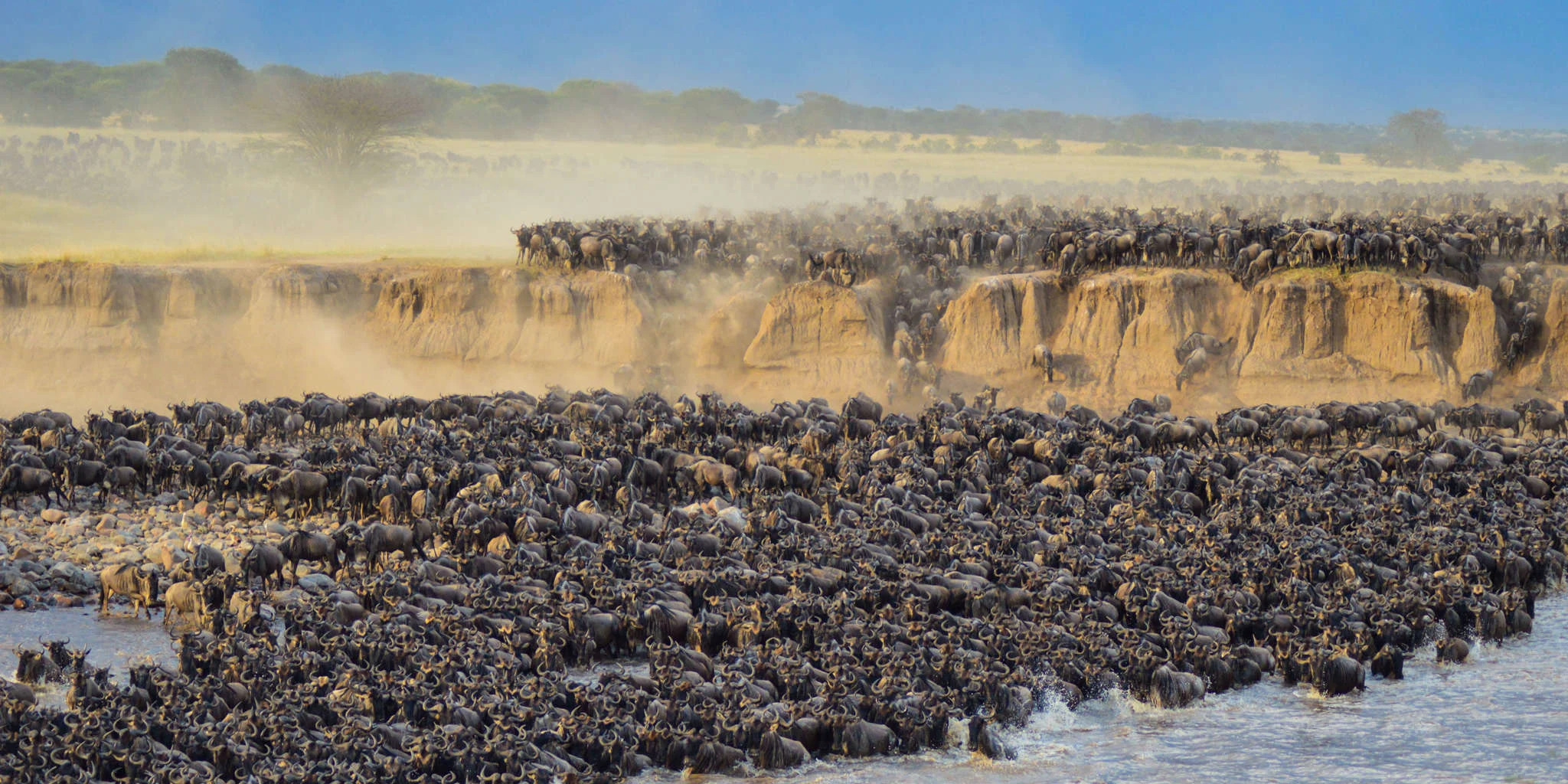
Kenya and Tanzania share one of the greatest wildlife ecosystems on Earth — the Serengeti-Mara landscape that straddles their common border and delivers some of Africa’s most iconic safari experiences to both sides. They share the Great Wildebeest Migration. They share the same golden savannah horizons. They share a deep history with international safari travel.
But they do not share the same price tag — and for a budget-conscious international traveller, the difference matters enormously.
The Tanzania versus Kenya safari question is one of the most searched topics in East African travel planning, and it rarely gets a straight answer. Travel agents with Kenya partnerships say Kenya. Tanzania operators say Tanzania. Most comparison guides hedge because they are trying to avoid committing either way.
This guide commits.
At Affordable International Travel Ltd, we are a 100% Tanzanian-owned and operated safari company, and yes — we obviously have a perspective. But we also have a responsibility to give you accurate, honest information so you can make the right decision for your trip. That means laying out the Kenya numbers fairly, explaining where Kenya genuinely wins, and being precise about where Tanzania delivers more wildlife for less money.
By the end of this guide, you will know exactly how the two countries compare across every major cost category — park fees, accommodation, transport, migration access, unique experiences, and total trip cost — and you will be equipped to make a decision with real data behind it.
The Fundamental Cost Driver: Park Fees
The most important number in any East Africa safari comparison is the park entrance fee. Everything else — accommodation, guides, vehicles — can be adjusted, negotiated, or substituted. The park fee is fixed and non-negotiable. You pay it every single day you spend in the park, per person, regardless of how you are travelling.
Tanzania Park Fees (Non-Resident Adults)
Tanzania’s parks are managed by the Tanzania National Parks Authority (TANAPA), which sets a transparent, consistent fee structure across all national parks:
| Tanzania Park | Daily Fee (Non-Resident Adult) |
|---|---|
| Serengeti National Park | $70.00 |
| Ngorongoro Conservation Area | $70.10 |
| Tarangire National Park | $53.10 |
| Lake Manyara National Park | $53.10 |
| Arusha National Park | $45.00 |
| Mikumi National Park | $35.00 |
| Ruaha National Park | $29.00 |
| Nyerere (Selous) National Park | $29.00 |
| Ngorongoro Crater descent (vehicle) | $200 per vehicle/day |
Tanzania’s most important distinction: park fees are flat-rate and season-independent. You pay the same amount in July’s peak season as you do in April’s green season. The only factor that changes is accommodation pricing.
Kenya Park Fees (Non-Resident Adults)
Kenya’s park fees are managed by Kenya Wildlife Service (KWS) for national parks, and by county governments for national reserves like the Masai Mara. The critical difference from Tanzania is that Kenya operates a tiered seasonal pricing structure for its most famous destination:
| Kenya Park / Reserve | Daily Fee (Non-Resident Adult) |
|---|---|
| Masai Mara (low season: Jan–Jun) | $100 per person |
| Masai Mara (high season: Jul–Dec) | $200 per person |
| Amboseli National Park | $60 per person |
| Lake Nakuru National Park | $60 per person |
| Tsavo East / West National Parks | $60 per person |
| Samburu National Reserve | ~$70 per person |
| Ol Pejeta Conservancy | $90–$120 per person |
The headline number here is the Masai Mara’s high-season fee: $200 per person per day. That is nearly three times the Serengeti’s flat $70, and nearly seven times what you would pay to enter Tanzania’s southern circuit parks at Ruaha or Nyerere.
This fee increase was introduced by Narok County in 2024 and has significantly shifted the cost comparison between the two countries for travellers whose primary target is the Great Migration river crossings — which peak between July and October, squarely within the Mara’s $200 high-season window.
Park Fee Comparison: 5-Day Safari
To make this concrete, consider the park fees alone for a 5-day safari focused on the migration:
| Scenario | Total Park Fees Per Person (5 Days) |
|---|---|
| Tanzania: 5 days Serengeti ($70/day) | $350 |
| Tanzania: Mixed circuit (Tarangire + Serengeti + Ngorongoro) | ~$360 |
| Kenya: 5 days Masai Mara (low season, $100/day) | $500 |
| Kenya: 5 days Masai Mara (high season, $200/day) | $1,000 |
A 5-day high-season Masai Mara safari costs $650 more per person in park fees alone compared to the Serengeti. For a couple, that is $1,300 — before a single night of accommodation or a single meal.
Accommodation Costs: Tanzania vs Kenya

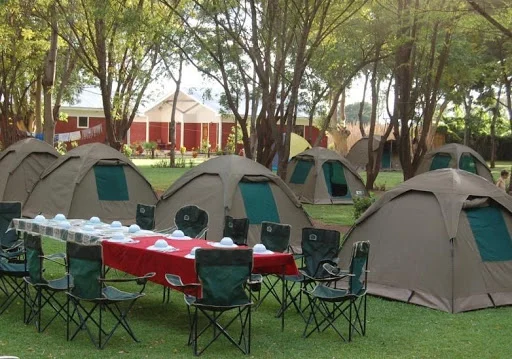
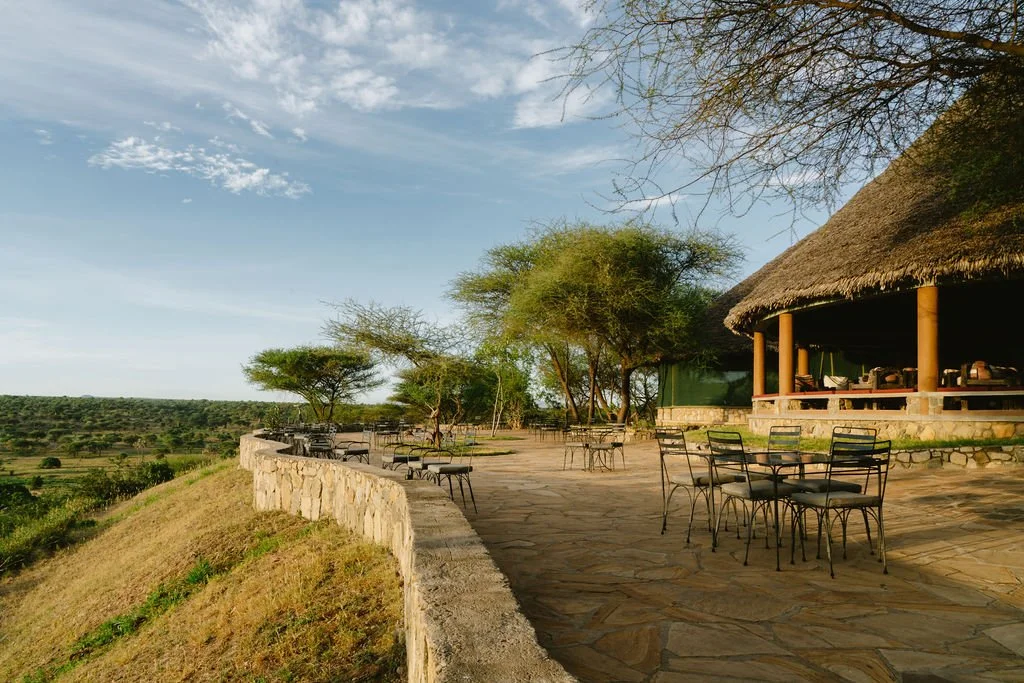
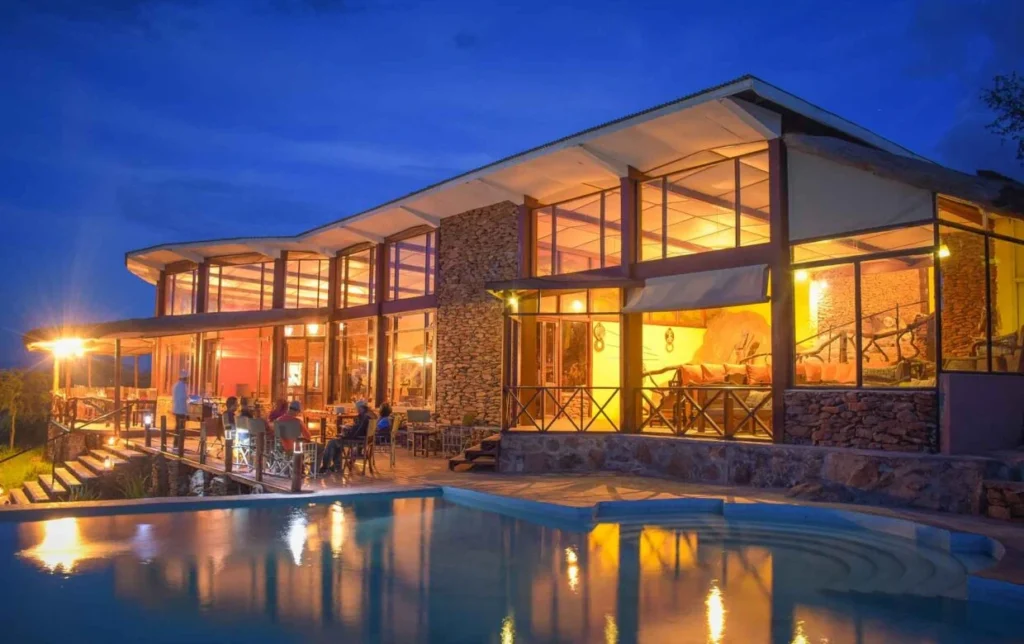
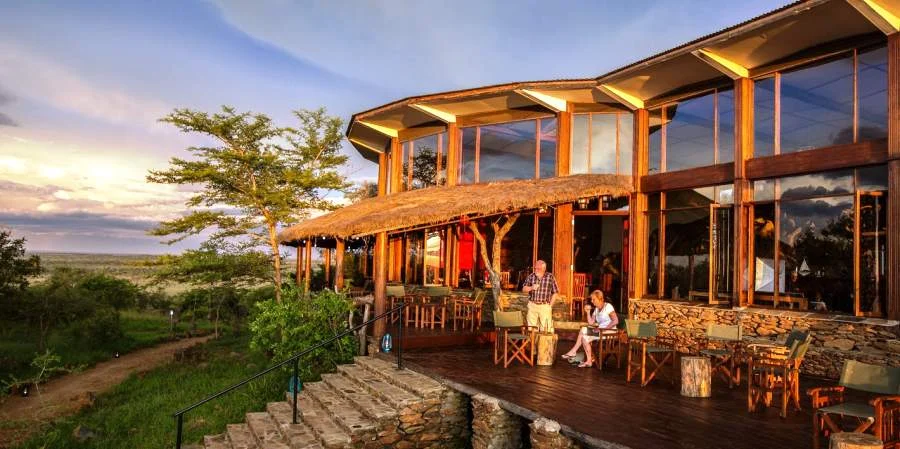
Tanzania Accommodation
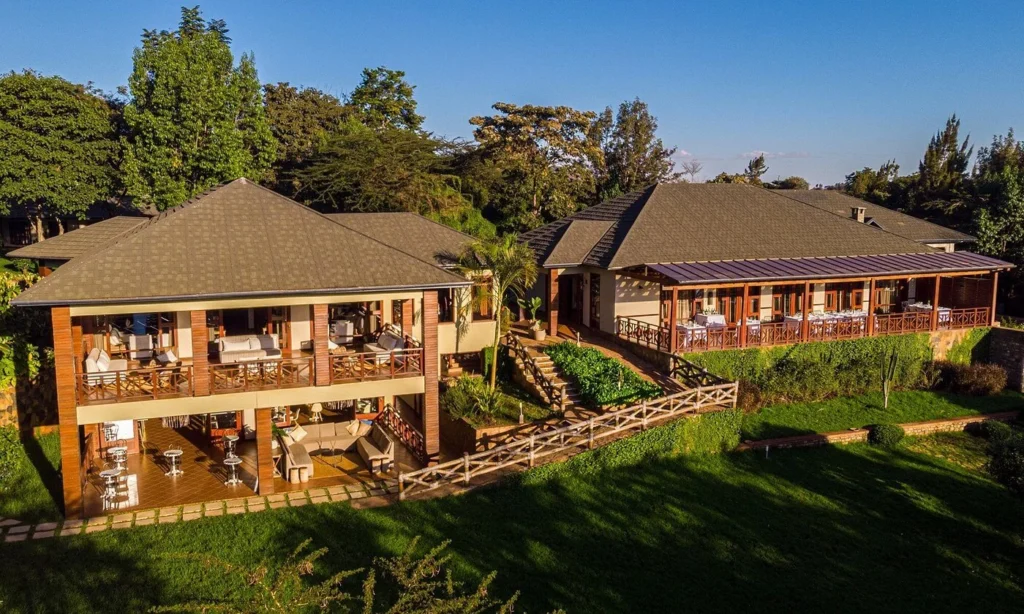
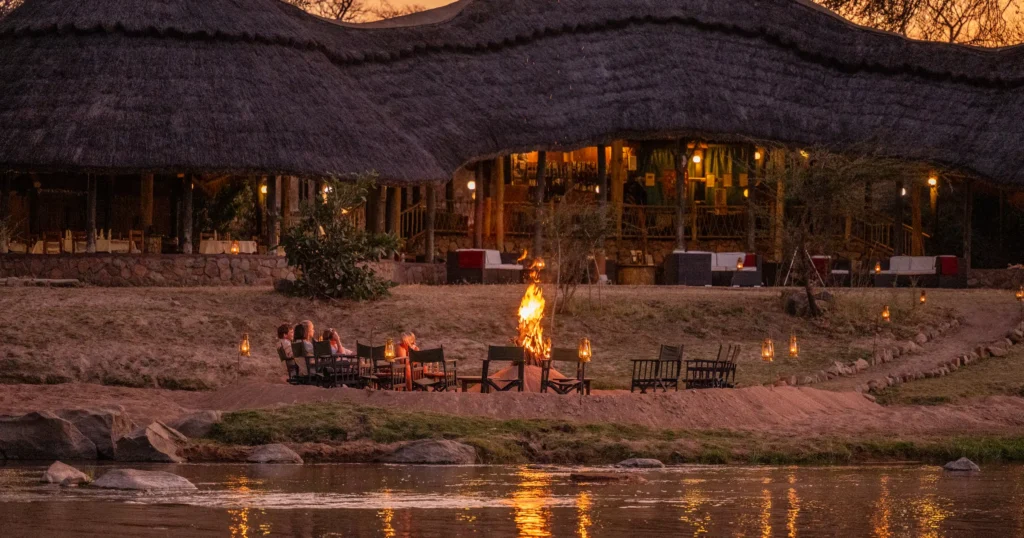
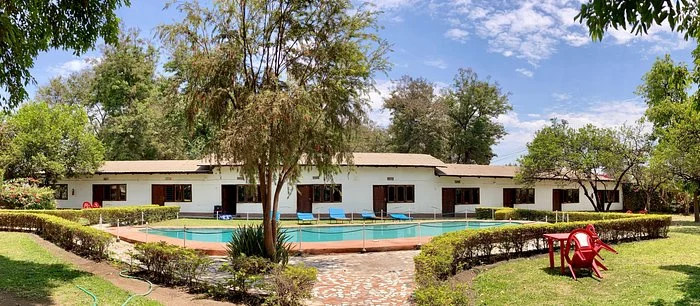
Tanzania offers the full spectrum from public campsites inside national parks to ultra-luxury tented lodges, but its mid-range and budget tiers are particularly strong in the northern circuit parks.
Budget camping (public campsites inside parks): $30–$80 per person per night Mid-range lodges and tented camps: $120–$300 per person per night, full board Upper mid-range properties: $300–$600 per person per night, full board Luxury camps: $500–$1,500+ per person per night, full board
Tanzania’s budget and mid-range accommodation has grown significantly over the past decade. The competition between operators in the Arusha–Tarangire–Ngorongoro corridor has kept mid-range prices competitive, and the public campsite network inside TANAPA-managed parks remains one of the most cost-effective ways to experience African wilderness anywhere on the continent.
Kenya Accommodation
Kenya safari accommodation costs between $1,320 and $3,400 per person per night at the upper end, depending on luxury level, season, and travel style. Mid-range options are more accessible, but Kenya’s most famous safari destination — the Masai Mara — skews expensive because its reputation drives premium demand.
Budget camping: $100–$200 per person per night Mid-range lodges and camps (Masai Mara): $150–$300 per person per night, full board Luxury tented camps (inside reserve): $400–$800+ per person per night, full board Ultra-luxury properties: $1,000–$3,400+ per person per night
Budget camping safaris in Kenya can be found for as low as $180 per person per day, while mid-range private options average $300 to $450 per person per day, and luxury safaris range from $600 to $1,500 per person per day.
One significant consideration for the Masai Mara specifically: during high season, fees for international visitors are significantly higher than in low season — a park like the Masai Mara costs $100 in low season and $200 in high season for the same entry.
Many lodges compound this seasonal premium with their own peak-season rate increases, meaning a July–September Masai Mara safari can cost 40–60% more in accommodation alone than the same lodge in March.
Transport and Access Costs
Getting to the Safari: International Flights
Both countries are well served by international aviation. The key gateway airports are:
- Tanzania: Kilimanjaro International Airport (JRO) and Julius Nyerere International Airport in Dar es Salaam (DAR). Kilimanjaro is served by multiple European and Middle Eastern carriers, typically a 45-minute road transfer from Arusha.
- Kenya: Jomo Kenyatta International Airport in Nairobi (NBO). One of Africa’s busiest hubs, with direct routes from more destinations globally than any Tanzanian airport.
Nairobi is often cheaper to fly into than Kilimanjaro, particularly from North America and Asia, where connecting hubs through Nairobi are well-established. From Europe, the price difference is usually modest.
If international flight cost is a priority: Kenya has a marginal advantage in flight accessibility and sometimes price. If you are already in East Africa or flying via Addis Ababa or Doha: Tanzania and Kenya are broadly equivalent.
Getting to the Parks: Internal Transfers
This is where the two countries diverge significantly on cost and convenience.
Tanzania’s northern circuit — covering Tarangire, Lake Manyara, Serengeti, and Ngorongoro — is road-accessible from Arusha without requiring a domestic flight. The drive from Arusha to Tarangire takes approximately 2 hours; the Serengeti is 6–7 hours by road. This means a full northern circuit safari can be completed entirely overland, which is the most cost-effective approach and how the majority of our packages at Affordable International Travel Ltd are structured.
Our 2-day Tarangire and Lake Manyara safari from $700 per person and 5-day northern circuit packages from $2,000 per person are entirely road-based, with no flight cost required.
Kenya’s Masai Mara is 270 km from Nairobi — a 5–6 hour road journey. While road access exists and is used by many budget travellers, the long drive reduces effective safari time. Domestic flights from Wilson Airport in Nairobi to Masai Mara airstrips take 45–60 minutes but add approximately $200–$400 per person round-trip to the total cost.
For the Masai Mara, the choice between road and flight is real: road saves money but costs time, while flying preserves safari days but adds a substantial cost that has no Tanzania equivalent for the northern circuit.
The Great Migration: Tanzania vs Kenya
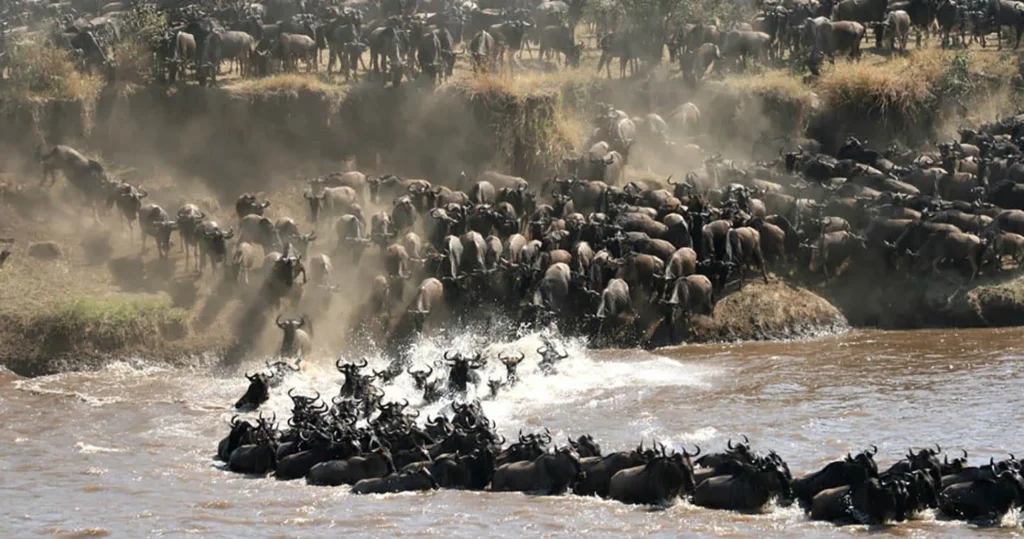
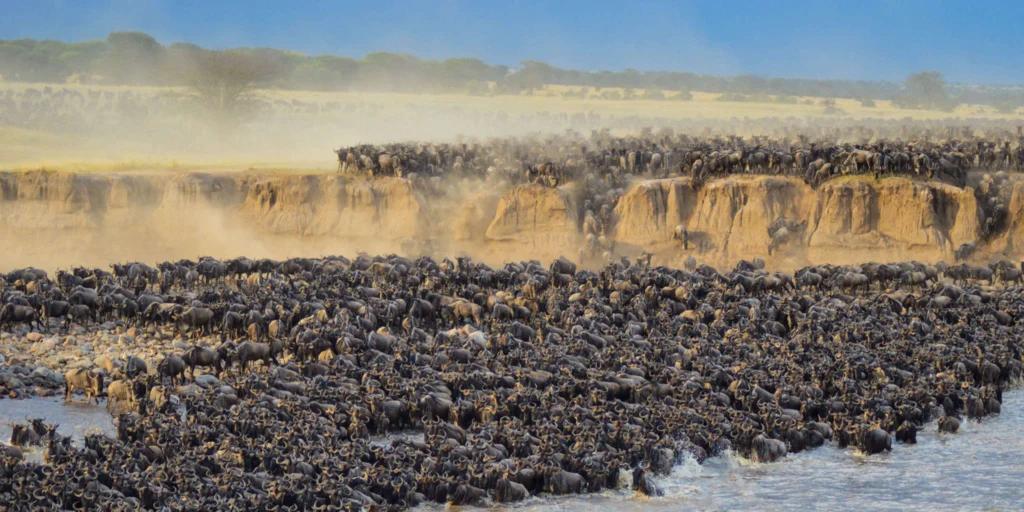
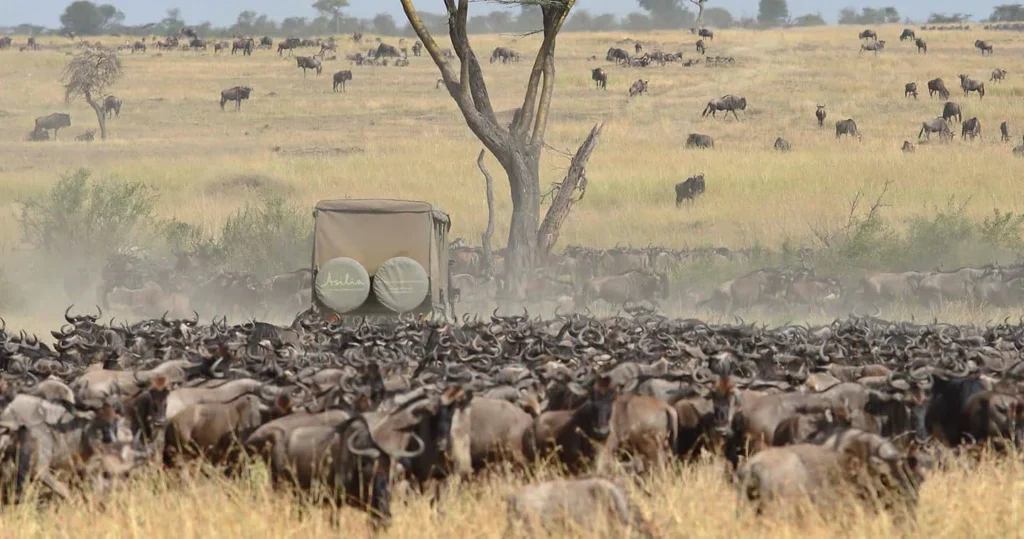
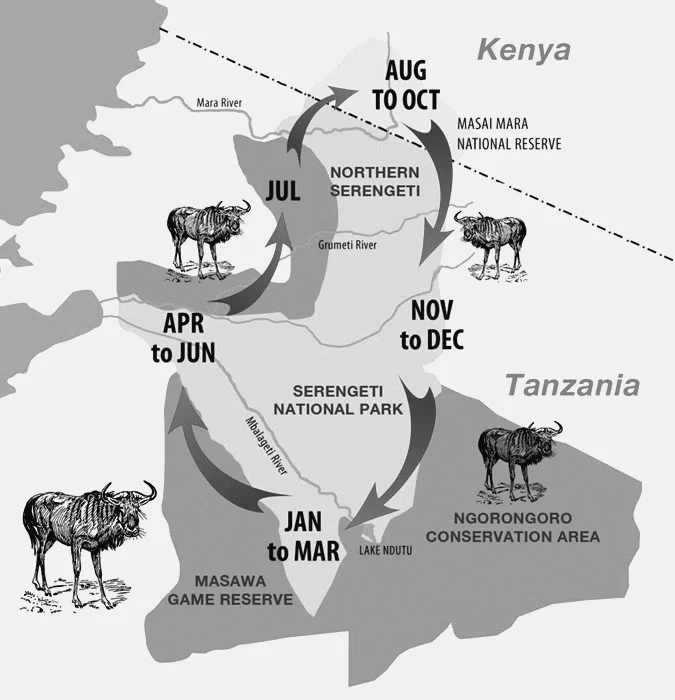
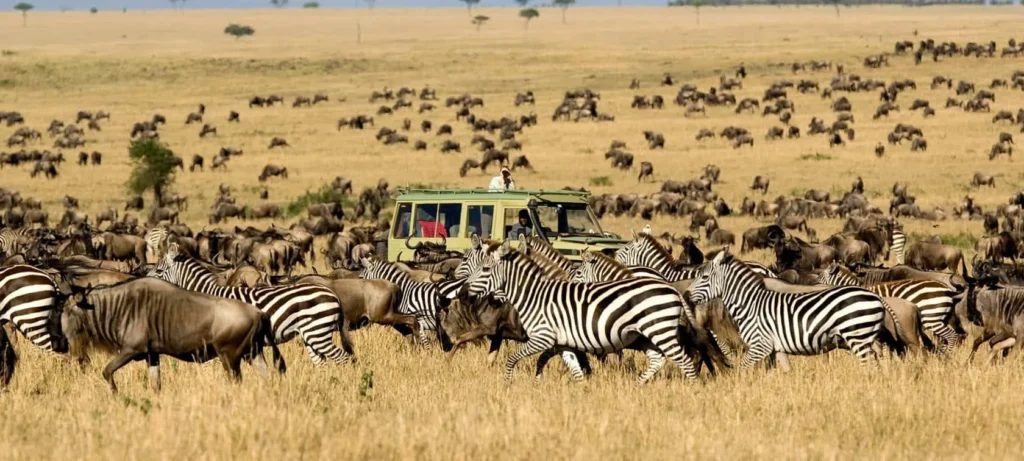
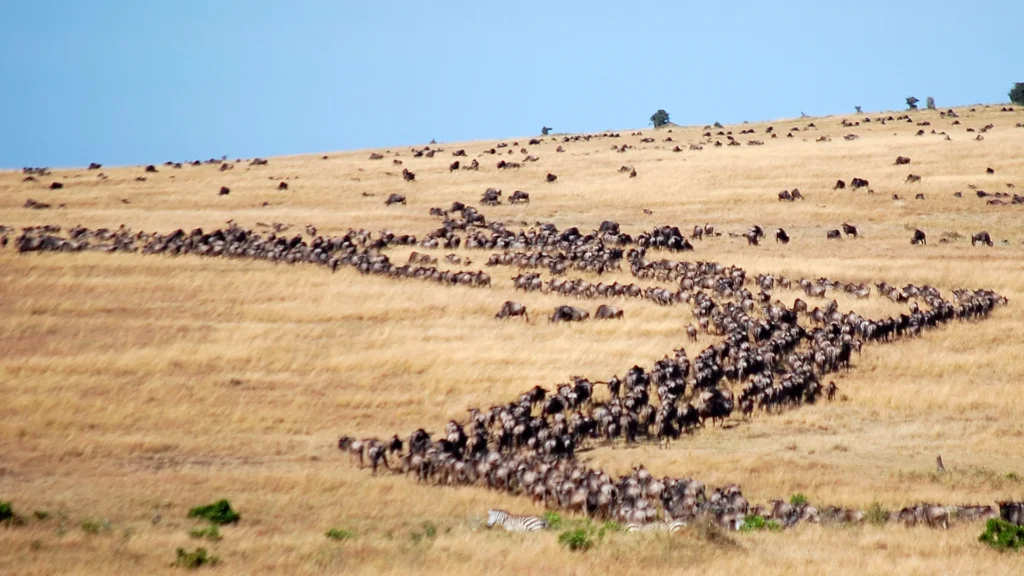
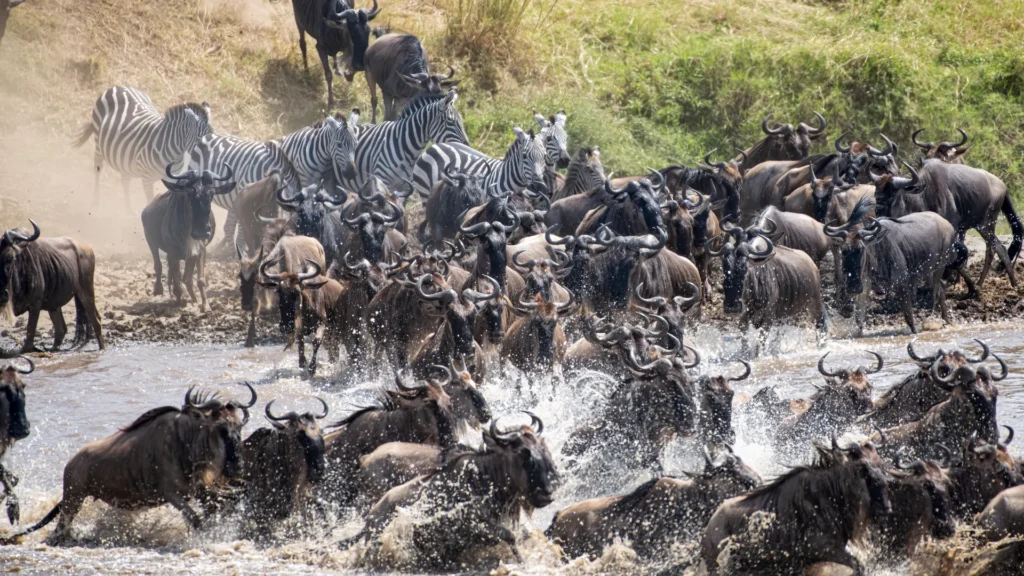
The Great Wildebeest Migration is the single most powerful pull factor for East Africa safari planning, and both countries offer access to different stages of this extraordinary annual event.
What Tanzania Offers
The migration spends approximately 8–9 months of the year in Tanzania. The calving season (January–February) takes place in the southern Serengeti and Ndutu plains, where thousands of calves are born daily and predator density reaches its annual peak. The herds move through the western Serengeti corridor (May–June) before beginning their northward push toward the Kenyan border.
For the calving season specifically, Tanzania has no Kenyan competition — this entire drama plays out entirely south of the border. Our 3-day Serengeti Great Migration Fly-In Safari from $1,511 per person flies directly into the northern Serengeti to position guests for river crossing access from the Tanzania side.
What Kenya Offers
The Masai Mara receives the herds at their northernmost point, typically between July and October. The famous Mara River crossings — the most dramatic single wildlife spectacle in Africa — happen on the Kenya side. This is what draws many travellers specifically to the Masai Mara during high season.
The Cost Reality of Chasing the River Crossings
Here is the honest calculation. A 5-day Masai Mara safari during peak migration season (July–October) costs approximately:
| Item | Estimate Per Person |
|---|---|
| Park fees (5 days × $200 high season) | $1,000 |
| Mid-range accommodation (4 nights) | $600–$1,200 |
| Domestic flights (Nairobi–Mara return) | $300–$400 |
| Safari vehicle + guide (shared group) | Included |
| Approximate total per person | $2,000–$3,000 |
A comparable 5-day Serengeti safari during the same period from Tanzania:
| Item | Estimate Per Person |
|---|---|
| Park fees (5 days × $70 flat rate) | $350 |
| Mid-range accommodation (4 nights) | $400–$800 |
| Road transfers from Arusha (included) | $0 additional |
| Safari vehicle + guide (shared group) | Included |
| Approximate total per person | $1,800–$2,000 |
The Tanzania Serengeti option saves a meaningful $200–$1,000 per person even during peak season. If you want both experiences — the calving and the river crossings — combining a Tanzania Serengeti safari with a Kenya Mara extension is possible but adds significant total cost.
Beyond the Masai Mara: Kenya’s Other Parks
It would be unfair to represent Kenya purely through the lens of Masai Mara pricing. Kenya has other parks that offer genuinely competitive value.
Amboseli National Park charges $60 per person per day and offers the iconic backdrop of Mount Kilimanjaro rising above elephant herds — one of Africa’s most recognisable landscapes. At $60/day, Amboseli is price-competitive with Tanzania’s Tarangire.
Tsavo East and West National Parks are vast, undervisited, and charge $60 per person per day. For travellers flying into Mombasa, Tsavo offers accessible wildlife without the Masai Mara premium.
Lake Nakuru National Park charges $60/day and is famous for flamingo concentrations and rhino conservation. For birders and rhino enthusiasts it offers specific value.
The picture that emerges is that Kenya’s secondary parks — those outside the Masai Mara — are broadly price-competitive with Tanzania’s mid-tier parks. The cost gap opens dramatically when the Masai Mara enters the equation, especially in high season.
Tanzania’s Unique Advantages Beyond the Serengeti
One of the strongest arguments for Tanzania as the better value destination is that it simply has more parks to offer — with lower fees — across a wider variety of ecosystems than Kenya’s safari circuit.
Tarangire National Park ($53.10/day) offers the best elephant concentration in northern Tanzania alongside ancient baobab forests that Kenya has no equivalent of. During dry season, Tarangire’s elephant and predator density rivals anything in East Africa.
Lake Manyara National Park ($53.10/day) delivers tree-climbing lions, flamingo flocks, groundwater forest, and 400 bird species in a single compact day — a wildlife diversity that Kenya’s comparable parks cannot match at that price.
Ngorongoro Crater ($70.10/day) is Tanzania’s unique geological trump card. The world’s largest intact volcanic caldera has no equivalent anywhere in Kenya. Its resident black rhino population, year-round wildlife concentration, and dramatic crater landscape are experiences completely absent from the Kenyan safari menu.
Ruaha National Park ($29/day) and Nyerere ($29/day) in Tanzania’s southern circuit offer remote, crowd-free wilderness experiences at fees that are a fraction of Kenya’s Masai Mara. African wild dogs, massive elephant herds, Tanzania’s highest lion density, and walking safaris — all for less than a third of what the Mara costs in high season.
Arusha National Park ($45/day) sits 30–45 minutes from Kilimanjaro Airport and offers a high-value day trip or short safari combining giraffes, colobus monkeys, flamingo-lined lakes, and Mount Meru — making it the best immediate arrival/departure wildlife option of any Tanzania gateway.
Mount Kilimanjaro — the continent’s highest peak — is exclusively Tanzanian. For travellers combining a summit attempt with a safari, Tanzania offers an experience that is physically impossible to replicate in Kenya, regardless of budget.
Mikumi National Park ($35/day), accessible by road from Dar es Salaam without any flight, is Tanzania’s most affordable mainland safari park and the best entry-level option for budget travellers arriving on the coast.
Complete Cost Comparison: 5-Day Safari Head-to-Head
Scenario 1: Budget Group Safari, Low Season
| Cost Category | Tanzania (Tarangire + Serengeti + Ngorongoro) | Kenya (Masai Mara, Jan–Jun) |
|---|---|---|
| Park fees (5 days) | ~$360 per person | ~$500 per person |
| Accommodation (4 nights, budget) | $160–$320 | $400–$600 |
| Domestic flight to park | Not required | $300–$400 (optional) |
| Safari vehicle + guide (shared) | Included | Included |
| Total per person (approx.) | $1,800–$2,000 | $1,800–$2,200 |
Low-season comparison verdict: Broadly comparable. Tanzania has a park fee advantage; Kenya has cheaper flight access from some origins, which can partially offset.
Scenario 2: Mid-Range Safari, High Season (Migration)
| Cost Category | Tanzania (Serengeti) | Kenya (Masai Mara, Jul–Dec) |
|---|---|---|
| Park fees (5 days) | $350 per person | $1,000 per person |
| Accommodation (4 nights, mid-range) | $600–$1,000 | $800–$1,500 |
| Domestic transfer to park | Road (included) | $300–$400 flight |
| Safari vehicle + guide (shared) | Included | Included |
| Total per person (approx.) | $2,000–$2,500 | $2,500–$4,000 |
High-season comparison verdict: Tanzania wins clearly. The Masai Mara’s $200/day high-season fee creates a $650 per-person park fee gap over 5 days, compounded by flight costs and higher accommodation rates.
Scenario 3: Short 3-Day Trip from Nairobi vs Arusha
Some travellers are transiting through one city and want a quick safari. This is where geography creates nuance.
A 3-day Nairobi-based Masai Mara trip (low season, road transfer) is genuinely accessible and costs $600–$1,800 per person depending on accommodation level. For travellers with a Nairobi layover, this can be an efficient option.
A 3-day Arusha-based Tanzania safari covering Tarangire, Lake Manyara, and Ngorongoro starts from $1,100 per person with Affordable International Travel Ltd — three parks, three ecosystems, exceptional wildlife, and fully inclusive. For a traveller flying through Kilimanjaro Airport, this is a strong alternative.
Our 3-day Tarangire, Lake Manyara, and Ngorongoro package from $1,100 per person and 3-day Arusha, Tarangire, and Ngorongoro from the same price are among the most competitive short-safari packages available anywhere in East Africa.
What Tanzania Has That Kenya Simply Does Not
Some Tanzania safari experiences have no Kenyan equivalent at any price. These are worth naming explicitly:
The Ngorongoro Crater. The world’s largest intact volcanic caldera, home to a permanent resident black rhino population and 25,000 animals in 260 square kilometres. There is nothing like it in Kenya.
The Serengeti calving season. January and February in the southern Serengeti — thousands of wildebeest calves born daily, predators hunting constantly, and the entire drama unfolding south of the border. Kenya has no calving season spectacle.
Southern circuit wilderness. Ruaha and Nyerere together form one of Africa’s largest protected wildlife areas. Wild dogs, remote bush camps, boat safaris on the Rufiji River, walking safaris, and a near-total absence of tourist vehicles. Kenya has no equivalent at $29/day.
Mount Kilimanjaro. Africa’s highest peak. A 7-day climb through five ecological zones to the roof of the continent. Exclusively Tanzanian, iconic globally, and combinable with a safari on either end. Our Kilimanjaro climb packages begin from $2,000 per person, making the Tanzania combination trip one of the most diverse adventure travel packages in the world.
Zanzibar. The spice island of the Indian Ocean, 25 minutes by flight from Dar es Salaam, is Tanzania’s celebrated beach extension. The safari-and-Zanzibar combination is one of the great travel itineraries globally. Kenya has its own coast, but Zanzibar’s historic Stone Town, turquoise waters, and white sand beaches are in a different category.
Where Kenya Has a Genuine Edge
This is an honest guide, so Kenya’s genuine advantages deserve clear acknowledgement.
Nairobi is a better-connected hub. If you are flying from North America, Asia, or via an airline hub that serves Nairobi strongly, your international flight cost may be meaningfully lower to NBO than to JRO or DAR. This can partially offset Tanzania’s park fee advantage.
The Mara River crossings are spectacular. If the dramatic high-season wildebeest river crossings are the single experience you have travelled to East Africa for, they happen on the Kenyan side of the ecosystem. The Tanzania Serengeti offers its own migration drama, but the Mara River crossings in their peak July–September form are a Kenyan experience.
Kenya’s tourism infrastructure is very mature. Nairobi has excellent international hotel options for pre/post safari stays, and the Masai Mara accommodation market is vast and well-tested. For some travellers, this mature infrastructure feels reassuring.
Short trips from Nairobi are efficient. A 3-day Masai Mara trip from Nairobi using road transfers is a genuinely practical safari option for travellers transiting through Kenya. Tanzania’s closest comparable option requires Kilimanjaro Airport as the gateway.
Which Country Is Better Value? The Honest Verdict
Tanzania is the better value safari destination for the majority of international travellers, for three clear reasons:
1. Park fees are dramatically lower, especially in high season. The Masai Mara’s $200/day high-season fee versus Tanzania’s flat $70 for the Serengeti creates a $650+ per-person difference over 5 days that no amount of cheaper accommodation can fully offset.
2. Tanzania offers far more parks at far lower prices. Ruaha at $29/day, Nyerere at $29/day, Mikumi at $35/day — Tanzania has a breadth of excellent, crowd-free safari options with no Kenyan equivalent at those price points.
3. Tanzania’s unique experiences have no Kenyan counterpart. The Ngorongoro Crater, the calving season, the southern circuit wilderness, Kilimanjaro, Zanzibar — Tanzania gives you things Kenya simply cannot provide, regardless of how much you spend.
Kenya is the better choice specifically if:
- Your international routing is strongly Nairobi-centred and flight savings are significant
- You are visiting between January and June (low season Mara fees at $100 rather than $200)
- The Mara River crossings are your single non-negotiable wildlife goal and you are visiting July–October
- You are doing a very short 2–3 day safari from Nairobi with no flexibility to extend to Tanzania
For every other scenario — budget safari, mid-range safari, combination circuits, first-time visitors, families, the calving season, southern circuit wildlife, or any trip where park fee value matters — Tanzania delivers more for less.
Frequently Asked Questions
Is Tanzania or Kenya better for a first safari?
Tanzania is our recommendation for most first-time safari visitors. Its northern circuit — covering Tarangire, Lake Manyara, Serengeti, and Ngorongoro — delivers extraordinary wildlife diversity across four distinct ecosystems at a total cost that is meaningfully lower than a comparable Kenyan itinerary, particularly during the high season. Tanzania also offers the Ngorongoro Crater, which has no Kenyan equivalent and is often the single most memorable experience of a first-time safari.
Can you do both Tanzania and Kenya in one trip?
Yes, and for travellers with 10+ days and a flexible budget, a combined East Africa trip can be very rewarding. A common structure is to begin with the Tanzanian northern circuit (5–7 days), then cross into the Masai Mara region (3–4 days) before flying home. The shared ecosystem means wildlife sightings are complementary rather than repetitive. Affordable International Travel Ltd can advise on the Tanzania portion and connect you with reliable Kenyan partners for the cross-border extension.
Is the Masai Mara worth $200 per person per day?
For travellers visiting between July and October specifically to witness the Mara River crossings, the $200/day fee can be justified by the spectacle — it is one of the great wildlife experiences on Earth. For all other months, the low-season rate of $100/day is more reasonable, though still significantly more expensive than comparable Tanzania parks. Whether it is worth it depends on how strongly the river crossings feature in your specific travel goals. If they are not your primary motivation, Tanzania’s parks deliver better wildlife value for less money every month of the year.
Do Tanzania and Kenya charge different fees for children?
Yes, and both offer meaningfully lower rates for children — generally around 50% of the adult rate for ages 5–15, with children under 5 typically entering free in Tanzania’s TANAPA parks. In Kenya, the Masai Mara charges around $50 per child per day (non-resident) in high season versus $200 for adults — still higher than Tanzania’s children’s rates at most parks. For families, Tanzania’s lower base fees combined with children’s discounts make the total family cost significantly more manageable.
Which country has better accommodation value for mid-range travellers?
Tanzania has better mid-range accommodation value. The competition between operators in the northern circuit has produced a strong range of comfortable, well-run mid-range tented camps and lodges at $120–$280 per person per night full board — lower than comparable quality properties near the Masai Mara. Tanzania’s budget campsite network inside TANAPA parks is also broader and cheaper than Kenya’s equivalent, making the full mid-range to budget accommodation spectrum more accessible in Tanzania.
Does Tanzania have a beach option like Kenya?
Tanzania’s Zanzibar is widely regarded as the superior Indian Ocean beach destination in East Africa. Historic Stone Town (a UNESCO World Heritage Site), pristine white-sand beaches, turquoise coral reef snorkelling, and a direct 25-minute flight from Dar es Salaam make Zanzibar one of the world’s great safari-and-beach combination destinations. Kenya’s coast (Diani, Malindi) offers its own appeal, but Zanzibar’s combination of culture, history, and beach quality is broadly considered to be in a different category by experienced East Africa travellers.
What about the Serengeti vs Masai Mara for the migration?
Both offer access to the same migrating herds, which cross the border seasonally. The Serengeti hosts the calving (January–February) and the long southward migration route. The Masai Mara hosts the dramatic northern river crossings (July–October). The Serengeti is also considerably larger (14,763 km² versus the Mara’s 1,510 km²), which means game drives encounter fewer other vehicles and the open-space feeling of the plains is more consistently maintained. At $70/day versus $100–$200/day, the Serengeti delivers comparable migration drama — and more park space — at a fraction of the Mara’s high-season cost.
Conclusion: Tanzania Delivers More Safari for Less Money
Kenya and Tanzania both offer extraordinary safari experiences — this guide has not tried to diminish Kenya, because it deserves its reputation as one of Africa’s great wildlife destinations. The Masai Mara during a river crossing is genuinely breathtaking. Amboseli with Kilimanjaro rising over elephant herds is a legendary image for a reason.
But on the numbers, the comparison is clear. Tanzania’s flat, season-independent park fees — $70 for the Serengeti, $29 for Ruaha, $53 for Tarangire — combined with its extraordinary range of parks, its unmatched suite of unique experiences, and its strong mid-range and budget accommodation sector make it the better value safari destination for the majority of international travellers.
The Ngorongoro Crater has no Kenyan equivalent. The calving season in Ndutu happens entirely in Tanzania. Ruaha’s lion density, Nyerere’s wild dogs and boat safaris, Mikumi’s accessible savannah, Tarangire’s elephant herds and baobabs, and Kilimanjaro’s summit — these are Tanzanian experiences, and most of them cost less per day to access than the Masai Mara in high season.
At Affordable International Travel Ltd, we have built our entire operation on the belief that Tanzania’s wildlife deserves the world’s attention, and that experiencing it should not require a luxury budget. Our packages start from $700 per person for a 2-day combination safari and scale to comprehensive 5-day northern circuit itineraries from $2,000 per person, fully inclusive with no hidden extras.
If you are ready to stop comparing and start planning, our team is ready to build your perfect Tanzania safari around your budget, your dates, and your wildlife priorities.
Request your free, no-obligation Tanzania safari quote today →
Explore Our Tanzania Safari Options
- All Tanzania Safari Tours — Browse by duration and price
- All Tanzania Safari Destinations
- Serengeti National Park Safari
- Ngorongoro Crater Safari
- Tarangire National Park Safari
- Lake Manyara Safari
- Ruaha National Park Safari
- Mikumi National Park Safari
- Arusha National Park Safari
- Climbing Mount Kilimanjaro
- 3 Days Serengeti Migration Fly-In Safari — from $1,511/person
- 3 Days Tarangire, Lake Manyara, and Ngorongoro — from $1,100/person
- 5 Days Tarangire, Ngorongoro, and Serengeti — from $2,000/person