
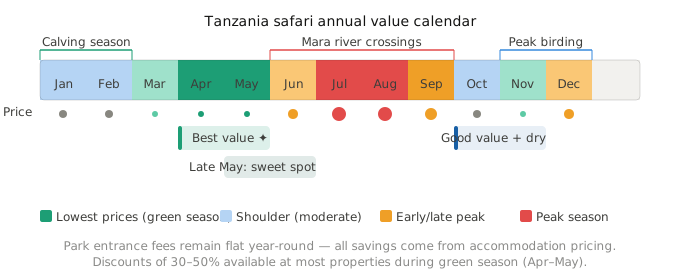
The cheapest months for a Tanzania safari are April and May, when the long rains bring accommodation discounts of 30–50% across most parks. March and November are close seconds as shoulder-season months with meaningful savings and good wildlife.
Tanzania’s park entrance fees are flat-rate year-round — they do not change with the season — so the savings come entirely from lower lodge and camp prices.
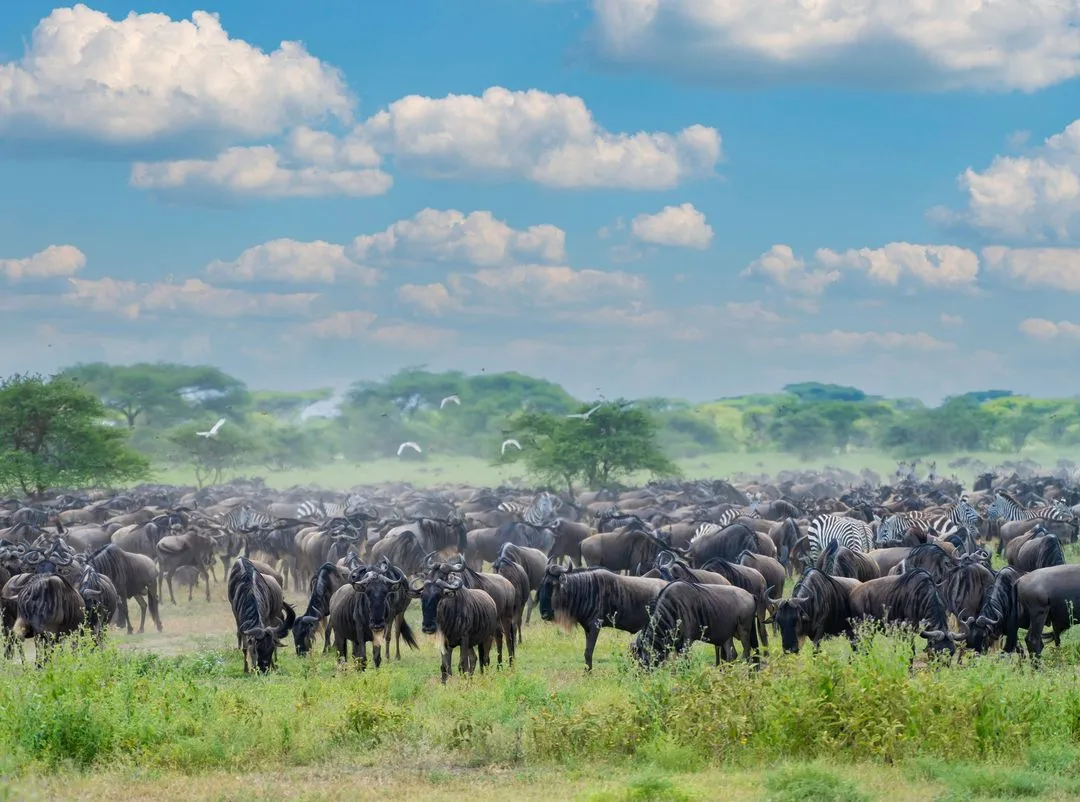
The wildlife during these cheaper months is excellent, particularly for birdwatching, predator activity, photography, and crowd-free game drives.
Choosing when to go on a Tanzania safari is one of the most powerful decisions you will make — and it has a direct, measurable impact on what you pay.
Unlike some travel destinations where off-peak periods mean a worse experience, Tanzania’s low and shoulder seasons deliver a genuinely different experience that many experienced safari travellers actively prefer.
Here is what most people do not know: Tanzania’s national park entrance fees are the same every month of the year. TANAPA, the Tanzania National Parks Authority, charges $70 for the Serengeti in January the same as it does in August. The park fee is constant. What changes dramatically with the seasons is accommodation pricing — and accommodation is where 60–70% of your total safari cost sits.
Tanzania’s lodges and tented camps use tiered pricing structures that can vary by 30–50% between their peak season rates and their green season rates. A lodge that charges $300 per person per night in peak July can charge $150 per person per night in April — for the same room, the same beds, the same wildlife outside your tent. The difference in what you see on a game drive is minimal. The difference in what you pay is enormous.
This guide gives you the complete, honest picture of Tanzania’s seasons, month by month — what each one costs, what wildlife it delivers, what its practical conditions look like, and which parks are best for each time of year. At Affordable International Travel Ltd, we run safaris every month of the year, and we will tell you exactly what each season actually delivers in the field.
Tanzania’s Three Safari Seasons Explained
Tanzania has two rainy seasons and two dry periods, which the safari industry typically divides into three pricing tiers:
Peak Season: June to October (Highest Prices)
Tanzania’s long dry season coincides almost perfectly with the Northern Hemisphere’s summer holiday period, which drives maximum demand. July, August, and September are the most expensive months of the year across virtually every park and lodge in the country. School holidays in Europe and North America mean family groups fill camps, and the Great Migration’s northern Serengeti river crossings draw the single largest concentration of safari demand in the entire East Africa calendar.
Typical price premium: 30–50% above green season rates at most properties.
Shoulder Season: November–December and January–February (Moderate Prices)
Tanzania’s two short periods — the short rains (November) and the post-short-rains dry spell (January–February) — create shoulder seasons where prices are meaningfully lower than peak but wildlife viewing remains excellent. These months attract travellers who want good conditions without the full peak-season price tag.
Typical saving vs. peak: 12–25% lower at most properties.
Green Season / Low Season: March, April, and May (Lowest Prices)
The long rains, running from late March through May, represent Tanzania’s genuine low season. Most international tourists avoid it based on assumptions about rain and difficult conditions. In reality, the rains rarely fall all day — most precipitation comes as afternoon or evening showers — and the wildlife during this period is extraordinary in its own right. Accommodation discounts of 30–50% are standard, and some camps offer special promotions including “stay 4, pay 3” and complimentary room upgrades.
Typical saving vs. peak: 30–50% lower, with some properties offering their deepest promotional rates of the year.
Month-by-Month Cost and Wildlife Guide
January — Shoulder Season, Excellent Wildlife Value
Price level: Moderate (10–20% below peak rates) Rain: Low, occasional afternoon showers, largely dry Crowd level: Moderate
January is one of Tanzania’s most underrated safari months. The short rains have finished, leaving the landscape a vivid, deep green — more photogenic than the parched golden grass of peak season.
The calving season in the southern Serengeti begins in earnest, with thousands of wildebeest calves being born daily in the Ndutu plains area. Predator activity reaches its annual high as lions, cheetahs, and hyenas shadow the calving herds.
For the Serengeti, January in the south and Ndutu area is genuinely spectacular — often cited by wildlife photographers as the most exciting month of the year. Tarangire National Park has lush green vegetation and good birdwatching, with migratory species from Europe present alongside resident wildlife. Ngorongoro is beautiful and accessible with lighter tourist traffic than peak season.
Best for: Calving season drama, photography, first-time visitors who want good conditions at moderate prices, birders.
Budget tip: January sits in the shoulder season window. Lodge rates are meaningfully below peak, and many properties still have availability without needing to book 6 months ahead.
February — Shoulder Season, Calving Season Peak
Price level: Moderate (10–20% below peak rates) Rain: Mostly dry, very occasional showers Crowd level: Moderate
February is the absolute peak of the calving season in the Ndutu and southern Serengeti ecosystem. Thousands of calves are born every single day, and the associated predator activity is extraordinary — lion hunts, cheetah sprints, hyena packs, and vultures wheeling overhead. Many experienced safari naturalists consider February the most dramatic wildlife month in Tanzania, more exciting than the better-known migration crossings of July–August.
The weather is excellent — warm and mostly dry, with very low rain probability. Ngorongoro Crater is particularly good in February, with green crater floor vegetation making animal spotting and photography exceptional. Mikumi National Park offers short, dry grass and active predators around waterholes.
Best for: Wildlife photography, calving season, predator-prey interactions, couples and honeymoon travellers who want outstanding wildlife at a moderate cost.
Budget tip: February shoulder season pricing is consistently 10–20% below peak. Availability is generally good without needing very long lead-time booking.
March — Early Green Season, Meaningful Savings Begin
Price level: Low-moderate (20–30% below peak rates) Rain: Long rains begin mid-to-late month, mostly afternoon showers Crowd level: Low
March is a transition month that many budget-savvy travellers use strategically. The first half of March often has peak-season quality conditions at early green season prices. As the long rains begin arriving in the second half of the month, tourist numbers drop further and accommodation rates fall noticeably.
Wildlife in March is still very good — the calving season’s energy continues in the south while herds begin their slow northward movement. Tarangire is green and atmospheric, with elephants and birds in excellent numbers. The parks are quieter than any month since November, giving game drives a genuinely private quality.
The rains in March are rarely disruptive — typically afternoon or evening showers that leave mornings clear and fresh. Roads remain accessible and game drives proceed normally.
Best for: Budget travellers willing to accept some afternoon rain in exchange for meaningful cost savings and genuine crowd-free game drives.
Budget tip: Early March is often the best price-to-experience sweet spot of the entire year. You get green season prices without the heavier rains of April. Our packages start from $700 per person for a 2-day Tarangire and Lake Manyara safari year-round, but March departures often have the widest availability.
April — Low Season, Deepest Discounts of the Year
Price level: Very low (30–50% below peak rates) Rain: Heaviest month — long afternoon/evening rains, but mornings usually clear Crowd level: Very low — near-private safari experience
April is Tanzania’s cheapest safari month. Full stop. Accommodation discounts at this time of year are routinely 30–50% across both budget and mid-range properties, and green season (April–May) offers the deepest discounts at most lodges. Some camps advertise “stay 4, pay 3” deals specifically for April.
What many people assume — that April safari means sitting in the lodge watching rain — is not the reality our guides experience on the ground. Rains typically fall in the afternoon and evening. Morning game drives, which start at 6–7am, are usually conducted in dry, clear, cool conditions with extraordinarily fresh air and dramatic cloud backdrops. The grass is tall, which does require more patience for sightings, but the photographic light and the lush green landscape produce images that dry-season visitors never see.
The Serengeti in April is emerald and misty — genuinely beautiful in a way that July’s dusty golden plains are not. Wildlife is present throughout: lions, elephants, buffalo, and all the park’s permanent residents. The Ngorongoro Crater is particularly remarkable in April — the crater floor is lush green, the crater walls are wreathed in mist, and you are likely to have game drives almost entirely to yourself. The black rhinos, lions, and elephant bulls are all still there. The difference is that no other vehicle is parked next to you.
Ruaha National Park and Mikumi also offer their lowest prices of the year in April, with genuinely excellent wildlife and virtually empty parks. For experienced safari travellers who prioritise privacy and cost over peak-season wildlife density, April is simply unbeatable.
Best for: Budget travellers, photographers wanting green landscapes and dramatic skies, experienced safari visitors seeking privacy, solo travellers who want more for less.
Budget tip: April is the single best month to get maximum Tanzania national park experience for minimum spend. Lodge rates are at their annual floor, and our packages at Affordable International Travel Ltd build in the best available green season rates. Contact us for current April pricing.
May — Low Season, Best Overall Green Season Value
Price level: Very low to low (25–40% below peak rates) Rain: Rains easing through the month, drying significantly by late May Crowd level: Very low
May combines the deepest accommodation discounts of the year with improving conditions as the rains begin to ease. By mid-to-late May, the heavy afternoon rains become lighter and more intermittent, and by the end of the month many parks are transitioning to dry-season conditions. Wildlife starts to concentrate again around permanent water sources as the landscape dries, meaning game viewing quality improves week by week through May.
For many experienced Tanzania safari planners, late May is the single best value window of the entire year. You are catching the tail of green season pricing — still 25–35% below peak at most lodges — but entering conditions that are increasingly close to dry-season quality. The herds in the Serengeti are on the move, the Grumeti River ambushes are beginning, and the parks have almost no tourist traffic compared to the coming peak season.
Tarangire in May is one of our personal favourites. The baobabs are full and green, elephants are spread through the park, and the Tarangire River is still flowing strongly — providing perfect photographic compositions that are impossible in the dry season when the river shrinks. Lake Manyara has flamingos on the lake and exceptional birdwatching through the forest.
Best for: The savviest budget travellers — those who want excellent wildlife with genuine safari atmosphere at prices they will not find at any other time of year.
Budget tip: Late May departures (from around the 20th onwards) are arguably Tanzania’s best value safari window: low season prices, improving wildlife, and the earliest arrivals of the dry season atmosphere.
June — Early Peak Season, Rising Prices But Outstanding Value
Price level: Moderate (rising — 10–20% below July–August peak) Rain: Mostly dry, cool mornings, warm afternoons Crowd level: Moderate, building through the month
June marks the beginning of Tanzania’s dry season and the start of the peak safari window — but the first half of June still carries shoulder-season pricing at many properties as they transition from green season rates. By late June, peak rates fully apply at the most popular camps and lodges.
For travellers who want genuine dry-season wildlife conditions but want to avoid paying full peak season prices, early June is a very strong window. The grass is drying and visibility is improving, the Serengeti herds are moving north toward the Grumeti corridor, and the Ngorongoro Crater is at its most consistently excellent for wildlife viewing.
Tarangire in June begins its extraordinary dry-season transformation — elephants start concentrating near the Tarangire River, and daily sighting quality climbs steeply through the month. For elephant enthusiasts, early-to-mid June offers exceptional experiences at prices that will rise steeply in July.
Best for: Travellers who want peak-season quality but book early June to catch prices before the high-season surge.
July — Peak Season, Highest Prices of the Year
Price level: High — peak season maximum Rain: Very dry, clear skies, excellent visibility Crowd level: High
July is Tanzania’s most popular and most expensive safari month. The Great Migration river crossings in the northern Serengeti begin, the weather is perfect, school holidays in Europe and North America are in full swing, and accommodation demand across the northern circuit is at its annual maximum. Lodges that offer green season discounts of 30–50% restore full peak rates, and the most popular properties are booked months in advance.
The wildlife is genuinely exceptional in July — this is not peak season by accident. The Serengeti’s northern section around the Mara River is at its most dramatic. Tarangire’s elephant concentration is building. The Ngorongoro Crater is alive with predator activity. If the July–August river crossings are your specific goal and budget is not the primary constraint, this is the right time.
For budget travellers, July is the month to avoid or approach with careful planning — joining a group departure rather than booking a private vehicle, booking well in advance to secure the best available prices, and considering budget camping options rather than lodges.
Best for: The Great Migration river crossings, travellers for whom peak-season wildlife experiences justify the premium cost.
August — Peak Season, Maximum Prices and Crowds
Price level: High — peak season maximum (often the single highest month) Rain: None. Perfectly dry Crowd level: High — busiest month of the year at most parks
August is peak of peak season. The Mara River crossings in the northern Serengeti are at their most dramatic, accommodation is at its most expensive, and the most popular camps and viewpoints have more vehicles than at any other time. If the specific drama of wildebeest crossing a crocodile-filled river is your primary safari goal, August is the month — but you will pay the maximum price for it and share the experience with the maximum number of other visitors.
For budget travellers, August is the most expensive month to be in Tanzania’s national parks. The same safari that costs $2,000 per person in May can cost $3,000–$4,000 in August simply because lodge rates are at their annual ceiling. Park fees remain identical — the price difference is entirely in accommodation.
September — Late Peak Season, Very Good Value Emerging
Price level: High but beginning to ease (5–10% below August peak at some properties) Rain: Dry and warm Crowd level: High, beginning to decrease late in month
September is considered the best month to visit Tarangire — wildlife density is at its absolute maximum, with elephants converging on the river in extraordinary numbers. The Mara crossings continue in the northern Serengeti. Wildlife viewing across the entire northern circuit is excellent.
Prices remain at peak levels through most of September but begin easing noticeably in the last week of the month as school holiday demand subsides. For travellers with flexibility on dates, late September departures often offer slightly better lodge pricing than July or August while maintaining excellent dry-season wildlife conditions.
October — Shoulder Season Returns, Excellent Value
Price level: Moderate (10–20% below peak rates) Rain: Short rains beginning late in the month Crowd level: Moderate — significantly quieter than July–September
October is one of Tanzania’s most underrated safari months and one of our favourites for value recommendations at Affordable International Travel Ltd. The peak season crowds have cleared, the air is still dry and warm through most of the month, and wildlife viewing remains excellent with animals concentrated around drying water sources.
Lodge prices begin dropping meaningfully in October — the first real affordability window after the long peak season run. The short rains typically arrive in the last week of October, bringing light refreshing showers that cool temperatures and begin turning the landscape green again. Rather than a problem, these rains bring migratory birds arriving from northern Europe and Central Asia, dramatically enriching birding across all parks.
Best for: Budget travellers who want dry-season quality wildlife without peak prices, birders, and travellers who prefer quieter parks.
November — Shoulder Season, Very Good Value
Price level: Low-moderate (15–25% below peak rates) Rain: Short rains — typically brief afternoon showers, not sustained Crowd level: Low
November is Tanzania’s first proper green season month and the beginning of meaningful accommodation discounts. The short rains arrive but are typically brief afternoon showers rather than sustained downpours — nothing like the longer rains of April. Morning game drives are usually conducted in dry, clear conditions.
Wildlife in November is excellent. Migratory birds are present in extraordinary numbers across all parks, making November the finest birding month in the entire Tanzania calendar. The short rains trigger new vegetation growth, bringing young animals and renewed breeding activity. Lake Manyara is particularly beautiful in November as flamingos return to the lake and the groundwater forest is vibrant and alive with activity.
Lodge rates in November are typically 15–25% below peak at most northern circuit properties, and booking availability is significantly better than peak season.
Best for: Birders, budget travellers, photographers targeting lush green backdrops and dramatic skies, anyone who wants a quieter and more affordable safari without the heaviest rains.
December — Shoulder Season with Holiday Premium
Price level: Moderate-high (Christmas and New Year carry premium pricing) Rain: Short dry spell in early December transitioning to short rains again Crowd level: Moderate-high around Christmas week
December splits neatly in two. Early December (1st–15th roughly) is a genuine shoulder season month with good pricing and excellent conditions — the short rains typically ease by early December, and the parks are green and atmospheric. Late December (20th–31st) carries a significant Christmas and New Year premium at virtually every lodge in Tanzania, as families from Europe, North America, and the Middle East fill properties for the holiday period.
For travellers with flexibility, early December is a strong value window. For travellers committed to a Christmas safari, it is worth booking very early and budgeting accordingly.
Tanzania Season and Price Summary Table
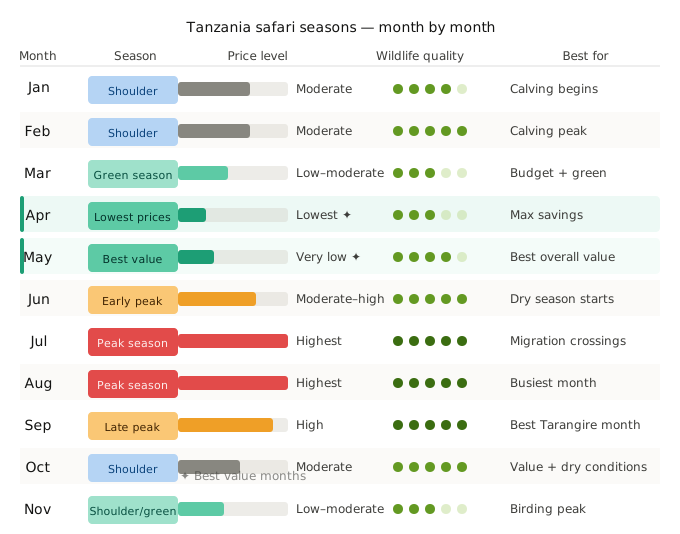
| Month | Season | Price Level | Wildlife Quality | Best For |
|---|---|---|---|---|
| January | Shoulder | Moderate | Excellent (calving) | Photography, calving season |
| February | Shoulder | Moderate | Excellent (calving peak) | Calving drama, predators |
| March | Early green | Low-moderate | Very good | Budget + green landscape |
| April | Green/low | Lowest | Good-excellent | Maximum savings, privacy |
| May | Green/low | Very low | Good → Very good | Best overall value |
| June | Early peak | Moderate-high | Excellent | Early dry season, value |
| July | Peak | Highest | Outstanding | River crossings |
| August | Peak | Highest | Outstanding | Migration peak |
| September | Late peak | High | Outstanding (Tarangire) | Tarangire elephant peak |
| October | Shoulder | Moderate | Excellent | Value + dry conditions |
| November | Shoulder | Low-moderate | Very good (birds) | Birders, budget |
| December | Shoulder/peak | Moderate-high | Very good | Early Dec value; late Dec premium |
What the Wildlife Actually Looks Like in the Cheap Months
This is the question we get asked most often about green season safaris — and it deserves an honest, detailed answer.
April and May: What You Will and Will Not See
What you will see: All of Tanzania’s permanent resident wildlife — lions, leopards, cheetahs, elephants, buffalo, hippos, zebra, giraffe, wildebeest herds, and a full representation of predators. The Ngorongoro Crater’s resident population of 25,000 animals is present in its entirety. Tarangire’s permanent elephant residents are abundant. All parks have their year-round wildlife fully intact.
What changes: Animals are more dispersed because water is abundant across a wider area, so they are not forced to concentrate at single water points as they are in the dry season. Vegetation is denser, which means you may need to scan more carefully to find animals in tall grass. Sightings require more patience and more skilled guiding — which is why booking with an experienced local operator like Affordable International Travel Ltd makes a real difference.
What is uniquely excellent: Birdwatching reaches its peak. Migratory species from Europe and Asia are present through November–April, and breeding plumage on resident species is extraordinary. The Serengeti’s calving drama (January–March) is at full intensity. The landscape is genuinely, strikingly beautiful — vivid green grass, dramatic clouds, golden afternoon light, and misty mornings.
The rain reality: Our guides confirm that in a typical April or May, rains arrive in the afternoon or evening — roughly 3–5 hours of heavy rain over a 24-hour period, often concentrated between 2pm and 6pm. Morning game drives from 6am to midday are conducted in completely dry, fresh, bright conditions the overwhelming majority of the time. You are not trapped in a lodge watching rain — you are out in the bush with nobody else for company.
How Much Can You Actually Save? Real Numbers
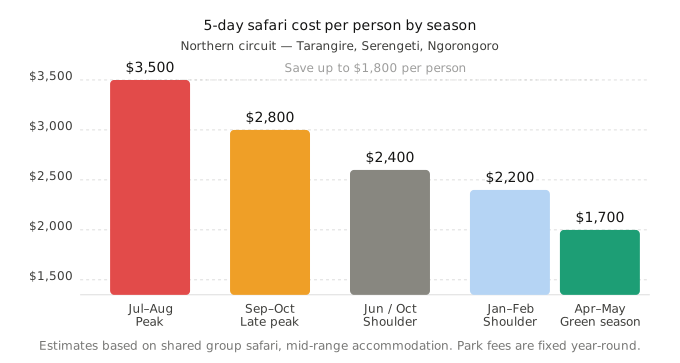
The potential savings from choosing the right month are substantial. Here is a concrete illustration using current pricing across our packages:
A 5-day northern circuit safari (Serengeti, Ngorongoro, Tarangire):
| Travel Month | Approximate Cost Per Person | Notes |
|---|---|---|
| July–August (peak) | $2,500–$3,500 | Full peak rates, book 6+ months ahead |
| June / September–October | $2,200–$2,800 | Shoulder rates, excellent conditions |
| January–February | $2,000–$2,500 | Calving season, good pricing |
| March | $1,800–$2,200 | Early green savings begin |
| April–May | $1,500–$2,000 | Maximum savings window |
| November | $1,800–$2,200 | Short rains, good value |
The difference between an April safari and a peak July safari on the same itinerary can be $500–$1,500 per person. For a couple, that is $1,000–$3,000 in total savings — more than enough to add a Zanzibar beach extension, a Kilimanjaro climb, or simply return home with more money in your pocket.
Our most affordable packages — the 2-day Tarangire and Lake Manyara safari from $700 per person, the 3-day Tarangire, Lake Manyara, and Ngorongoro safari from $1,100 per person, and 5-day circuits from $2,000 per person — are all available year-round, with the green season representing the most competitive entry pricing across the entire range.
Which Parks Are Best Value by Season?
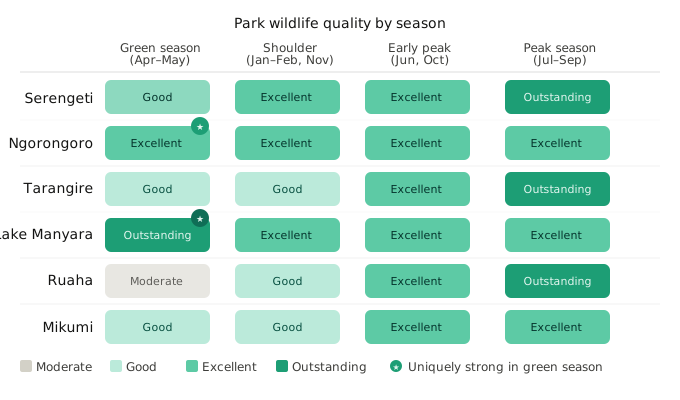
Not all Tanzania parks respond equally to seasonal pricing and conditions. Here is how each major park performs across the year’s cheapest months:
Ngorongoro Crater — Excellent Year-Round, Best Value in Green Season
The Ngorongoro Crater is Tanzania’s most season-independent park. Its resident wildlife population — all 25,000 animals — stays year-round, and the crater’s enclosed geography means wildlife concentration is high regardless of rainfall or dry conditions. This makes it uniquely valuable in the green season: you pay the lowest accommodation rates of the year while the wildlife experience changes least of any park.
Our Ngorongoro safari packages work in every month, but the April–May green season pricing makes the crater’s relatively high entrance fee ($70.10/day) much easier to justify when lodge costs are 30–50% lower.
Tarangire — Best in Dry Season, Still Good in Green Season
Tarangire is at its absolute peak in September (best overall month) and July–August for elephant density. The green season offers good elephant and bird experiences at lower prices, but the extraordinary dry-season concentration of wildlife at the Tarangire River is genuinely reduced. For pure elephant drama, save Tarangire for June–October if budget allows. For a beautiful, affordable, and less crowded Tarangire experience, March–May delivers real satisfaction.
Serengeti — Great Migration Timing Matters, But Off-Season Delivers
The Serengeti has something exceptional to offer in every month — calving in the south (January–February), river crossings in the north (July–October), and year-round permanent resident wildlife throughout. For budget travellers, April and May in the central Serengeti deliver excellent game drives with dramatic landscapes at the lowest prices of the year. The permanent predator populations — lions, leopards, cheetahs — are present and active.
Lake Manyara — Strong Year-Round, Outstanding in Green Season
Lake Manyara is one of Tanzania’s most consistent year-round performers and one of the parks that improves most in the green season. Flamingos on the lake, brilliant birdwatching in the forest, and tree-climbing lion sightings are all excellent through the wetter months. Because Manyara can be done well in a single day, its low accommodation cost impact in green season is particularly significant.
Mikumi — Best Accessibility, Good Year-Round
Mikumi is Tanzania’s most road-accessible park from Dar es Salaam and delivers reliable wildlife year-round. March and April offer green season pricing and a lush Mkata Floodplain, while the dry season (June–October) brings wildlife to the water sources in impressive numbers. For budget travellers based in Dar es Salaam or Zanzibar, Mikumi’s year-round accessibility and green season prices make it consistently excellent value.
Ruaha — Remote, Exceptional, Best in Dry Season
Ruaha National Park is at its best from June to October when the Great Ruaha River is the central gathering point for massive wildlife concentrations. Some remote camps in Ruaha close during the heaviest rains (March–April). For budget travellers targeting Ruaha, May (as rains ease and camps reopen) through October represents the best value window.
8 Expert Tips for Booking the Cheapest Tanzania Safari
1. Target late May or early October. These are the “golden windows” — conditions that closely approach peak-season quality at prices that still reflect the preceding low season. Late May specifically is a consistent standout: green season rates, improving game viewing, and increasing wildlife concentration as the dry season arrives.
2. Be honest about the rain. If you research what green season rain in Tanzania actually means — typically afternoon showers, not all-day downpours — rather than assuming the worst, April and May immediately become far more attractive options. Our guides are in Tarangire and the Serengeti in April every year. The morning game drives are typically dry, the skies are dramatic, and the parks are empty.
3. Book a group departure over a private vehicle. In any month, a shared group vehicle costs significantly less per person than a private arrangement. Our group safari packages spread vehicle and guide costs across 4–6 passengers. Combine this with green season timing and you access Tanzania’s best parks at the absolute lowest cost the industry offers.
4. Combine parks on a multi-day itinerary. The per-day cost of a safari falls as the trip length increases, because vehicle and guide costs are amortised over more days. A 3-day safari from $1,100 per person covers three parks more efficiently per park than three separate single-day visits would.
5. Consider camping. Tanzania’s public campsite network inside TANAPA-managed parks is operational year-round and priced far below lodge accommodation. In green season, camping at a park-adjacent or inside-park campsite combines the cheapest accommodation option with the cheapest seasonal pricing — the most aggressive cost reduction strategy available.
6. Book directly with a local Tanzanian operator. International booking platforms add margin at every layer. Booking directly with Affordable International Travel Ltd means your money reaches guides, local communities, and parks rather than overseas commission structures. This also means we can be transparent with you about seasonal pricing and help you identify the best value window for your specific dates.
7. Be flexible on departure dates. Even within the same month, mid-week departures can be slightly cheaper than weekend departures at some properties. If your schedule allows flexibility of a few days either way, ask our team about the best value departure dates for your preferred itinerary.
8. Read what Tanzania’s own tourism authorities say. The Tanzania Tourism Board provides comprehensive seasonal information and has been actively encouraging year-round visitation as part of its strategy to distribute tourism benefits more evenly. Their materials confirm that the green season offers genuine wildlife experiences and are a reliable reference point for understanding what each month delivers.
Green Season Safari: What Our Guests Actually Say
After years of running green season safaris at Affordable International Travel Ltd, the feedback from guests who travel in April, May, and November is remarkably consistent. Most arrive with some anxiety about what the rain will mean — and most leave saying it was among the best wildlife experiences they have had.
The specific things green season guests most frequently report as unexpected positives: the complete absence of other vehicles at sightings, the quality of early morning light for photography, the lushness and visual drama of the landscape, the intimacy of having a guide’s full attention without competition from a dozen other safari groups at the same sighting, and the simple pleasure of feeling like you are experiencing something genuinely wild and undiscovered rather than a heavily trafficked wildlife corridor.

Frequently Asked Questions
Is the green season really worth visiting Tanzania for a safari?
Yes — for most budget-conscious travellers, the green season (March–May) is not just acceptable, it is excellent. Wildlife is present and active in all parks. The rain typically falls in the afternoon and evening, leaving morning game drives unaffected. Accommodation discounts of 30–50% are real and significant. The main trade-off is that animals are more dispersed (less concentrated at water points) and vegetation is denser, requiring more patient and skilled game viewing. With an experienced local guide, green season safaris consistently deliver memorable wildlife experiences.
Do Tanzania’s national park fees change with the season?
No. Tanzania’s TANAPA park entrance fees are flat-rate year-round — the same in April as in August. The Serengeti charges $70 per adult per day in every month. This is a significant point of difference from Kenya’s Masai Mara, which charges $100 in low season and $200 in high season. Tanzania’s flat park fee structure means the entire seasonal cost difference comes from accommodation pricing, and the park value you receive per dollar of entrance fee is identical in April and July.
Which month has the absolute lowest safari prices in Tanzania?
April is typically the cheapest month across the broadest range of Tanzania’s parks and accommodation types. The long rains are at their heaviest, tourist numbers are at their lowest, and most lodges and camps offer their deepest green season discounts. May is a very close second and arguably offers better overall value because conditions are improving while prices remain near their floor.
Can I see the Big Five in the cheap season?
Yes. The Big Five — lion, leopard, elephant, buffalo, and rhinoceros — are year-round residents in their respective parks. The Ngorongoro Crater’s black rhino population is present every month. Tarangire, the Serengeti, Ruaha, and Nyerere all have their large mammal populations throughout the year. Predator activity in the green season can actually be higher than in the dry season because young animals born during and after the calving season are more vulnerable, keeping lions and cheetahs actively hunting.
Should I avoid travelling in April and May entirely?
No — but you should travel with clear expectations and with a good operator. April and May are not for travellers who want guaranteed dry, dusty conditions and maximum game viewing visibility at every moment. They are ideal for travellers who want genuine value, privacy, beautiful landscapes, outstanding birdwatching, and a wilder, less orchestrated safari experience. If your primary goal is the Great Migration river crossings in the northern Serengeti, you genuinely need July–September. For everything else, green season is a legitimate and often superior choice.
How far in advance do I need to book a green season Tanzania safari?
Green season offers much more booking flexibility than peak season. While we always recommend booking as early as possible to secure your preferred departure dates and accommodation, green season safaris can often be arranged with 4–8 weeks of lead time rather than the 4–6 months advisable for peak season. Affordable International Travel Ltd can often accommodate green season bookings with relatively short notice — contact our team with your dates and we will confirm availability quickly.
What is the cheapest way to combine a safari with Kilimanjaro?
Combining a Kilimanjaro climb with a post-summit safari in March–May is one of the smartest itinerary combinations available in Tanzania. Kilimanjaro’s best climbing months are January–March and June–October — the dry conditions ideal for the summit approach. A March combination allows you to climb in excellent conditions and then transition directly to a green season safari at discounted lodge rates. Our Kilimanjaro packages start from $2,000 per person, and combining them with a 3–5 day safari creates a comprehensive Tanzania adventure at a total cost well below the peak season equivalent.
Conclusion
Tanzania’s safari calendar does not have a bad month — it has different months, with different wildlife experiences, different landscapes, and very different price tags.
If you want the most safari for the least money, April and May are your answer. Accommodation discounts of 30–50%, genuine wildlife throughout all parks, and near-private game drives in landscapes that look nothing like the sun-bleached photographs that dominate peak-season safari marketing. It is an entirely different and, for many travellers, deeply compelling experience.
If you want peak-season conditions on a budget, late May, early June, and October give you the best value outside the full green season — dry conditions and excellent wildlife at prices that are meaningfully below July and August.
If the Great Migration river crossings are your specific goal, July–September is non-negotiable — but go in knowing you will pay peak prices and share the experience with Tanzania’s largest tourist crowds of the year.
At Affordable International Travel Ltd, we design safaris for all twelve months. We are a 100% Tanzanian-owned and operated company, and our guides are in these parks year-round — in every season, at every park. We know exactly what each month delivers and we will tell you honestly what your budget can achieve in the window you have available.
Our packages start from $700 per person for a 2-day safari and scale to comprehensive 5-day northern circuit itineraries from $2,000 per person, fully inclusive with no hidden fees. Whatever month you are considering, talk to us first. We will help you choose the dates that give you the most Tanzania for your money.
Request your free, no-obligation Tanzania safari quote today →
Explore Our Tanzania Safari Packages by Destination
- All Tanzania Safari Tours — Browse by duration and price
- Serengeti National Park Safari
- Ngorongoro Crater Safari
- Tarangire National Park Safari
- Lake Manyara Safari
- Ruaha National Park Safari
- Mikumi National Park Safari
- 2 Days Tarangire and Lake Manyara — from $700/person
- 3 Days Tarangire, Lake Manyara, and Ngorongoro — from $1,100/person
- 5 Days Lake Manyara, Serengeti, and Ngorongoro — from $2,000/person
- Climbing Mount Kilimanjaro
- All Tanzania Safari Destinations