
The most common safari pricing mistakes tourists make include booking through overseas middlemen instead of local operators, misunderstanding what park fees cover, choosing peak season without checking off-peak alternatives, packing too many parks into one itinerary, and confusing accommodation tier with wildlife quality. These mistakes can add $1,000–$3,000 to a trip without improving the experience.
You’ve dreamed of watching elephants cross the Serengeti or standing at the rim of Ngorongoro Crater. But somewhere between your first Google search and hitting “book,” the price tag quietly doubled — and you’re not sure why.
The frustrating truth is that most safari pricing mistakes happen before anyone boards a plane. They’re made at the planning stage, often by travelers who are excited but don’t yet know how Tanzania’s safari system works. The costs aren’t random. They follow very predictable patterns — patterns that locals, experienced guides, and operators like International Affordable Travel see repeat themselves every season.
This guide breaks down the seven most damaging safari pricing mistakes tourists make, what they actually cost you, and — more importantly — how to sidestep every single one.
Mistake 1: Booking Through Overseas Agents Instead of Local Operators
This is the single most expensive mistake you can make, and it’s the one most first-time safari travelers commit without realising it.
When you book through a travel agency based in London, New York, or Sydney, your money passes through multiple hands before it reaches Tanzania. Each intermediary takes a margin. By the time your safari is priced and packaged, you could be paying 20–40% more than if you’d gone directly to a Tanzanian operator — for the exact same game drives, the exact same parks, and often the exact same accommodation.
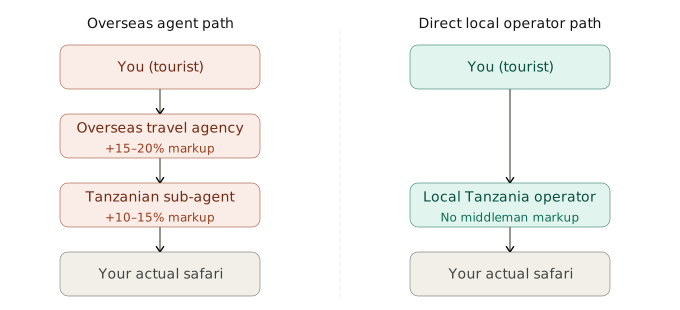
What makes this mistake so common is that overseas agencies market themselves as “safari specialists.” They have polished websites, professional photos, and recognisable brand names. But they’re selling the same parks and the same wildlife viewing slots as local operators — at a significant premium.
Booking directly with a locally based operator like International Affordable Travel means your money funds guides, vehicles, and expert itinerary planning — not marketing offices overseas.
Mistake 2: Not Understanding What Park Fees Actually Cover
Tanzania’s national parks charge government-set conservation fees, managed by the Tanzania National Parks Authority (TANAPA) and the Ngorongoro Conservation Area Authority (NCAA). These are non-negotiable, fixed charges — but how operators bundle and communicate them is where confusion (and overcharging) creeps in.
The 2025–2026 fee structure for international non-residents is roughly:
- Serengeti: $70 per adult per day (entry) + $60–$71 concession fee per night if sleeping inside the park
- Tarangire / Lake Manyara: $50 per adult per day
- Ngorongoro Crater: $70+ per adult, including crater descent fees and mandatory ranger
These fees are also subject to 18% VAT. What some operators — particularly those quoting vague “all-inclusive” rates — do is either bundle fees at inflated amounts or omit them entirely from quoted prices, then add them later.
The fix: Always request a line-by-line price breakdown. If a quote doesn’t separate accommodation, transport, park fees, and meals, push until it does. Reputable operators will provide this without hesitation.
Mistake 3: Assuming Luxury Accommodation Means Better Wildlife
This is one of the most psychologically convincing myths in safari planning, and it’s costing travelers hundreds of dollars per night for no improvement in wildlife access.
A $600/night luxury tented camp and a $180/night mid-range lodge in the same park boundary use the same game-drive tracks, see the same lions, and share the same sunset. The difference is thread count, not wildlife density.
What actually matters for good game viewing:
- Time inside the park — more days beats better beds
- Position in the park — lodges near key wildlife corridors like the Seronera valley in the Serengeti outperform remote luxury properties
- Guide quality — an experienced, passionate Tanzanian guide finds more wildlife than the most expensive vehicle can
For budget-smart travelers, camping safaris in Tanzania and mid-range lodge safaris frequently deliver equal or better wildlife experiences than luxury alternatives, at a fraction of the cost.
Mistake 4: Cramming Too Many Parks into One Trip
This is especially common among first-time safari planners from the US or Europe, who look at a map, see six famous parks within what appears to be a manageable distance, and try to visit them all in seven days.
Africa is vast. Distances between Tanzania’s northern circuit parks are significant. Driving from Arusha to the northern Serengeti takes a full day. Each park transition eats into game-drive time, increases fuel costs, and adds wear to safari vehicles — costs that get baked into your quote.
An itinerary that visits four parks in five days means approximately two full days of transit. An itinerary that visits two parks in five days means five mornings and evenings in prime wildlife territory.
Comparison of game time vs transit time for 5-day safari itineraries
5-day safari — game drive hours available
4-park itinerary (Serengeti + Ngorongoro + Tarangire + Manyara)
2-park itinerary (Serengeti + Ngorongoro)
Fewer parks = more time watching wildlife, fewer hours in a vehicle on dirt roads.
The smarter approach: choose two or three parks that complement each other geographically. The classic northern circuit of Serengeti, Ngorongoro, and Tarangire can be covered efficiently, as explored in the Tanzania safari destinations guide. Add parks on a second trip — not a first.
Mistake 5: Booking Peak Season Without Considering Shoulder Alternatives
Tanzania’s peak season (June to October) coincides with the Great Wildebeest Migration in the northern Serengeti and Maasai Mara region. Demand is highest, and prices for accommodation, group joining packages, and even flights spike accordingly.
But here’s what many travelers don’t realise: excellent wildlife viewing is available year-round in Tanzania’s parks. The dry season brings animals to waterholes in Tarangire and Lake Manyara. The green season (November to May) brings lush landscapes, bird-watching at its finest, significantly fewer tourists, and lodge rates that can be 20–40% lower than peak-season equivalents.
If seeing the Great Migration is your primary goal, timing matters and the cost premium is worth it. But if you’re after lions, elephants, hippos, and giraffes — Tanzania’s parks deliver them reliably at any time of year. Understanding this distinction can save thousands.
Mistake 6: Ignoring Group Safari Options
Most tourists automatically assume a private safari is superior, and many don’t even ask about group joining options. This assumption costs solo travelers and couples hundreds of dollars per day.
A private safari vehicle for two people means you bear the full cost of the guide, vehicle, fuel, and park vehicle fees alone. A group joining safari splits these costs among four to six travelers, often cutting the per-person price by 35–50% while delivering the same professional guide, the same 4×4 vehicle, and the same game-drive routes.
Group safaris are particularly well-suited to:
- Solo travelers looking to share costs without compromising quality
- Couples traveling on a mid-range or budget
- Travelers open to meeting other wildlife enthusiasts from around the world
The trade-off is some flexibility in timing — group vehicles follow shared schedules rather than your personal pace. For those who can live with that, it’s one of the most effective budget tools available.
Mistake 7: Ignoring What’s Excluded From the Price
Quoted safari prices often exclude several costs that, taken together, can add several hundred dollars to your final bill. The most common hidden or excluded items include:
- Visa fees — $50 USD for most nationalities, $100 for US citizens
- Balloon safari surcharges — an optional experience in the Serengeti that typically costs $500–$600 per person
- Guide gratuities — the industry standard is approximately $15–$20 per person per day for a guide and $5 per person per night for accommodation staff
- Optional Zanzibar beach extension — popular but separately priced from any mainland package
- Travel insurance — rarely included and absolutely essential
When comparing quotes across operators, a lower headline price sometimes reflects more exclusions, not a better deal. Comparing apples to apples means requesting full inclusions lists in writing.
If a Zanzibar extension or a balloon flight over the Serengeti is on your wishlist, build it into your planning budget from day one — don’t treat it as a possible add-on and get surprised later.
Tanzania safari pricing tiers: budget, mid-range, and luxury
Prices are per person per day estimates for 2025–2026. Park fees add $50–$160/person/day depending on park and accommodation type.
Explore the full breakdown in the Tanzania safari tours overview to compare specific packages across price ranges.
Frequently Asked Questions About Safari Pricing Mistakes
What is the most expensive safari pricing mistake tourists make?
Booking through an overseas travel agency instead of directly with a locally based Tanzanian operator is consistently the costliest mistake. The extra layers of commission and markup between you and the actual safari operator can add $500–$2,000 to a standard week-long trip — for absolutely no improvement in wildlife access or guide quality.
Are park fees included in Tanzania safari packages?
They should be, but not all operators are transparent about this. Reputable operators include TANAPA conservation fees, crater fees, and vehicle entry fees in their quoted price. Always ask for an itemised quote showing park fees as a separate line. For the 2025–2026 season, Serengeti entry alone is $70 per adult per day for international non-residents, before accommodation concession fees and VAT.
Is a budget safari in Tanzania worth it?
Absolutely. Budget safaris — whether camping or using basic lodge accommodation — access the exact same national parks, game-drive routes, and wildlife as mid-range and luxury alternatives. The main difference is accommodation comfort, not wildlife quality. A well-planned budget camping safari can be a deeply rewarding experience at a fraction of luxury prices.
When is the cheapest time to do a Tanzania safari?
The green season — roughly March to May and parts of November — offers the lowest accommodation rates, thinner crowds, and excellent bird-watching. While heavy rain can limit some roads, most parks remain accessible and wildlife viewing, particularly in Ngorongoro and Tarangire, remains exceptional. Shoulder months like November and early December deliver a practical balance between cost savings and game activity.
How do I know if a safari quote is fair?
Request a full itemised breakdown: accommodation, transport, guide, park fees, meals, and any optional activities listed separately. Compare this breakdown across at least two or three operators. Any quote that lumps everything into one opaque total is a warning sign. Also verify that the operator is registered and licensed — legitimate Tanzanian operators are affiliated with industry bodies.
What hidden costs should I budget for beyond the package price?
Budget an extra $150–$250 per person for tips (guides, drivers, camp staff), $50–$100 for a Tanzanian visa, and $100–$200 for travel insurance. Balloon rides over the Serengeti — a popular optional add-on — cost approximately $500–$600 per person. International flights to Kilimanjaro or Arusha airports are always separate and should be factored in early during budget planning.
Is a private safari always better than a group joining safari?
Not necessarily. Group joining safaris offer the same professional guides and game-drive routes at significantly lower per-person cost. For solo travelers or couples without strong flexibility requirements, a group joining safari is often the smartest financial decision available. Private safaris become worth the premium for families with children, travelers with very specific timing needs, or those seeking a more intimate, customised pace.
Does more time in one park beat more parks in one trip?
Yes — almost always. Two mornings and two evenings in the Serengeti produce far more meaningful wildlife encounters than a rushed afternoon in four different parks. Transit time, park entry and exit logistics, and accommodation changeovers consume a huge proportion of a short safari trip. Experienced operators consistently advise depth over breadth.
Conlcusion
The mistakes covered in this guide follow a clear pattern: they come from working with the wrong operator structure, misunderstanding pricing, and trying to do too much too fast. None of them are inevitable.
With the right local knowledge, a clear itemised quote, and a focused itinerary, a Tanzania safari can be one of the most extraordinary and genuinely affordable experiences of your life — from witnessing the Great Migration across the Serengeti to descending into the ancient caldera of the Ngorongoro Crater.
Key takeaways before you book:
- Book directly with a licensed, locally based Tanzanian operator
- Always request a fully itemised quote, park fees included
- Fewer parks, more time = better wildlife encounters
- Consider group joining if traveling solo or as a couple
- Green season and shoulder months offer excellent value
The team at International Affordable Travel — a 100% Tanzanian-owned operator — offers transparent, tailored pricing across all safari styles and budgets. Request a free safari quote and get a breakdown you can actually compare.