
A safari from Arusha reaches five major parks: Arusha National Park (under an hour away), Tarangire and Lake Manyara (about 2 hours), Ngorongoro Crater (about 4 hours), and the Serengeti (6–7 hours by road or a short flight). Most travellers spend 3 to 7 days. On a well-run budget trip, expect roughly $200–$350 per person per day.
If you’ve booked a flight into northern Tanzania, your safari almost certainly starts in Arusha — and the choices you make here decide how much you see, how far you drive, and what you pay. The problem is that “safari from Arusha” returns a hundred operators quoting wildly different prices for trips that look identical on paper.
I’m Zawadi Baraka Kivuyo, lead safari guide at Affordable International Travel. In 14 years guiding out of Arusha, I’ve driven these roads to every northern park in every season and led more than 900 clients through them. This guide gives you the honest version: which parks you can actually reach, how long each trip takes, what the park fees are, and how to spend your budget where it counts. No “prices vary.” Real numbers.
Safaris You Can Book From Arusha
Every northern-circuit safari below departs from Arusha. Prices are starting rates per person and shift with group size, season and whether you camp or stay in lodges.
2-Day Safaris
From $700 per personTarangire & Lake Manyara Safari
Big elephant herds and tree-climbing lions — the lightest driving of any trip.
From $700 pp
View & bookTarangire & Ngorongoro Crater Safari
Tarangire’s herds paired with a Big Five game drive on the crater floor.
From $700 pp
View & bookLake Manyara & Ngorongoro Crater Safari
Birdlife and hippos at Manyara, then the Big Five chance in the crater.
From $700 pp
View & bookArusha National Park & Ngorongoro Crater Safari
Closest-park start — ideal if you land late and want to begin fast.
From $700 pp
View & book3-Day Safaris
From $1,100 per personArusha, Tarangire & Ngorongoro Crater Safari
A short, complete three-park loop starting from Arusha.
From $1,100 pp
View & bookTarangire, Lake Manyara & Ngorongoro Safari
The classic three-park short circuit — herds, birds and the crater.
From $1,100 pp
View & bookGame-Drive, Culture & Bush Walk: Tarangire & Ngorongoro
Game drives plus a guided walk and a village visit for deeper culture.
From $1,500 pp
View & bookSerengeti Great Migration & River Crossing Safari
Flies you into the Serengeti to skip the long drive and chase the herds.
From $1,511 pp
View & bookNgorongoro Crater Rim Walk & Empakaai Crater Hike
For walkers who want the highlands on foot, away from the vehicle.
From $2,000 pp
View & book4-Day Safaris
From $1,800 per personTarangire, Ngorongoro Crater & Serengeti Safari
The first length that reaches the Serengeti properly — three headline parks.
From $1,800 pp
View & bookLake Manyara, Serengeti & Ngorongoro Crater Safari
Manyara’s birdlife, the Serengeti plains and the crater floor in four days.
From $1,800 pp
View & bookNgorongoro Crater & Serengeti Safari
Focused on the two big-game stars of the northern circuit.
From $1,891 pp
View & bookTarangire & Serengeti Balloon Safari
Adds a sunrise hot-air balloon flight over the Serengeti plains.
From $2,591 pp
View & book5 & 6-Day Safaris
From $2,000 per personTarangire, Ngorongoro Crater & Serengeti Safari
Two nights inside the Serengeti — the difference between glimpsing and watching predators.
From $2,000 pp
View & bookLake Manyara, Serengeti & Ngorongoro Crater Safari
A relaxed five-day run across three of the circuit’s best parks.
From $2,000 pp
View & bookTarangire, Lake Manyara, Ngorongoro Crater & Serengeti
All four northern parks at an unhurried pace — the full circuit.
From $2,500 pp
View & bookDon’t See Your Exact Trip?
We build custom safaris from Arusha around your dates, budget and travel style — you pick the days, the parks and the comfort level, and we price it honestly. Send your dates and group size and we’ll reply with a real itinerary and quote.
Plan your safari on WhatsAppWhy does almost every Tanzania safari start in Arusha?
Arusha is the gateway to Tanzania’s northern circuit — the run of parks that holds the Serengeti, Ngorongoro Crater, Tarangire and Lake Manyara. It sits roughly in the centre of all four, which is why operators, guides and vehicles are based here rather than at the parks themselves.
The practical reason is the airport. Most international travellers land at Kilimanjaro International Airport (JRO), about 50km/31mi from Arusha, which is a transfer of roughly an hour. From Arusha town you can be in a park gate the same day. Try to organise a northern safari from anywhere else in Tanzania and you add a long internal flight or a full day of driving before the safari even begins.
If you want to compare the parks themselves before reading on, our Tanzania safari destinations guide breaks each one down by wildlife and season.
Which parks can you reach on a safari from Arusha?
Five parks are realistically within reach, and they fall into two groups: close parks you can do as short trips, and far parks that need a multi-day plan.
The close group is Arusha National Park, Tarangire and Lake Manyara. Arusha to Tarangire is about 120km/75mi and Arusha to Lake Manyara about 130km/81mi — both roughly two hours on tarmac. Arusha National Park is almost on the doorstep, under an hour away, which makes it the natural choice if you only have a day.
The far group is Ngorongoro Crater and the Serengeti. The Ngorongoro Crater is about 190km/118mi from Arusha — a drive of roughly 3.5 to 4 hours, and central Serengeti (Seronera) is about 335km/208mi, which takes 6 to 7 hours by road. That’s why a one-day Serengeti trip from Arusha makes no sense — you’d spend the whole day in the vehicle.
Here’s how the parks compare for planning purposes:
| Park | Distance from Arusha | Drive time | What you’ll see | Best for |
|---|---|---|---|---|
| Arusha National Park | ~30 km | Under 1 hr | Giraffe, buffalo, colobus, flamingos | A day trip, or your first day |
| Tarangire National Park | ~120 km | ~2 hrs | Big elephant herds, baobabs, lions | Short safaris, dry-season game |
| Lake Manyara National Park | ~130 km | ~2 hrs | Tree-climbing lions, flamingos, hippos | Half-day add-on, birdlife |
| Ngorongoro Crater | ~190 km | ~4 hrs | Big Five in one crater floor, rhino | High chance of seeing everything |
| Serengeti (central) | ~335 km | ~6–7 hrs | Big cats, plains game, the Migration | 5+ day trips, predator action |
Driving distances and times from Arusha to the five northern-circuit parks. Times assume a normal safari vehicle and an early start — wildlife stops along the way always add time.
A quick note on the Serengeti road: you don’t drive there in one shapeless slog. The route climbs through the Ngorongoro Conservation Area, so most operators (us included) break the journey with a game drive or an overnight rather than racing through. If your days are tight, flying one leg into or out of the Serengeti is worth pricing — I’ll come back to that.
How many days do you need for a safari from Arusha?
The honest answer depends on whether you want the Serengeti. Reach the close parks in two or three days; reach the Serengeti properly and you need five or more. Here’s how the common trip lengths map to a realistic itinerary.
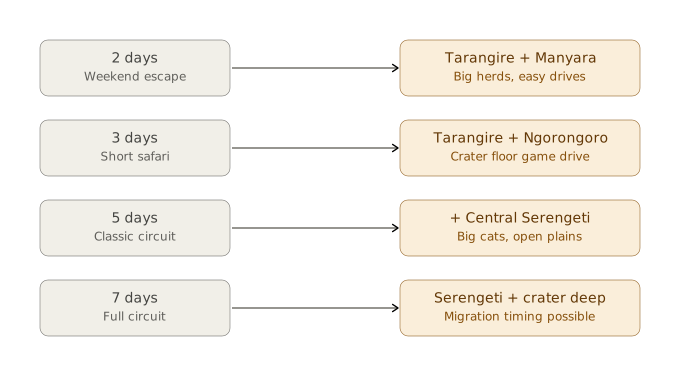
Two short notes on the extremes. A 2-day trip works, but the day-one drive eats your morning, so you really get one and a half days of game viewing — fine for a taster, not for the Serengeti.
At the other end, 7 days lets you sleep inside the Serengeti for two or three nights, which is the difference between glimpsing predators and watching them hunt. If you only have a single day, you’re better off with a proper day trip from Arusha to a close park than trying to stretch a full safari into 24 hours.
How much does a safari from Arusha cost?
A quality budget safari from Arusha runs roughly $200–$350 per person per day, and the single biggest line item is something no operator controls: government park fees. Understanding those fees is how you spot an honest quote from a too-good-to-be-true one.
Park entry fees are set by the Tanzania National Parks Authority (TANAPA) and the Ngorongoro Conservation Area Authority, charged per person for each 24 hours. The bands look like this:
- Tarangire, Lake Manyara and Arusha National Park: roughly $50–$60 per adult per day
- Serengeti and the Ngorongoro Conservation Area: around $70–$83 per adult per day
- Ngorongoro Crater descent: a service fee of $295 per vehicle, each descent
- On top of these, an 18% VAT applies, plus a daily vehicle fee
So before a single guide, vehicle, meal or campsite is paid for, two people spending a day in the Serengeti plus a crater descent already owe several hundred dollars in fees alone. That’s the maths behind why a “$99 Serengeti day from Arusha” can’t be real — the park gate costs more than that.
Where you genuinely save is on the parts an operator does control: a local guide instead of an imported one, a well-kept Land Cruiser shared sensibly, sound camping or modest lodges instead of luxury tented camps, and no foreign agency markup.
That’s the gap we work in. For the full line-by-line breakdown by trip length, see our Tanzania safari cost guide — and because TANAPA fees and seasonal rates move, our operations team confirms live park fees before any quote goes out, so the number you’re given is the number you pay.
Should you fly into Kilimanjaro Airport or use a road transfer?
For a safari from Arusha, fly into Kilimanjaro International Airport (JRO) — it’s the closest international gateway and sits about an hour from town. Dar es Salaam is a domestic flight or a very long drive away and only makes sense if you’re combining the northern circuit with a southern park or Zanzibar.
The other decision is whether to fly a leg of the safari itself. For trips that include the far Serengeti, flying from an airstrip back to Arusha or JRO at the end saves you the 6–7 hour return drive on your last day.
It costs more, but on a tight schedule it can be the difference between catching your international flight relaxed or anxious. On a 5-day or shorter trip I usually recommend driving in and flying out; on 7 days you have room to drive both ways and game-view the whole route.
When is the best time for a safari from Arusha?
The dry season — late June to October — is the easiest time to see animals from Arusha, because thinning water sources pull wildlife into the open and the roads stay firm.
When you drive from Arusha toward the Serengeti you pass through the Ngorongoro Conservation Area, where a transit fee applies unless you fly, and in the dry months that whole route runs smoothly.
But “best” depends on what you’re chasing. In 14 years guiding I’ve learned that Tarangire is at its most spectacular in the dry season, when its elephant herds concentrate around the river in numbers you won’t see anywhere else on the circuit.
The green season (November to May) brings lower prices, newborn animals and dramatic skies, with the trade-off of muddier tracks and taller grass. There’s no wrong month — only a month that matches your priorities, and that’s a conversation worth having before you book.
A guide’s field notes from the Arusha road
Three things I tell every client planning a safari from Arusha, learned the hard way over the years.
First, leave Arusha early. The town’s morning traffic is real, and an 8am departure can cost you 40 minutes you’ll wish you had at the park gate. We aim to be on the highway before the rush.
Second, don’t over-pack the days. New travellers often want four parks in three days. The driving swallows the wildlife time, and everyone arrives exhausted. Fewer parks, more hours actually in them — that’s the version people remember.
Third, your guide matters more than your vehicle. A sharp local guide reads the bush, knows which Tarangire gate is quicker on a given week, and finds the leopard a tired driver rolls straight past. Every guide on our team is Tanzanian, licensed, and trained here — you can meet the team before you ever get in the vehicle.
As a member of the Tanzania Association of Tour Operators (TATO), Affordable International Travel has now run more than 340 safaris and climbs for over 600 travellers from 38 countries, and most of those started exactly where yours will: Arusha.
Frequently Asked Questions About Safaris From Arusha
How far is the Serengeti from Arusha?
Central Serengeti (the Seronera area) is about 335km/208mi from Arusha, a drive of roughly 6 to 7 hours depending on road conditions and game-viewing stops along the way. The route climbs through the Ngorongoro Conservation Area, so most operators break it with a game drive or an overnight rather than driving straight through. If your schedule is tight, you can fly between an Arusha-area airport and a Serengeti airstrip in about an hour, which is worth pricing for the return leg.
Can you do a Serengeti safari from Arusha in one day?
No, not sensibly. With 6 to 7 hours of driving each way, a one-day Serengeti trip from Arusha would be almost entirely spent in the vehicle, leaving little time for wildlife. The Serengeti needs a minimum of three days to be worthwhile, and five or more to do it justice. If you only have a single day, choose a close park instead — Tarangire, Lake Manyara or Arusha National Park all deliver real game viewing within a two-hour drive.
What is the cheapest safari you can do from Arusha?
The most affordable real safari from Arusha is a one or two-day trip to a nearby park such as Tarangire or Lake Manyara, where the lower park fees (roughly $50–$60 per adult per day) and short driving keep costs down. Be cautious of any quote that seems far below the going rate — government park fees are fixed, so a price that undercuts them usually means hidden costs, an over-full vehicle, or corners cut on safety.
Which park should I visit on a short safari from Arusha?
For one or two days, Tarangire is my first recommendation, especially in the dry season, when its elephant herds and baobab landscapes are unmatched on the northern circuit. Lake Manyara pairs well with it for birdlife and its tree-climbing lions. If you have three days, add the Ngorongoro Crater — its enclosed floor gives you a strong chance of seeing the Big Five in a single drive, which no other park guarantees.
Do I need to book a safari from Arusha in advance?
For dry-season travel (June to October) and the migration months, book two to four months ahead — vehicles, guides and park-area lodges fill up. In the green season you can often arrange a trip on shorter notice. Either way, booking ahead lets your operator confirm current park fees, secure the right vehicle, and plan an early gate arrival. Last-minute trips are possible but give you fewer choices on timing and accommodation.
Is it better to fly or drive on a safari from Arusha?
Drive for the close parks — Arusha National Park, Tarangire, Lake Manyara and even Ngorongoro are all reachable in under four hours, and the road itself is part of the experience. For the far Serengeti, consider flying at least one leg: driving in lets you game-view the route, while flying out on your final day saves a long return drive before an international flight. On trips of five days or fewer, drive-in and fly-out is often the best balance of cost and time.
Planning Your Safari From Arusha
A great safari from Arusha comes down to matching your days to the right parks, understanding that fixed park fees set the floor on any honest price, and trusting a local guide to make the hours in the bush count. To recap:
- The close parks (Arusha NP, Tarangire, Lake Manyara) suit 1–3 day trips; the Serengeti needs 5+
- TANAPA and Ngorongoro park fees are the biggest cost and can’t be discounted away
- Fly into Kilimanjaro International Airport (JRO), and consider flying the Serengeti return leg
- Late June to October is easiest for game viewing; the green season trades mud for value
- Book 2–4 months ahead for the dry season and migration
You now have what you need to plan with confidence rather than guess. When you’re ready to turn this into a real itinerary and a real price, talk to me directly on WhatsApp: +255 740 453 344, or send your dates through our contact page, and I’ll tell you honestly which parks fit your time and budget.
Affordable International Travel, NSSF Commercial Complex, Moshi, Kilimanjaro Region, Tanzania 25000.