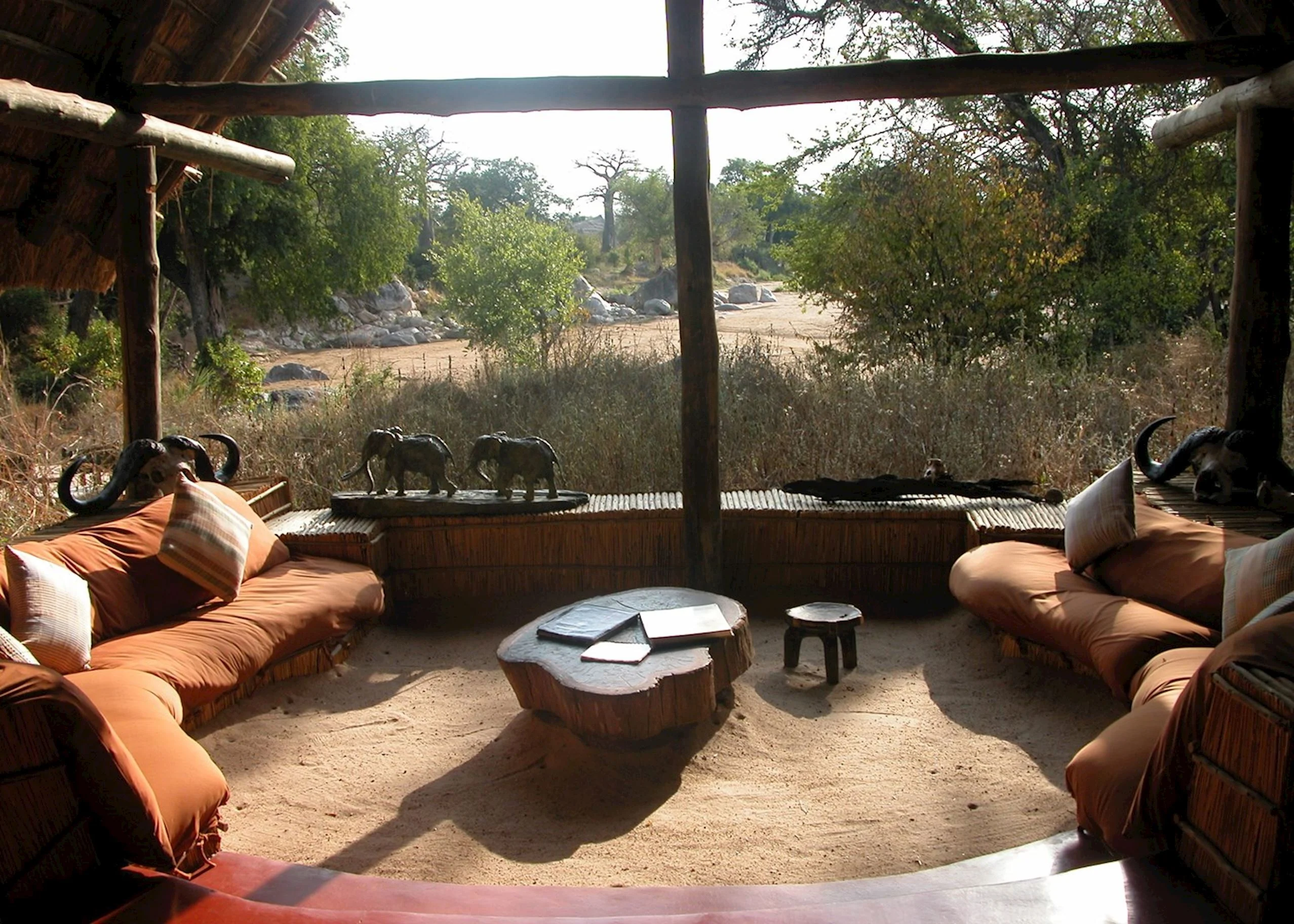

A camping safari is significantly cheaper than a lodge safari in Tanzania. Budget camping costs $30–$80 per person per night, compared to $120–$350 per person per night for mid-range lodges. On a 5-day northern circuit safari, a camping option can save $300–$1,000 per person compared to lodge accommodation, while visiting the exact same parks, with the same driver-guide, and seeing the same wildlife. The game drives are identical. The nights are different.
Once you know which Tanzania parks you want to visit, the second most impactful budget decision you will make is how you want to sleep.
Not what you want to see. Not which route you take. Not even which season you travel in — though all of those matter too. The single biggest cost variable between two travellers on the same Tanzania itinerary, covering the same parks on the same dates, is often whether they sleep in a tent or a lodge.
This surprises many first-time Tanzania safari planners. The assumption is that the wildlife — the lions, the elephants, the black rhino in the Ngorongoro Crater — is the expensive part of a safari. In reality, park entrance fees are fixed and non-negotiable.
Your $70 Serengeti entrance fee is the same whether you sleep in a canvas tent or a tented lodge with a plunge pool. What changes dramatically with your accommodation choice is everything outside the game drive hours.
This guide gives you the complete, honest picture of what each accommodation type actually involves, what it costs, who it suits, and how to make the decision that gives you the best possible safari for your budget.
At Affordable International Travel Ltd, we include both camping and lodge options across our portfolio — and we genuinely believe both can deliver an outstanding Tanzania safari experience. The question is which one is right for you.
Understanding Tanzania’s Safari Accommodation Spectrum
Before comparing costs, it is worth mapping the full landscape of Tanzania safari accommodation, because the terms are sometimes used loosely and the options span a much wider range than most travellers realise.
Public Campsites (Budget Camping)
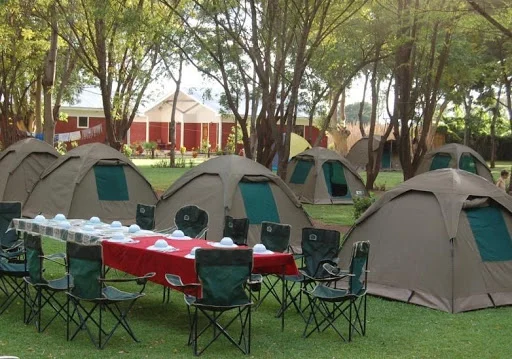
Tanzania’s Tanzania National Parks Authority (TANAPA) operates public campsites inside most national parks and conservation areas. These are the most basic accommodation option — flat areas with firepit facilities, pit latrines or basic toilets, and sometimes a simple tap for water. No permanent structures, no hot showers, no electricity.
Camping fees at public sites are $30–$50 per person per night for non-residents at most northern circuit parks. Your tent, sleeping bag, and cooking equipment travel with the safari vehicle, and your cook prepares meals at the campsite.
Special Campsites (Private Budget Camping)
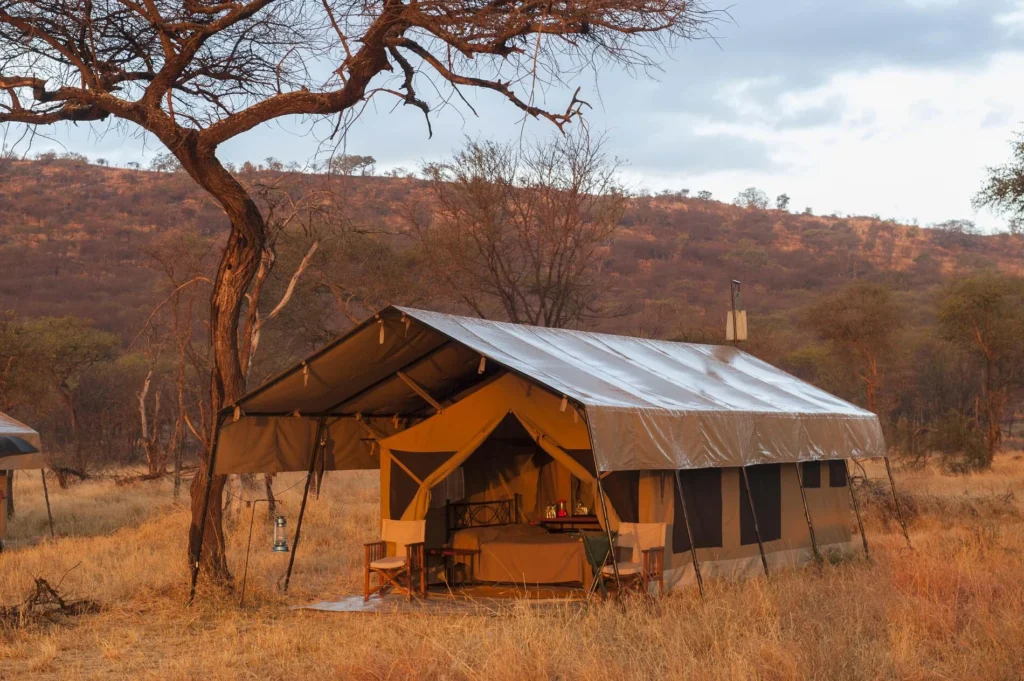
A step up from public sites, special or private campsites are reserved for exclusive use by a single group. They are typically in better-positioned locations within the parks — sometimes on a riverbank or escarpment with dramatic views — and offer a more private, quieter experience than shared public sites. Fees are higher: typically $50–$100 per group per night plus a per-person fee. When divided among a group, this can still be very cost-effective.
Budget Tented Camps (Permanent Tents with Basic Facilities)
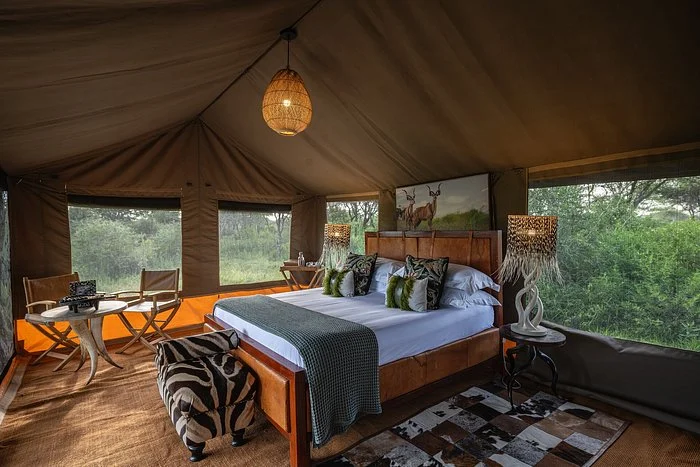
These are permanent canvas structures on raised platforms with real beds, basic en-suite or shared bathroom facilities (often bucket showers or solar-heated water), and a communal dining/lounge area. They sit between true camping and mid-range lodges in both price and comfort — typically $80–$150 per person per night full board. Many are inside or immediately adjacent to national parks.
Mid-Range Lodges and Tented Camps
Comfortable permanent accommodation with en-suite bathrooms, hot water, proper beds, full-board dining, and increasingly good service. These are the workhorses of Tanzania’s mid-range safari market and what most international travellers picture when they think of a “safari lodge.” Prices range from $120–$350 per person per night full board at the northern circuit parks.
Luxury Lodges and Exclusive Camps
The upper tier — private plunge pools, four-poster beds, infinity views, fine dining, sommelier service, and guest-to-staff ratios that feel personal and exclusive. These start from $400–$500 per person per night and can reach $1,500 or more at the most prestigious properties in the Serengeti.
This guide focuses on the comparison that matters most for budget-conscious international travellers: camping versus mid-range lodges and tented camps, as these represent the two most common options and the largest cost gap.
Camping Safari Tanzania: Full Cost Breakdown
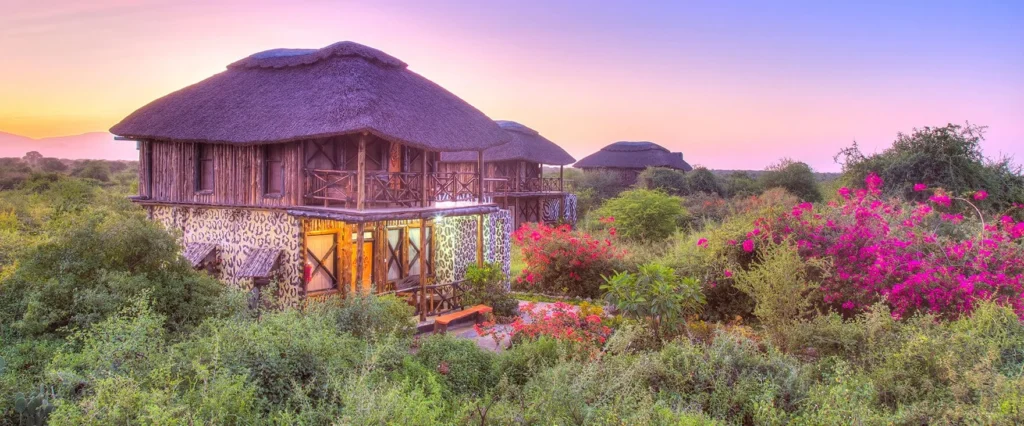
What Is Included in a Tanzania Camping Safari Package?
When you book a camping safari through Affordable International Travel Ltd, everything is taken care of. You do not need to bring camping equipment, source food, or navigate permits. Our camping safari packages include:
- All national park and conservation area entrance fees
- A certified, experienced driver-guide for all game drives
- A 4WD safari vehicle with pop-up roof
- All camping equipment: tent, sleeping bag, foam mattress, pillow, and duvet (cold nights on the Ngorongoro crater rim can be surprisingly chilly)
- A dedicated camp cook who prepares all meals at the campsite
- Full-board meals: breakfast, packed lunch for inside the park, and a hot dinner at camp each evening
- Bottled drinking water throughout
- All camping fees at public or special campsites
- Airport and hotel transfers
The only thing you bring is your personal luggage, your camera, and your appetite for adventure.
Camping Accommodation Cost Per Night
| Campsite Type | Per Person Per Night |
|---|---|
| Public campsite (TANAPA-managed) | $30–$50 |
| Special/private campsite | $50–$100 per group + per-person fees |
| Budget tented camp (permanent, basic) | $80–$150 |
5-Day Camping Safari: Full Cost Estimate
For a 5-day northern circuit camping safari covering Tarangire, Serengeti, and Ngorongoro:
| Cost Component | Per Person |
|---|---|
| Park entrance fees (5 days) | ~$306 |
| Ngorongoro crater descent (shared vehicle) | ~$33 |
| Camping fees (4 nights, public campsites) | $120–$200 |
| Safari vehicle + driver-guide (shared) | ~$120–$180 |
| Camp cook and cooking equipment | ~$40–$60 |
| All meals, full board | Included |
| Bottled water | Included |
| Transfers | Included |
| Estimated total per person | $650–$850 |
As part of a fully packaged camping safari from Affordable International Travel Ltd, this translates to all-in per-person pricing starting from around $700 for shorter 2-day combinations.
Our 4-day Tarangire, Ngorongoro, and Serengeti safari is available with camping accommodation options, and our 3-day Tarangire, Lake Manyara, and Ngorongoro package starts from $1,100 per person with accommodation to suit your preference.
The Camping Safari Experience: What It Is Actually Like
This is the part of the camping vs lodge debate that travel websites rarely cover honestly, because the reality of camping inside a Tanzania national park is genuinely different from what most people imagine — in ways that are both more challenging and more remarkable than the brochure version.
The nights. Camping inside Tanzania’s national parks means sleeping with the bush literally around you, not behind a fence. At a public campsite in the Serengeti, you may hear hyenas calling outside your tent at midnight. The Ngorongoro Crater rim Simba Campsite sometimes has buffalo grazing quietly through the camp before dawn. These are not dangerous situations when managed correctly by an experienced operator — but they are viscerally, unforgettably real in a way that waking up in a lodge room never quite is.
The mornings. Camping safaris enable the earliest possible departures for morning game drives. When you sleep inside the park, there is no drive from an outside lodge to the park gate, no queue at the entrance, and no wasted time. Your guide opens the vehicle as the first light appears and you drive directly into the park. This translates to more time at wildlife sightings and access to the most active predator hours that lodge guests often miss entirely.
The practical realities. Public campsites at most Tanzania national parks have basic toilet facilities — pit latrines are the standard, though some sites have flush toilets.
Showers are typically not available at public sites; bucket showers can sometimes be arranged by camp cooks. Temperatures at altitude (the Ngorongoro Crater rim is at 2,300 metres above sea level and can drop to near freezing at night) require proper sleeping equipment, which quality camping safari operators provide.
The social dimension. Campsite evenings have their own particular atmosphere — dinner cooked over a gas stove, a fire if conditions permit, the sounds of the African night, and conversations with your group or fellow campers. Many travellers describe this as their most treasured safari memory, precisely because no lodge can replicate it.
Lodge Safari Tanzania: Full Cost Breakdown
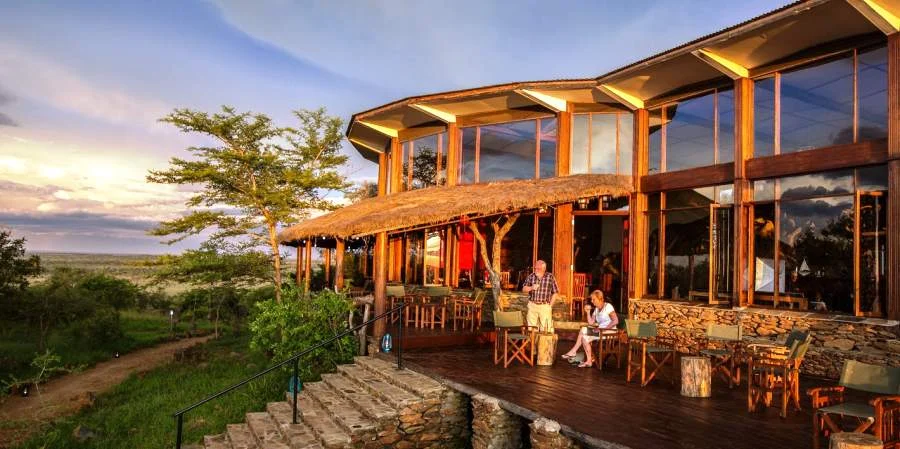
What Is Included in a Tanzania Lodge Safari Package?
Our lodge safari packages at Affordable International Travel Ltd include the same core elements as camping packages — all park fees, vehicle, driver-guide, full-board meals, and transfers — with accommodation upgraded to mid-range lodges or permanent tented camps with proper facilities.
Lodge Accommodation Cost Per Night
| Lodge Type | Per Person Per Night (Full Board) |
|---|---|
| Budget lodge (park-adjacent, basic en-suite) | $80–$150 |
| Mid-range lodge (comfortable, hot water) | $150–$280 |
| Mid-range tented camp (inside park) | $180–$350 |
| Upper mid-range lodge | $280–$450 |
| Luxury camp / lodge | $450–$1,500+ |
5-Day Lodge Safari: Full Cost Estimate
For the same 5-day northern circuit, using mid-range lodge accommodation:
| Cost Component | Per Person |
|---|---|
| Park entrance fees (5 days) | ~$306 |
| Ngorongoro crater descent (shared vehicle) | ~$33 |
| Accommodation (4 nights, mid-range lodge) | $600–$1,120 |
| Safari vehicle + driver-guide (shared) | ~$120–$180 |
| All meals, full board | Included |
| Bottled water | Included |
| Transfers | Included |
| Estimated total per person | $1,100–$1,700 |
Our 5-day Lake Manyara, Serengeti, and Ngorongoro safari and 5-day Tarangire, Ngorongoro, and Serengeti safari both start from $2,000 per person using mid-range lodge accommodation — reflecting the higher accommodation cost while remaining accessible to most international travellers’ budgets.
The Lodge Safari Experience: What It Actually Delivers
Consistent comfort. Mid-range lodge accommodation in Tanzania is genuinely comfortable. A proper bed with linen, a hot shower after a dusty game drive, electricity for charging camera batteries, a communal lounge with cold drinks before dinner, and a dining room with cooked meals served at tables — these are not luxury extras in the mid-range category. They are standard.
Better facilities for specific traveller types. Families with young children, older travellers, anyone with mobility considerations, and those who find sleep quality critical to their enjoyment — for all of these, the lodge option is simply the right practical choice. A child who has slept well and eaten a proper breakfast will have a better safari day than one who spent the night cold and restless.
Inside-park advantages. Some of Tanzania’s most atmospheric lodge positions are inside national park boundaries — allowing animals to walk through the property, enabling early morning departures without gate queues, and providing sundowner views directly over the landscape you came to see. The Serengeti, Tarangire, and Ngorongoro all have good mid-range inside-park options.
The trade-off. Lodge accommodation is less immersive than camping. The fence around the property, the permanent structure of the building, the dining room with its menu — all of these create a small but real layer of separation between you and the raw environment you travelled to Tanzania to experience. Whether this matters depends entirely on what you came for.
Direct Cost Comparison: Camping vs Lodge
5-Day Northern Circuit: Head-to-Head
| Cost Category | Camping Safari | Mid-Range Lodge Safari |
|---|---|---|
| Park fees (5 days) | ~$306 | ~$306 |
| Accommodation (4 nights) | $120–$200 | $600–$1,120 |
| Cook / cooking setup | $40–$60 | Included in lodge |
| Vehicle + guide (shared) | ~$150 | ~$150 |
| Meals | Included | Included |
| Total per person (approx.) | $700–$900 | $1,200–$1,800 |
| Saving with camping | — | $500–$900 per person |
Per Night Accommodation Savings
| Accommodation Type | Per Night | 4-Night Saving vs Mid-Range Lodge |
|---|---|---|
| Public campsite | $30–$50 | $440–$900 |
| Budget tented camp | $80–$150 | $200–$560 |
| Mid-range lodge | $150–$280 | Baseline |
| Upper mid-range | $280–$450 | -$520 to -$680 |
The camping saving over 4 nights is real and substantial — $440–$900 per person compared to mid-range lodging. For a couple, that is $880–$1,800 in accommodation savings alone, with absolutely no change in the parks visited, the guide quality, or the wildlife encountered.
What You Get and What You Give Up: The Honest Trade-Off
Choosing Camping Gives You
Lower total cost — the primary advantage. The numbers above speak for themselves. Camping makes Tanzania’s finest national parks accessible to a budget that lodge safari pricing cannot accommodate.
Inside-park immersion. Public campsites inside the national parks put you directly inside the wildlife environment for the entire 24-hour period, not just during game drives. The authenticity of this — the sounds, the proximity of animals, the unmediated relationship with the landscape — is something that lodge accommodation fundamentally cannot replicate.
The earliest game drives. Sleeping inside the park means you can begin driving at first light without any gate or transfer time. These are often the best wildlife hours of the entire day — predators finishing overnight hunts, elephants heading to water in the cool morning air, lions visible on open ground before they retreat to shade.
A story to tell. Ask experienced safari travellers about their most memorable Africa nights. A significant proportion will describe a camping experience — the night the hyenas circled the tent, the morning a zebra was just ten metres from breakfast, the extraordinary silence at 3am in the middle of the Serengeti. These moments do not happen in lodges.
Flexibility for adventurous itineraries. Some of the most off-the-beaten-path camping spots inside Tanzania’s parks — particularly special campsites in remote corners of the Serengeti or Tarangire — are genuinely inaccessible to lodge travellers. Camping opens access to a more adventurous version of the same parks.
Choosing Camping Requires You to Accept
Basic bathroom facilities. Pit latrines at public campsites are the standard. There is no hot shower unless your operator specifically provides a camp shower setup. If bathroom quality is genuinely important to your wellbeing and enjoyment, this is a meaningful consideration.
No electricity at most public sites. Charging camera batteries and phones requires a vehicle inverter or a portable power bank. Serious photographers should plan for this.
Temperature variation. The Ngorongoro Crater rim is at 2,300 metres elevation and genuinely cold at night — sometimes below 10°C. The Serengeti can also be cool after dark even in the dry season. A well-organised camping safari operator provides adequate sleeping equipment, but you need to pack warm clothing for evenings.
Animal proximity. This is simultaneously the best thing and the potentially unsettling thing about camping inside Tanzania’s parks. Animals — especially hyenas, buffalo, and occasionally elephants — may come through or near the campsite at night. This is managed by experienced operators who understand campsite positions and wildlife behaviour, but it is not for travellers who find this prospect alarming rather than thrilling.
Less structured evenings. The luxury lodge experience — the sunset cocktails in the lounge, the gourmet dinner service, the curated wine list — does not exist at a camping safari. Evenings are simpler, more communal, and less polished. For many travellers this is a feature, not a bug. For others it matters.
Choosing a Lodge Gives You
Reliable comfort throughout. Hot showers, proper beds, electricity, cold drinks, and a consistent standard of physical comfort regardless of weather, temperature, or altitude. This matters practically for longer trips, for families, for older travellers, and for anyone who finds physical discomfort genuinely affects their enjoyment.
A place to properly recover between drives. Safari days are longer and more physically demanding than most people expect — early starts, long hours in a bouncing 4WD, heat and dust. A comfortable lodge with a pool, proper lounging areas, and a good meal provides meaningful recovery that affects how much you enjoy the next day’s game drive.
Facilities for families and specific traveller needs. For families with young children, the structured environment of a lodge — meals at proper tables, a secure perimeter, predictable routines — is practically easier to manage than camping. For anyone with mobility limitations, lodge facilities are also simply more accessible.
Better positioning for multi-day Serengeti stays. Inside-park Serengeti lodges allow continuous game drives without returning to outside accommodation, and the ability to do evening drives to the gate without wasting the best wildlife light on transit.
Which Parks Are Best for Camping vs Lodges?
Not every park in Tanzania’s northern circuit is equally suited to camping. Here is a park-by-park honest assessment.
Serengeti National Park — Camping Is Outstanding
The Serengeti’s public campsites in the Seronera area are some of the best-positioned campsites anywhere in Tanzania. Sleeping inside the Serengeti — waking to the sounds of the plains, departing for game drives at dawn with no gate journey — is one of the genuinely extraordinary experiences that budget camping makes accessible. Wildlife regularly passes through or near the Seronera campsites. This is the park where the immersion argument for camping is strongest. Mid-range inside-park lodges also exist and are good, but the camping here is genuinely exceptional if you can handle the basic facilities.
Ngorongoro Conservation Area — Camping Has a Strong Case
The Simba Campsite on the Ngorongoro Crater rim is one of Africa’s most atmospherically positioned campsites. Waking up at the edge of the world’s largest intact caldera, often with buffalo grazing through the camp at first light, is a bucket-list experience in itself.
The altitude means cold nights — proper sleeping equipment is essential — but the combination of the view, the wildlife access, and the dramatically reduced cost compared to rim lodges makes this one of our strongest camping recommendations.
Alternatively, Karatu town lodges outside the NCA boundary offer a comfortable mid-range option at lower prices than crater-rim lodges.
Tarangire National Park — Lodge Has More Options
Tarangire has excellent inside-park tented camps at the mid-range level, and camping is possible at public sites. However, Tarangire’s park roads in the wet season can make campsite access more variable, and the inside-park tented camps here offer very good value at the mid-range level. This is a park where the step from basic camping to a basic tented camp (at only modestly higher cost) is often worthwhile.
Lake Manyara National Park — Lodge Outside Makes Sense
Lake Manyara is best experienced as a day visit — the park is compact enough to cover thoroughly in a single game drive day. Accommodation is typically outside the park in the Mto wa Mbu or Karatu areas, where a range of budget lodges and camps offer good value regardless of whether you are camping or lodging.
The overnight cost difference between basic camping and a budget lodge here is relatively modest, and many travellers choose to sleep in a proper bed between their Manyara and Ngorongoro days.
Mikumi National Park — Both Work Well
Mikumi has both a well-managed campsite and affordable lodges adjacent to the park. Given Mikumi’s accessibility from Dar es Salaam, it is often visited as part of a short trip where the accommodation cost difference is not as dramatic as on a longer northern circuit itinerary. Both options are viable and genuinely enjoyable here.
Ruaha National Park — Camping Requires Planning
Ruaha is remote enough that camping requires good logistical organisation — equipment transport, food supply, and access to campsites that can be challenging in the wet season.
It is doable and can be a remarkable experience, but requires more planning than northern circuit camping. The permanent camps in Ruaha at the budget-to-mid-range tier offer good value for the remote location.
The Hybrid Approach: Mixing Camping and Lodge Nights
One of the most practical and cost-effective strategies for Tanzania safari planning is mixing accommodation types across different nights of the same itinerary. This is not a compromise — it is smart budgeting.
A common and highly effective hybrid approach:
Camp in the Serengeti.
The immersion argument is strongest here, the campsite quality relative to the experience is excellent, and the cost saving is greatest on the nights where the park itself provides the drama.
Stay in a lodge near Ngorongoro.
Given the cold nights and the logistical advantage of a warm shower before a long game drive day, many travellers find one or two lodge nights around Ngorongoro meaningfully more comfortable without dramatically changing the overall trip cost.
Camp or use a budget tented camp in Tarangire.
The inside-park tented camps here offer a good middle ground between true camping and lodge comfort at accessible prices.
This hybrid structure gives you the best of both formats — raw immersion in the Serengeti where it matters most, practical comfort on the colder or more logistically demanding nights — while keeping overall trip cost well below a full-lodge itinerary.
All of our packages at Affordable International Travel Ltd can be customised to mix accommodation types.
Tell us your priorities and your budget, and we will build the right combination.
Our 3-day Game Drive, Culture, and Bush Walk in Tarangire and Ngorongoro and our 3-day Ngorongoro Rim Walk and Empakaai Crater Hike both offer flexible accommodation arrangements built into the itinerary design.
Who Should Choose Camping, and Who Should Choose a Lodge?
Camping Is the Right Choice If You
- Are travelling on a limited budget and want to maximise the number of park days and parks visited per dollar
- Are an adventurous traveller who considers sleeping inside the park, hearing wildlife at night, and waking at dawn in the bush to be core to what a safari means
- Are a backpacker, student, or young traveller for whom the camping experience is part of the appeal of East Africa travel
- Are a solo traveller or small group who wants to direct budget savings toward more nights in the parks rather than more comfortable beds
- Are a serious wildlife photographer who wants maximum time inside the parks, including the earliest possible morning departures
- Have done lodge safaris before and want a more raw, immersive experience on a return visit
- Are travelling in a group of four or more, where camping costs per person become even more attractive as vehicle costs are shared
A Lodge Is the Right Choice If You
- Travel with children who need reliable sleep, structured mealtimes, and a secure environment
- Have mobility considerations or physical requirements that basic campsite facilities cannot accommodate
- Find that sleep quality significantly affects your health and enjoyment of the following day
- Are celebrating a special occasion — honeymoon, anniversary, birthday — and want the comfort and atmosphere of a proper lodge setting
- Are doing a shorter safari (2–3 days) where the per-night accommodation premium is a smaller proportion of the total cost difference
- Strongly prefer hot showers, electricity, and consistent food quality as non-negotiables
- Are doing a first-ever safari and want the experience to be physically comfortable and professionally polished without the unknowns of bush camping
Neither Is Objectively Better
This bears saying directly: camping safaris and lodge safaris are not different quality tiers of the same experience. They are different experiences.
The game drives are identical. The wildlife is identical. The guide quality is identical. What differs is everything that happens between game drives — where you sleep, how you eat dinner, what sounds you hear at night, and whether you wake up with a shower or a bucket of hot water from the camp cook.
Both experiences are genuinely rewarding. The best choice is the one that matches your travel personality, your budget, and what the word “safari” means to you.
What Is Included in Affordable International Travel Ltd Packages?
Whether you choose camping or lodge accommodation, every package at Affordable International Travel Ltd is fully inclusive — no hidden extras.
All packages include:
- All national park and conservation area entrance fees
- 4WD safari vehicle with pop-up roof hatch
- Experienced, licensed, English-speaking driver-guide
- All game drives as specified in the itinerary
- Full-board meals (breakfast, packed picnic lunch inside the park, dinner)
- Bottled drinking water throughout
- All camping fees or lodge accommodation costs
- Airport and hotel pick-up and drop-off transfers
- Government taxes and levies
Camping packages additionally include:
- All camping equipment (tent, sleeping bag, mattress, pillow, duvet)
- Dedicated camp cook
- Cooking equipment and gas
- Camping table, chairs, and basic lighting
No surprises on arrival. Every quote is fully itemised before you confirm.
Real Pricing: Our Packages Across Both Options
| Package | Duration | Starting From (Per Person) |
|---|---|---|
| 2 Days Tarangire and Lake Manyara | 2 days | $700 |
| 2 Days Lake Manyara and Ngorongoro | 2 days | $700 |
| 3 Days Tarangire, Lake Manyara, and Ngorongoro | 3 days | $1,100 |
| 3 Days Arusha, Tarangire, and Ngorongoro | 3 days | $1,100 |
| 3 Days Game Drive, Culture, and Bush Walk | 3 days | $1,500 |
| 3 Days Ngorongoro Rim Walk and Empakaai Hike | 3 days | $2,000 |
| 4 Days Tarangire, Ngorongoro, and Serengeti | 4 days | $1,800 |
| 4 Days Lake Manyara, Serengeti, and Ngorongoro | 4 days | $1,800 |
| 5 Days Lake Manyara, Serengeti, and Ngorongoro | 5 days | $2,000 |
| 5 Days Tarangire, Ngorongoro, and Serengeti | 5 days | $2,000 |
Accommodation type — camping or lodge — affects the final quoted price. For any itinerary in our portfolio, contact our team and we will quote both options clearly so you can make an informed comparison.
Frequently Asked Questions
Is camping safe inside Tanzania’s national parks?
Yes. Tanzania’s national parks are managed by TANAPA under strict safety standards, and public campsites within park boundaries are designated and monitored. Our experienced guides and camp cooks are fully familiar with campsite safety protocols — including food storage, campfire management, and appropriate responses to wildlife in the vicinity. Campers do not leave their tents at night without a guide, and our teams understand how to position tents and manage wildlife encounters safely. We have run camping safaris inside Tanzania’s national parks for years without incident related to wildlife.
What do I need to bring for a camping safari?
Very little beyond your personal clothing and camera equipment. Affordable International Travel Ltd provides all camping equipment — tent, sleeping bag, mattress, pillow, and duvet. We recommend bringing: warm layers for cold evenings (especially Ngorongoro), a headtorch, a power bank for charging camera batteries, sunscreen and insect repellent, and any personal medications. Your packing list will be confirmed when you book.
Can I upgrade from camping to a lodge on specific nights?
Yes, absolutely. We customise accommodation arrangements for every itinerary. If you want to camp inside the Serengeti but stay in a lodge near the Ngorongoro Crater rim, we can build that itinerary. Hybrid arrangements are common and often represent the best balance of cost and comfort for a multi-day safari. Contact us to discuss what combination works for your preferences and budget.
How does the food compare between camping and lodge safaris?
Lodge safari meals are prepared in a professional kitchen and typically include a set menu for breakfast and dinner, with a packed lunch for inside the park. Camping safari meals are prepared by a dedicated camp cook using a portable gas stove and cooler boxes. The quality is surprisingly good — fresh vegetables, grilled protein, soup, and proper camp coffee in the morning — though the presentation is naturally less formal than a lodge dining room. Many travellers find the camp meals eaten at a folding table overlooking the Serengeti more memorable than anything on a lodge menu.
Are there age restrictions for camping safaris in Tanzania?
There are no formal age restrictions for camping safaris in Tanzania’s national parks. However, we recommend honest assessment for families with very young children. Children under about age five may find sleeping in a tent in unfamiliar surroundings (with associated night sounds) stressful rather than exciting. Children aged six and above typically enjoy camping safaris enormously, and the immersive wildlife proximity is often the highlight of their experience. We can advise on the most suitable accommodation combination for specific family ages and compositions.
Do camping safaris visit the same parks as lodge safaris?
Yes. Camping and lodge safaris use the same national parks, the same park gates, the same game drive routes, and the same wildlife areas. Park entrance fees — the non-negotiable cost that guarantees your access to the wildlife — are identical at both accommodation levels. The parks do not know or care where you slept last night.
What is the difference between a public campsite and a special campsite?
Public campsites are shared with other groups and operated by TANAPA. They have basic fixed facilities (pit latrines, sometimes a tap) and are available to any operator for any group. Special campsites are reserved exclusively for one group for the night and are typically in better-positioned, more remote locations with greater privacy. Special campsites cost more (a site reservation fee plus per-person fees) but offer a more exclusive, quieter experience. For groups of four or more where the site reservation fee divides across multiple people, special campsites can be excellent value for the quality of experience they deliver.
Conclusion
The camping vs lodge safari debate does not have a correct answer. It has two excellent answers for two different types of traveller, at two significantly different price points.
Camping puts you inside Tanzania’s national parks for the full 24-hour period, at the lowest possible accommodation cost, with an immersive authenticity that many experienced safari travellers rate as their most powerful Africa experience.
The Simba Campsite on the Ngorongoro Crater rim at dawn. A Serengeti campsite with hyenas calling in the dark. A morning game drive that begins before the light fully rises because there is no gate to reach first.
These experiences are real, affordable, and available through Affordable International Travel Ltd from $700 per person for a 2-day combination.
Lodge safaris deliver consistent comfort, reliable facilities, and a polished safari experience for travellers who value recovery between game drives, need reliable infrastructure for children or health reasons, or simply prefer to end an extraordinary day in a proper bed with a hot shower.
Our lodge packages start from the same entry points and scale to comprehensive 5-day northern circuit itineraries from $2,000 per person.
Most importantly: the wildlife is the same. The parks are the same. The guide driving you through the Serengeti has the same licence and the same experience whether you slept in a tent or a lodge bed last night.
Tanzania’s animals — the lions, the elephants, the black rhino on the Ngorongoro Crater floor — do not adjust their performance based on your accommodation budget.
At Affordable International Travel Ltd, we are 100% Tanzanian-owned and operated, and we have run both camping and lodge safaris in every park on this page for years.
Tell us what kind of traveller you are, what your budget is, and what a Tanzania safari means to you. We will build the right itinerary — and tell you honestly which accommodation type will make you happier at the end of the trip.
Request your free, no-obligation Tanzania safari quote today →
Explore Our Tanzania Safari Options
- All Tanzania Safari Tours — Browse by duration and price
- Serengeti National Park Safari
- Ngorongoro Crater Safari
- Tarangire National Park Safari
- Lake Manyara Safari
- Ruaha National Park Safari
- Mikumi National Park Safari
- 3 Days Game Drive, Culture, and Bush Walk — from $1,500/person
- 3 Days Ngorongoro Rim Walk and Empakaai Hike — from $2,000/person
- 4 Days Tarangire, Ngorongoro, and Serengeti — from $1,800/person
- 5 Days Lake Manyara, Serengeti, and Ngorongoro — from $2,000/person
- 5 Days Tarangire, Ngorongoro, and Serengeti — from $2,000/person
- All Tanzania Safari Destinations
- Contact Us — Talk to a Safari Expert