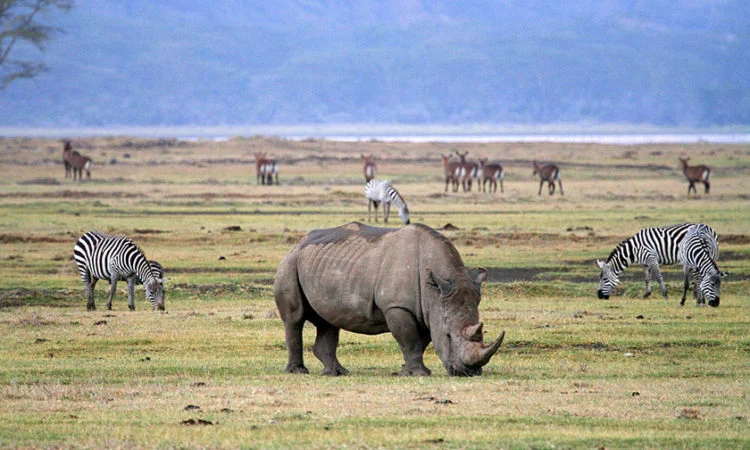

Yes — Ngorongoro Crater is worth the cost for budget travelers, provided you plan it correctly. The $70.10 daily conservation fee is Tanzania’s highest, but the crater delivers Africa’s densest year-round wildlife concentration — including the Big Five — in a single compact day. No other park on the continent gives you a realistic chance of seeing lion, elephant, buffalo, hippo, and black rhino in one morning’s game drive. For the right traveller, the value is extraordinary.
There is a moment that almost every Tanzania safari planner experiences. You are researching your itinerary, comparing parks, feeling good about your budget — and then you look up Ngorongoro Crater.
The conservation fees stop you cold.
At $70.10 per adult per day, Ngorongoro is Tanzania’s most expensive park to enter.
Add a crater descent fee for your vehicle, accommodation on the crater rim, and the cost of getting there from Arusha, and suddenly what looked like a manageable addition to your safari starts to feel like a budget-breaking luxury.
So the question becomes a real one: is Ngorongoro actually worth it for someone travelling on a budget?
After years of running safaris for budget-conscious international travellers at Affordable International Travel Ltd, our honest answer is yes — but only if you understand exactly what you are paying for, plan your visit efficiently, and book through an operator who knows how to make the most of every hour inside the crater.
This guide walks you through the full cost picture, the wildlife reality, the money-saving strategies, and the honest verdict on whether Ngorongoro deserves a place in your Tanzania itinerary.
Table of Contents
What Exactly Is the Ngorongoro Conservation Area?
Before we get into costs, it helps to understand what makes Ngorongoro genuinely different from every other park in Tanzania.
The Ngorongoro Crater is the world’s largest intact and unflooded volcanic caldera. Formed roughly three million years ago when a massive volcano collapsed inward, it created a self-contained ecosystem approximately 260 square kilometres in area and 600 metres deep.
The rim rises to over 2,300 metres above sea level, and the crater floor sits in permanent semi-arid grassland, dotted with soda lakes, swamps, and forests along the inner walls.
What makes the crater unique from a wildlife perspective is that the walls largely prevent animals from leaving.
The result is one of the highest concentrations of wildlife anywhere on Earth — an estimated 25,000 large animals living permanently within those 260 square kilometres. Lions, elephants, spotted hyenas, zebra, wildebeest, hippos, flamingos, cheetahs, jackals, and one of Tanzania’s last stable populations of black rhino all share this relatively small floor.
It is, in the most literal sense, a natural enclosure — a bowl of wildlife that requires no migration timing, no dry-season concentration, and no luck to deliver extraordinary game viewing. The animals are simply always there.
The Ngorongoro Conservation Area (NCA) itself covers a much larger 8,292 square kilometres and is managed not as a conventional national park but as a multi-use conservation area — home to the Maasai people and their cattle alongside the wildlife, which adds a remarkable cultural dimension to any visit.
What Are the Actual Costs of a Ngorongoro Safari?
This is where honest planning matters most. Let us go through every cost a budget traveller should account for.
Conservation Area Entrance Fee
$70.10 per adult per day for non-resident visitors. This is the single largest cost and the one that gives most budget travellers pause. Children aged 5–15 pay $35.05 per day; under 5s enter free.
Note that this fee covers entry to the Ngorongoro Conservation Area — not specifically the crater descent. You can spend a day on the crater rim, visiting viewpoints, walking trails, and the Maasai highlands, without paying the crater descent fee. But for most visitors, descending into the crater is the primary reason to come.
Crater Service Fee (Vehicle Descent Fee)
Each vehicle descending into the crater pays an additional fee of $200 per vehicle per day. This is per vehicle, not per person — meaning the cost per person decreases significantly the more travellers you have sharing a vehicle. In a shared 4WD carrying six passengers, this works out to roughly $33 per person. In a private vehicle for a solo traveller or couple, it can add $100–$200 per person to the total.
This is one of the clearest reasons why joining a shared group safari or small group departure meaningfully reduces the cost of a Ngorongoro visit.
Accommodation
Accommodation near Ngorongoro falls into three broad categories:
- Budget camping (Simba Campsite, public sites on the rim): $40–$80 per person per night — basic facilities, spectacular rim-top setting
- Mid-range lodges and tented camps (rim area): $150–$300 per person per night, full board
- Luxury lodges with crater views: $400–$1,000+ per person per night
For budget travellers, the Simba Campsite on the crater rim is a legitimate and genuinely atmospheric option — you wake up with the crater spread out below you at sunrise, often with buffalo grazing around the campsite perimeter.
Full Cost Breakdown for a Budget Ngorongoro Day Trip
| Cost Item | Per Person (Shared Group of 6) |
|---|---|
| Conservation area entrance fee | $70.10 |
| Crater descent fee (vehicle, shared) | ~$33 |
| Budget accommodation (1 night, campsite) | $40–$80 |
| Safari vehicle + driver-guide | Included in package |
| Meals (full board) | Included in package |
| Transfers from Arusha | Included in package |
| Estimated total per person (land cost) | $143–$183 |
When booked as part of a multi-park package through Affordable International Travel Ltd, the vehicle, guide, transfers, and meals are all shared across the itinerary, reducing the effective per-day cost considerably.
Our 5-day Tarangire, Ngorongoro, and Serengeti safari starts from $2,000 per person fully inclusive — spreading the Ngorongoro cost across a rich multi-park experience.
What Do You Actually Get for That Money?
This is the question that matters most. Let us look at what the Ngorongoro fee actually buys you — and compare it honestly with cheaper alternatives.
The Big Five in a Single Day
Tanzania has approximately 20 national parks and game reserves. Of those, precisely one reliably offers a realistic chance of seeing all five of the Big Five — lion, leopard, elephant, buffalo, and rhinoceros — in a single half-day game drive. That park is Ngorongoro Crater.
The black rhino is the key. Tanzania’s wild rhino population is extremely small and extremely shy — in most parks, even experienced guides go months without a confirmed sighting.
The Ngorongoro Crater’s resident black rhino population (estimated at 20–30 individuals) is Tanzania’s most reliably observable. Our guides at Affordable International Travel Ltd spot crater rhinos on the majority of our visits. That alone justifies the entry fee for travellers with the Big Five on their list.
Lions are similarly exceptional. The crater floor supports one of Africa’s most studied lion populations, and because the terrain is open grassland, sightings are consistent throughout the year. You are not waiting for a lion to emerge from tall grass — you can often watch a pride for an extended period from a comfortable distance in clear, flat terrain.
Year-Round Wildlife, Zero Timing Risk
Most Tanzania parks have a peak season and an off-season. In the off-season, wildlife disperses, vegetation grows tall, and sightings become harder and less predictable. The Serengeti, for example, is excellent during the dry season — but a July visit and a March visit can feel like completely different parks.
Ngorongoro does not work like this. The crater walls and the permanent water sources on the floor mean that wildlife concentration remains consistently high throughout the year.
You can visit in April — Tanzania’s wettest month, when most other parks are at their quietest — and still have extraordinary game viewing. The crater is misted, emerald, and almost entirely free of other tourist vehicles.
For a budget traveller who needs to travel in the off-season to access lower accommodation prices, this consistency is genuinely valuable.
Dramatic Scenery That Has No Equivalent
There is a moment on the crater rim, before the descent, when you look out over the full caldera for the first time. The scale of it — the sheer circular drop, the tiny distant shapes of animals on the floor 600 metres below, the opposite rim rising back up through forest and cloud — is one of the most arresting natural views in Africa.
No other park in Tanzania offers this particular experience. You are not just going on a game drive inside a national park; you are descending into a geological wonder that took three million years to form. For many travellers, that perspective — the reminder of deep time and the improbable luck of being alive to witness it — is worth the cost on its own terms.
How Does Ngorongoro Compare to Cheaper Tanzania Parks?
To answer the value question properly, it helps to compare Ngorongoro directly with Tanzania’s most popular budget-friendly alternatives.
| Feature | Ngorongoro ($70.10/day) | Tarangire ($53.10/day) | Lake Manyara ($53.10/day) | Mikumi ($35/day) |
|---|---|---|---|---|
| Black rhino | Yes (resident, reliable) | No | No | No |
| Lion | Excellent | Good | Good (tree-climbing) | Good |
| Elephant | Good | Outstanding | Good | Good |
| Leopard | Possible | Good | Possible | Possible |
| Buffalo | Excellent | Good | Good | Good |
| Flamingos | Good (seasonal) | No | Outstanding | No |
| African wild dog | No | Rare | No | No |
| Year-round consistency | Exceptional | Seasonal | Seasonal | Good |
| Minimum days needed | 1 | 2 | 1 | 2 |
| Crowds (peak season) | Moderate | Moderate | Low | Very low |
| Unique experience | World’s largest caldera | Baobab landscape | Tree-climbing lions | Accessible savannah |
The key insight from this table: if seeing a black rhino is on your list, no park in this comparison delivers the same reliability. If it is not, then Tarangire or Lake Manyara offer very strong value at a lower entry fee.
When Is the Best Time to Visit Ngorongoro on a Budget?
The good news for budget travellers is that Ngorongoro’s wildlife quality changes far less with the seasons than any other Tanzania park. But the cost of accommodation, the number of other vehicles on the crater floor, and the overall atmosphere vary considerably through the year.
Best Value Months for Budget Travelers
April and May (Long Rains): This is Tanzania’s lowest-tourism period. Lodge prices on the crater rim drop significantly — sometimes 40–50% below peak rates at mid-range properties. The crater floor is lush and green, the air is clear after rain, and you will often find yourself almost alone on the floor during morning game drives. The rhinos, lions, and elephants are all there. The only concession is occasional short heavy showers, which rarely last long and often produce spectacular photographic light.
November (Short Rains): Similar dynamics to April–May but shorter and less intense. Off-season prices at lodges, lush scenery, excellent birdlife, and quiet crater roads.
January and February (Green Season): Wildlife viewing remains excellent — predators are actively hunting, and the crater’s permanent residents are all present. Prices are lower than peak season, and the green landscape is genuinely beautiful. February is also when wildebeest and zebra calving peaks in the wider Ngorongoro ecosystem, bringing predator activity to a high.
Peak Season (June–October)
June through October is Tanzania’s dry season and the most popular safari period. Wildlife viewing at Ngorongoro is excellent — visibility is high, dust is low, and animals are easy to spot against the dry golden grass. Accommodation prices are at their highest, and the crater can have more vehicles than at any other time. Book 3–6 months ahead if travelling in this window.
Seasonal Summary
| Month | Crowds | Lodge Prices | Wildlife Quality | Budget Verdict |
|---|---|---|---|---|
| January–February | Low–Moderate | Mid | Excellent | Good value |
| March | Low | Low | Very good | Strong value |
| April–May | Very low | Lowest | Excellent | Best value |
| June–August | High | Highest | Excellent | Pre-book early |
| September–October | Moderate–High | High | Excellent | Shoulder value |
| November | Low | Low–Mid | Very good | Good value |
| December | Moderate | Mid–High | Excellent | Reasonable |
6 Practical Ways to Make Ngorongoro More Affordable
Our team at Affordable International Travel Ltd has helped hundreds of budget travellers get the most from Ngorongoro without overspending. Here is what actually works:
1. Join a shared group departure.
The crater vehicle descent fee ($200 per vehicle) is the cost that most dramatically changes per-person when shared. In a group of six, it becomes roughly $33 each. For a solo traveller in a private vehicle, it can be $200 alone. Group departures with Affordable International Travel Ltd automatically spread this cost.
2. Visit during the green season.
April, May, and November offer the same wildlife — including rhinos, lions, and the full crater experience — at meaningfully lower accommodation costs. For a traveller whose primary goal is wildlife rather than perfect weather, this is the smartest budget move available.
3. Camp on the crater rim.
The Simba Campsite on the Ngorongoro rim costs a fraction of the lodge prices and puts you at one of the most atmospheric spots in Africa — on the edge of the caldera, at altitude, with star visibility that is genuinely extraordinary in the dry season. Many experienced safari travellers consider this the only way to experience Ngorongoro authentically.
4. Pair Ngorongoro with adjacent parks for multi-day package pricing.
A standalone Ngorongoro day trip is the most expensive way to visit per unit of time. When Ngorongoro is included as part of a multi-park circuit, the vehicle, guide, and transfer costs are spread across the full itinerary.
Our 5-day Tarangire, Ngorongoro, and Serengeti package from $2,000 per person makes the Ngorongoro day cost far more reasonable as part of a broader experience.
5. Spend one full day, not two.
Unlike Tarangire or Ruaha, which genuinely reward multiple days of exploration, the crater floor can be very thoroughly experienced in a single long game drive day — typically 6–8 hours.
Most wildlife sightings happen in the first four hours of the morning anyway. One well-planned day is sufficient and saves you a second day of conservation fees.
6. Consider the Ngorongoro Highlands experience instead of (or alongside) the crater.
Our 3-day Ngorongoro Crater Rim Walk and Empakaai Crater Hike from $2,000 per person offers a completely different and deeply immersive way to experience the greater Ngorongoro Conservation Area — walking the rim with Maasai guides, descending into the neighbouring Empakaai Crater with its flamingo-filled soda lake, and spending nights camping in the highland forest.
This active, hiking-based itinerary avoids the crater descent vehicle fee entirely while delivering an experience most visitors to Ngorongoro never have.
What Types of Travelers Get the Most Value from Ngorongoro?
Not every traveller extracts the same value from Ngorongoro. Based on years of guiding international visitors, here is an honest guide to who benefits most:
Ngorongoro is exceptional value if you:
- Have the Big Five on your wish list and want a realistic shot at all five including black rhino
- Are visiting Tanzania for the first time and want a guaranteed wildlife-rich experience regardless of season
- Have limited time — one day in the crater can deliver what some parks take four days to match
- Value landscape and geological spectacle alongside wildlife
- Are travelling during the green season and want consistent game viewing despite the rains
- Want to experience Maasai culture in an authentic highland setting
Ngorongoro may not be your best spend if you:
- Are primarily interested in elephants — Tarangire delivers a far superior elephant experience at lower cost
- Are a dedicated birdwatcher targeting specific species — Lake Manyara and Tarangire both offer richer birding for the price
- Are on an extremely tight per-day budget and cannot absorb the $70.10 fee — in this case, Mikumi ($35) or Nyerere ($29) offer extraordinary wildlife for less
- Specifically want to see African wild dogs — Nyerere National Park is your park for that
- Are visiting the Serengeti in peak migration season (July–September) — on those days, the Serengeti itself arguably rivals the crater for sheer spectacle
Is Ngorongoro Better Than the Serengeti for Budget Travelers?
This comparison comes up constantly and deserves a direct answer.
The Serengeti charges the same daily fee as Ngorongoro ($70) but requires more days to experience properly — the Serengeti is 14,763 square kilometres compared to Ngorongoro’s 260 square kilometre crater floor.
A meaningful Serengeti visit typically requires at least 2 full days, often 3, meaning the park fee alone is $140–$210 per adult before accommodation.
Ngorongoro delivers its iconic experience in a single day. One day, one fee, and you have covered Africa’s most wildlife-dense ecosystem with a realistic chance at all Big Five.
For a budget traveller choosing between the two, Ngorongoro is more cost-efficient per day. For a traveller with more time and budget, both are worth including — and combining them in a circuit itinerary is the smartest way to experience northern Tanzania fully.
Our 4-day Tarangire, Ngorongoro, and Serengeti safari from $1,800 per person includes both parks in a single itinerary — the most cost-effective way to tick off Ngorongoro alongside the Serengeti without paying for them in isolation.
Ngorongoro Crater: What You Will Actually See
For travellers evaluating whether the cost is justified, it helps to have a realistic picture of what a typical crater day delivers.
A standard full-day crater visit with Affordable International Travel Ltd proceeds something like this:
You depart the crater rim lodge or campsite before 7am — early morning is peak predator activity. The descent road drops steeply through highland forest and emerges suddenly onto the crater floor, a view that stops most first-time visitors mid-sentence.
By 8am you are on the open grassland, and within the first hour it is common to see lion prides either making or finishing a kill from the night before. Hyenas follow. Jackals circle at the periphery.
The lake at the crater’s heart attracts flamingos throughout the year — pink smears of colour against the alkaline white shore. Hippos wallow in the shallows year-round. Buffalo herds of several hundred graze the open plain.
Mid-morning, your guide works toward the known rhino territory — typically the quieter western sections of the crater floor. Rhino sightings are not guaranteed, but our guides at Affordable International Travel Ltd locate them on the vast majority of visits.
When you watch a black rhino move through open grassland — a species pushed to near-extinction across the continent — the conservation fee stops feeling like a cost and starts feeling like a contribution to something worth preserving.
Picnic lunch is taken at a designated site on the crater floor, with vultures overhead and wildebeest grazing at a respectful distance.
The afternoon is for elephants (the crater’s bulls are famously large-tusked), cheetah searches across the open plain, and the drive back up the rim road through cloud and forest as the light softens.
Most travellers emerge from the crater saying the same thing: it was more than they expected.
Frequently Asked Questions
How much does it cost per person to visit Ngorongoro Crater?
The full per-person cost depends on your group size and accommodation choice, but a realistic estimate for a budget traveller in a shared group is $143–$183 for a single day — covering the $70.10 conservation fee, a share of the $200 crater descent vehicle fee, and one night at a budget campsite. When booked as part of a multi-park package with Affordable International Travel Ltd, this cost is incorporated into the overall itinerary price, which starts from $1,800 per person for a 4-day northern circuit safari including Ngorongoro.
Can you visit Ngorongoro Crater on a very tight budget?
Yes, with careful planning. The key cost-saving moves are: travelling in the green season (April–May or November) for lower lodge rates, joining a shared group departure to split the vehicle descent fee, and staying at the Simba Campsite on the crater rim rather than a lodge. These three steps combined can reduce the total per-person Ngorongoro day cost to around $140–$150, which is at the budget end of what is achievable given the mandatory conservation fee structure.
Do you need more than one day at Ngorongoro Crater?
One full day is sufficient to experience the crater floor thoroughly and see the great majority of its wildlife. Unlike Tarangire or the Serengeti — where size and terrain variation reward multiple days — the crater is compact enough that a well-guided 6–8 hour game drive covers its key areas. Most travellers do not regret spending only one day in the crater, provided they choose a well-planned itinerary and an experienced guide.
Is Ngorongoro better visited independently or as part of a package?
As part of a package, without question, especially for budget travellers. The vehicle descent fee ($200 per vehicle) is the single most significant argument for joining a shared package — solo or couple travellers booking a private vehicle pay that fee in full without sharing it. Group packages also include meals, transfers, and the driver-guide cost spread across the itinerary, which substantially reduces the effective per-day cost of the Ngorongoro visit.
Can you see the black rhino at Ngorongoro Crater?
The black rhino population at Ngorongoro Crater is Tanzania’s most reliably observable. The crater’s resident population of 20–30 animals represents a significant proportion of Tanzania’s remaining wild black rhinos, and the open terrain of the crater floor makes sightings far more likely here than anywhere else in the country. Sightings are not guaranteed on every visit, but our experienced guides at Affordable International Travel Ltd locate them on the large majority of crater days. No other park in this guide offers a comparable chance.
What is the Ngorongoro Highlands experience, and is it cheaper?
The Ngorongoro Conservation Area extends far beyond the crater floor itself, and the broader highlands offer an alternative experience that avoids the crater descent vehicle fee. Our 3-day Ngorongoro Crater Rim Walk and Empakaai Crater Hike takes you along the rim on foot with Maasai guides, then descends into the neighbouring Empakaai Crater — a smaller but extraordinary volcanic basin filled with flamingos and surrounded by montane forest. It is one of the most unusual and genuinely off-the-beaten-path experiences in northern Tanzania, and it is priced from $2,000 per person for 3 days — combining extremely well with a crater floor game drive day for a comprehensive Ngorongoro experience.
Is the Ngorongoro fee worth paying if I have already been on safari elsewhere in Tanzania?
Yes — especially if your previous safaris were in other northern circuit parks. Ngorongoro offers something none of the other parks can match: the black rhino, the geological drama of the caldera, and the consistency of year-round wildlife concentration. Experienced safari-goers who return to Tanzania often name the crater as the one park that holds up to a second or third visit because the wildlife and the landscape are genuinely different from anything else in the region.
Conclusion: Our Honest Verdict
The $70.10 conservation fee is real, and we are not going to tell you it is nothing. For a traveller on a genuinely tight budget, it is a significant daily cost — Tanzania’s highest park entrance fee by some margin.
But here is what you are actually buying: Africa’s most reliable black rhino sighting opportunity, one of the continent’s highest densities of resident lions, Big Five access in a single day, and a geological and wildlife spectacle that took three million years to create. You are also buying consistency — the knowledge that whether you visit in July or April, in drought or rain, the crater will deliver.
The travellers we have guided through Ngorongoro who felt it was not worth the price are very few. The ones who left wishing they had spent an extra day are common.
The key is to visit it smartly — in the green season if your budget is tight, as part of a multi-park package to spread the vehicle and guide costs, in a shared group to split the descent fee, and with a guide who knows the crater well enough to find the rhinos.
At Affordable International Travel Ltd, that is exactly what we do. We are a 100% Tanzanian-owned operator, and the Ngorongoro Conservation Area is in our backyard. We know which time of morning the lions are most active, which part of the crater floor the rhinos favour, and how to build an itinerary around Ngorongoro that gives you every possible wildlife moment without a dollar wasted.
Request your free, no-obligation Ngorongoro safari quote today →
Explore More Tanzania Safari Options
- Ngorongoro Crater Safari — Full details and pricing
- 3 Days Ngorongoro Rim Walk and Empakaai Hike — from $2,000/person
- 4 Days Tarangire, Ngorongoro and Serengeti — from $1,800/person
- 5 Days Tarangire, Ngorongoro and Serengeti — from $2,000/person
- Tarangire National Park Safari
- Lake Manyara Safari
- All Tanzania Safari Destinations