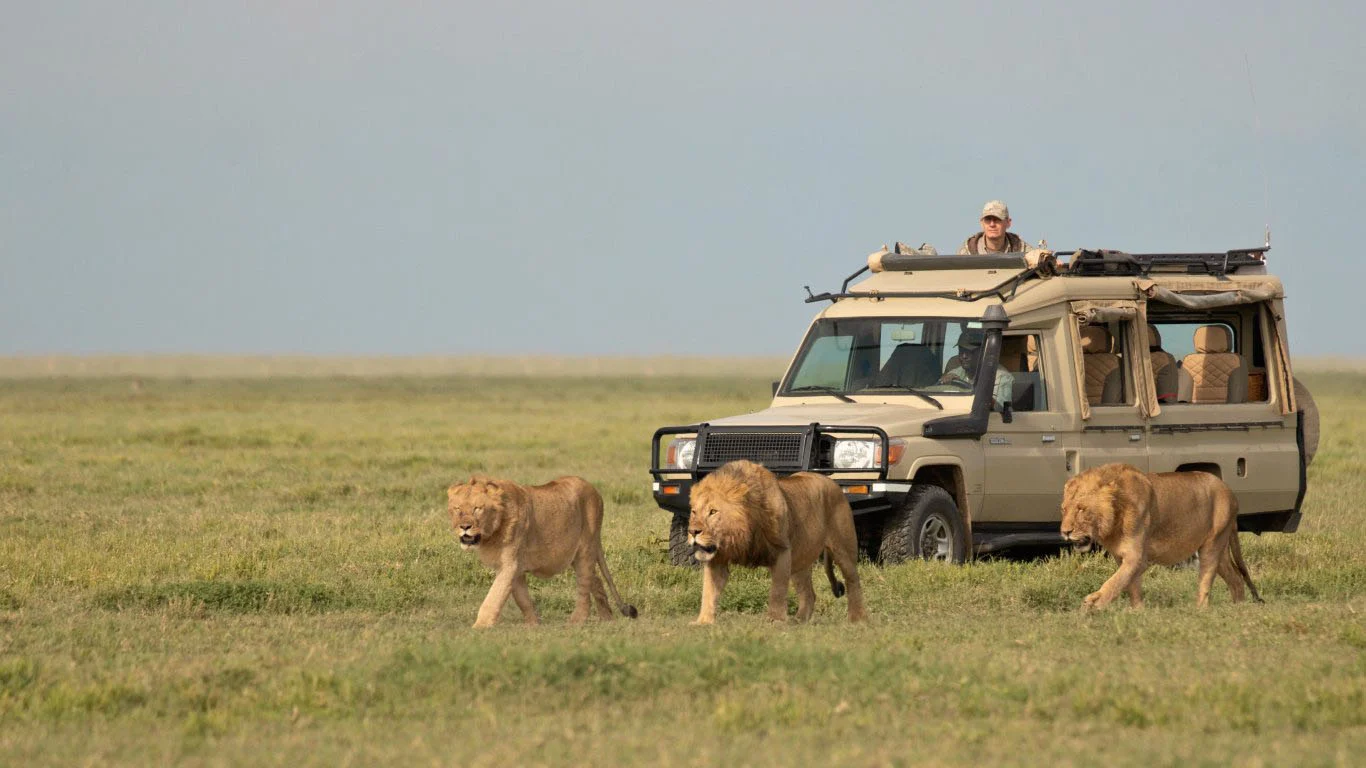

A 7-day budget safari in Tanzania costs between $1,400 and $2,800 per person. Camping safaris start at roughly $180–$220 per person per day, while budget lodge safaris run $250–$400 per day. These figures typically include a 4WD safari vehicle with a professional driver-guide, national park entrance fees, all meals, and accommodation. International flights, visas, and optional add-ons like a hot-air balloon ride are not included.
Most people assume a Tanzania safari is out of reach — reserved for luxury travelers with five-figure budgets. The reality is different. Tanzania’s national park system, among the finest in Africa, is fully accessible on a budget, and a well-planned 7-day trip can deliver lions, elephants, the Great Wildebeest Migration, and the Ngorongoro Crater without breaking the bank.
The total cost of your safari depends on four variables: accommodation type, group size, time of year, and which parks you visit. Get those right and you can experience world-class wildlife at a fraction of the luxury price. Get them wrong and the same itinerary costs twice as much.
This guide gives you real numbers for a 7-day Tanzania safari — broken down by accommodation tier, explained by cost category, and illustrated with a sample itinerary — so you can plan with clarity and book with confidence.
What Does a 7-Day Tanzania Safari Include?
Before breaking down costs, it helps to understand what “a safari” actually covers. When you book a package with a reputable operator like International Affordable Travel, a standard all-inclusive safari package covers the following:
- A dedicated 4WD Land Cruiser with a pop-up roof for game viewing
- A professional Tanzanian driver-guide (typically English-speaking, certified)
- All national park entrance fees for the days you’re inside each park
- Full board accommodation — breakfast, lunch, and dinner
- Drinking water throughout the trip
- Airport transfers (Arusha or Kilimanjaro International Airport)
Not included in most budget packages: international flights, Tanzania visa fees ($50 for most nationalities), travel insurance, tips for the guide and camp staff, personal spending, and optional experiences such as a Serengeti hot-air balloon ride.
What Are the Main Cost Categories for a 7-Day Safari?
Breaking a budget safari into its core cost drivers helps you understand where the money actually goes — and where you can save.
National Park Entrance Fees
Park fees are fixed by the government and cannot be negotiated regardless of who you book with. According to the official TANAPA tariff schedule, Serengeti National Park charges $70 per adult non-East African resident per day during peak season and $60 per day during low season. Tarangire and Lake Manyara National Parks both charge around $59 per adult per day, while the Ngorongoro Crater charges $60 per adult per day plus an additional crater descent vehicle fee of approximately $295 per vehicle.
For a 7-day northern circuit covering Tarangire, Ngorongoro, and the Serengeti (a typical budget itinerary), park fees alone can amount to $350–$500 per person, depending on the number of days spent inside each park.
Safari Vehicle and Guide
The vehicle and driver-guide represent the largest single fixed cost. A fully equipped Toyota Land Cruiser costs the same to operate whether it carries one person or six. This is why group size is the most powerful lever for reducing per-person cost — every additional traveler in the vehicle directly reduces your share of this fixed expense.
A solo traveler on a private 7-day safari may pay $500–$600 per day for the vehicle and guide component alone. That same vehicle shared among four people drops to roughly $150 per person per day for the same element.
Accommodation
This is where you make or break a budget. Budget camping at Tanzania’s public campsites costs $30–$80 per person per night, compared to $120–$350 per person per night for mid-range lodges. On a 5-day northern circuit safari, choosing camping over lodge accommodation can save $300–$1,000 per person while visiting the exact same parks with the same guide and seeing the same wildlife.
For a 7-day trip, that saving scales accordingly.
How Much Does a 7-Day Budget Safari Cost by Accommodation Tier?
The table below shows realistic total costs per person for a 7-day Tanzania safari across three accommodation styles, based on a group of four sharing one vehicle on the northern circuit (Tarangire → Ngorongoro → Serengeti).
7-day Tanzania budget safari cost comparison across three accommodation tiers for a group of four
Budget option
Camping safari
$1,400
per person (group of 4)
- Park fees (7 days)~$400
- Vehicle + guide~$560
- Camping (6 nights)~$280
- Meals + water~$100
- Transfers~$60
Mid budget option
Budget lodge safari
$2,100
per person (group of 4)
- Park fees (7 days)~$420
- Vehicle + guide~$560
- Lodge (6 nights)~$960
- Meals (full board)Included
- Transfers~$60
Comfort option
Mid-range lodge
$2,800
per person (group of 4)
- Park fees (7 days)~$420
- Vehicle + guide~$560
- Lodge (6 nights)~$1,620
- Meals (full board)Included
- Transfers~$60
Estimates based on a group of 4 sharing one 4WD Land Cruiser on the northern circuit (Tarangire, Ngorongoro, Serengeti). Prices are per person in USD and exclude international flights, visa fees ($50), travel insurance, and gratuities. Actual quotes vary by season and exact itinerary.
The biggest swing between tiers is accommodation, not park fees. Park fees are identical across all three — the difference is entirely in where you sleep. For a deeper look at how these two styles compare in practice, read our full camping vs lodge safari cost comparison.
What Does a Typical 7-Day Budget Safari Itinerary Look Like?
A well-designed 7-day northern circuit safari typically covers three to four parks, spending two to three nights in each key area to maximize game viewing without rushing. Here is a sample itinerary that fits the mid-budget lodge tier:
Sample 7-day Tanzania northern circuit budget safari itinerary from Arusha through Tarangire, Ngorongoro, and Serengeti
Day 1
Arusha arrival + Tarangire National Park
Morning airport pickup, briefing with your guide, then drive south to Tarangire — famous for its giant elephant herds and ancient baobab trees. Afternoon game drive. Overnight at budget lodge near the park.
Tarangire NP — $50/person park feeDay 2
Full-day game drive, Tarangire
Full day inside the park with your guide. The dry season concentrates enormous numbers of zebra, wildebeest, giraffe, and predators around the Tarangire River. Picnic lunch in the park.
Tarangire NP — $50/person park feeDay 3
Drive to Ngorongoro — Lake Manyara en route
Morning game drive in Lake Manyara (tree-climbing lions, flamingos), then continue to the Ngorongoro rim. Sunset views over the crater before settling into your budget lodge on the crater rim.
Lake Manyara NP — $50/person park feeDay 4
Ngorongoro Crater full descent
Early morning descent into the world’s largest intact volcanic caldera. Lions, black rhinos, hippos, leopards, and thousands of wildebeest share the crater floor. One of Africa’s most concentrated wildlife viewing areas.
Ngorongoro — $60/person + $295 crater descent fee per vehicleDay 5
Drive to Serengeti — Central Seronera
Transit through the Ngorongoro Conservation Area (transit fee applies) and enter the Serengeti by early afternoon for your first game drive. The Seronera Valley is the year-round wildlife hotspot of the park.
Serengeti NP — $70/person park fee (peak season)Day 6
Full day in the Serengeti
Dawn and dusk game drives with a midday rest. Cheetahs, lions, leopards, and vast herds of plains game. If timing aligns (July–October), river crossings by wildebeest are possible in the northern Serengeti.
Serengeti NP — $70/person park fee (peak season)Day 7
Final morning drive + departure to Arusha
One last sunrise game drive before exiting the Serengeti and driving back to Arusha (approximately 5 hours). Transfer to Kilimanjaro International Airport for your departure flight.
Departure day — no additional park feesThis itinerary is fully customizable. If you prefer to drop Lake Manyara to save one park fee day, or add a second night in the Serengeti for more game viewing, International Affordable Travel can adjust the route to match your budget and interests.
How Does Group Size Change the Total Cost?
Group size is arguably the most powerful variable in your budget. The vehicle, guide, and fuel costs are fixed regardless of how many people are on board. Every additional traveler dilutes those fixed costs.
A solo traveler on a private 7-day northern circuit safari might pay $3,200–$3,800 per person. The same itinerary with two people drops to roughly $2,400–$2,800 per person. With four people, that same trip can come in under $2,100 per person on a lodge option.
For travelers on a strict budget, joining a group departure is the single most effective way to reduce costs. You share the vehicle with other independent travelers, pay only your share of vehicle and guide costs, and still receive the full guided experience.
Does the Time of Year Affect Safari Pricing?
Yes, significantly. Tanzania has two main safari seasons and pricing reflects demand.
The dry season (June to October) is peak season: vegetation is sparse, animals concentrate around water sources, and wildlife sightings are at their most reliable. This is also when the Serengeti’s famous wildebeest river crossings happen (July–September). Prices are at their highest during this window.
The green season (November to May, with a short dry spell in January–February) sees lower prices from many operators — sometimes 20–30% below peak rates. Rain is typically not continuous; mornings are often clear. The landscape is lush, newborn animals are abundant, and crowds are thinner. March to May is the most discounted period, though heavy rains can affect road access in some areas. For a fuller breakdown of how off-peak timing works in your favor, read our guide on low season safaris in Tanzania.
What Is the Cheapest Way to Do a 7-Day Safari in Tanzania?
Getting the per-person price as low as possible comes down to three decisions made before you book:
Choose camping over lodges. Camping accommodation costs $30–$80 per person per night compared to $120+ for budget lodges. Over six nights, that saves $270–$540 per person on accommodation alone. Tanzania camping safaris use the same parks, the same guides, and offer the same game drives — you’re simply trading a bed with a roof for a tent and a view of the stars.
Travel in a group. Four or more people sharing a vehicle dramatically reduces per-person vehicle and guide costs. If you’re traveling solo or as a couple, ask about joining a group departure.
Avoid peak-season surcharges where possible. The shoulder months of November, early December, and January–February offer good wildlife viewing without full peak-season pricing.
Focus on high-value parks. Tarangire, Lake Manyara, and Ngorongoro offer outstanding wildlife at slightly lower park fees than the Serengeti’s premium tier. A 7-day itinerary built around these parks can trim $100–$150 off the per-person park fee total.
If you’re deciding between camping and a lodge but want a side-by-side breakdown of what each offers, our camping vs lodge comparison covers exactly that.
Popular 7-Day Packages from International Affordable Travel
International Affordable Travel offers several ready-to-book 7-day routes designed for budget-conscious travelers. The 6-day Tarangire, Lake Manyara, Ngorongoro, and Serengeti safari starts from $2,500 per person — or can be extended to seven days with an additional Serengeti night. For travelers wanting a shorter introduction, the 3-day Arusha, Tarangire, and Ngorongoro safari starts from $1,100 and pairs well with a Zanzibar extension.
All packages are fully customizable. If you want a route tailored to your dates, group size, and accommodation preference, request a free custom quote.
FAQ About 7-Day Budget Safari Costs in Tanzania
How much does a 7-day Tanzania safari cost per person?
A 7-day budget Tanzania safari costs between $1,400 and $2,800 per person, depending on accommodation type (camping vs lodge), group size, and season. These figures include park fees, a 4WD vehicle and guide, full-board meals, and all transfers within Tanzania. International flights, visa fees, and gratuities are not included.
What is included in the daily cost of a budget Tanzania safari?
The daily per-person rate on a budget safari typically covers one day’s park entrance fees, your share of the safari vehicle and driver-guide, three meals and drinking water, and accommodation for the night. The inclusion of accommodation makes the per-day rate look higher than it is — it replaces hotel costs you would otherwise pay separately.
Is $180 per day enough for a budget Tanzania safari?
$180 per person per day is achievable on a camping safari if you’re traveling as part of a group of four to six people. Solo or couple travelers will find it tight, as the vehicle and guide costs are shared across fewer people. Joining a group departure is the most effective way to reach this price point.
Can I customize a 7-day safari if I’m on a tight budget?
Yes. A good operator will build your itinerary around your specific budget rather than giving you a fixed package to take or leave. Common customizations include choosing camping over lodges, skipping one premium park, traveling during shoulder season, or joining a group departure to share vehicle costs.
What park fees should I budget for a 7-day northern circuit safari?
For a 7-day safari covering Tarangire (2 days), Lake Manyara (1 day), Ngorongoro (1 day + crater descent), and the Serengeti (2 days), expect to pay approximately $400–$500 per person in park fees. The Ngorongoro crater descent fee ($295 per vehicle, shared among passengers) is an additional cost that surprises many first-time safari planners. The Ngorongoro crater descent vehicle fee is $295 per vehicle per day, covering up to six passengers
Is Tanzania safe for budget travelers?
Tanzania is consistently rated one of Africa’s most stable and safe safari destinations. The national parks are well managed by Tanzania National Parks (TANAPA), and licensed operators are regulated and insured. When booking with a certified operator, safety standards — vehicles, guides, and communications — are maintained regardless of budget tier.
What is the best time of year for an affordable 7-day safari?
The shoulder months of November, early December, and January–February offer a strong balance: wildlife is still plentiful, the landscape is green, crowds are thinner, and some operators offer reduced rates. The green season (March–May) is the most affordable period but comes with higher rainfall. Peak season (June–October) offers the best game viewing, including the Serengeti wildebeest crossings, but at the highest prices.
How does flying vs driving affect a 7-day safari budget?
Driving between parks is standard on budget safaris and is included in the vehicle cost. Flying between parks (fly-in safari) saves time but adds $200–$500 per person in charter flight costs. Fly-in options are available but are better suited to mid-range and luxury budgets. For a 7-day budget trip, a road safari is the norm and allows for transit game viewing that fly-in travelers miss entirely.
Conclusion
A 7-day budget safari in Tanzania is one of the best-value wildlife experiences on the planet. The parks — Serengeti, Ngorongoro, Tarangire, Lake Manyara — are world-class regardless of how much you pay to sleep. A lion doesn’t appear more dramatically because you’re watching from a $500-a-night lodge. The crater doesn’t get wider. The wildebeest don’t move faster.
What changes between budget and luxury is where you sleep at night and what amenities surround you. The game drives, the guide, the wildlife, the dawn over the savannah — those are the same.
Key takeaways from this guide:
- A 7-day budget safari costs $1,400–$2,800 per person depending on accommodation and group size
- Camping saves $300–$1,000 per person over lodge options on the same itinerary
- Group size is the single most powerful cost lever — four people in a vehicle makes a significant difference
- Park fees are fixed and non-negotiable but can be optimized by choosing your parks strategically
- Traveling outside peak season (June–October) can reduce costs meaningfully without sacrificing wildlife quality
International Affordable Travel specializes in exactly this: giving travelers a genuine, professionally guided Tanzania safari experience at a price that doesn’t require a luxury budget.
If you’re ready to plan, WhatsApp the team directly or view all Tanzania safari packages to find the right starting point.