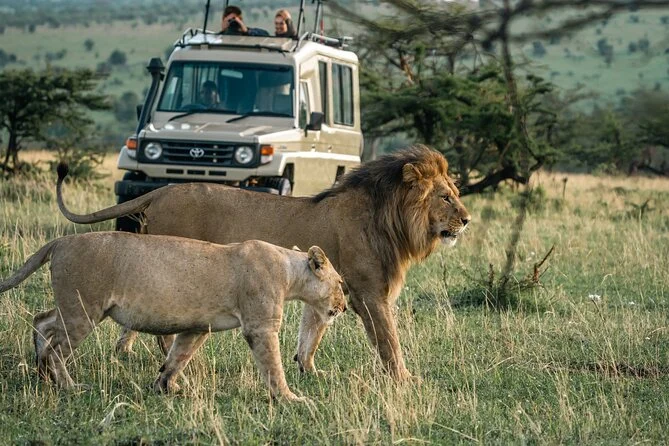

Quick Answer: A 4-day Tanzania budget safari costs from about $1,800 per person when you travel in a small group with camping or basic-lodge accommodation. That figure typically covers national park and Ngorongoro conservation fees, a shared 4×4 with a driver-guide, full-board meals, and airport or hotel transfers. Park fees, the vehicle, and food make up most of the total; private trips and lodge upgrades cost more.
If you have searched “4 day budget safari Tanzania cost,” you have probably seen prices swing from $900 to $3,000 for what looks like the same trip — and no one explains why. I quote this exact itinerary most weeks. In eight years managing bookings at Affordable International Travel, I have processed more than 500 safaris and Kilimanjaro climbs, and the 4-day Northern Circuit is the single most requested route we run. This guide gives you the real number, shows you where every dollar goes, and walks you through a genuine day-by-day route so you know what $1,800 actually buys.
A 4-day safari is the shortest trip that reaches the Serengeti and Ngorongoro Crater without feeling rushed. It is the sweet spot for first-timers on a budget — long enough for the Big Five, short enough to keep the total under control. Below I break down the honest cost, the three things that move the price most, and how to spend less without cutting the parts that matter.
How much does a 4-day Tanzania budget safari cost?
A 4-day budget safari with us starts from $1,800 per person, based on a small group sharing a 4×4 and staying in budget camps or simple lodges. Our 4 Days Tarangire, Ngorongoro Crater and Serengeti Safari sits right at that anchor, and the 4 Days Ngorongoro Crater and Serengeti Safari is close behind at from $1,891.
That “from” price assumes low-to-shoulder-season travel, a shared group vehicle, and camping or basic accommodation. The moment you add a private vehicle, high-season dates, or mid-range lodges, the number climbs. A comfort upgrade like the 4 Days Tarangire & Serengeti Balloon Safari runs from $2,591 per person — same days, very different experience.
Here is roughly how a from-$1,800 trip splits, per person, for a group of four to six sharing:
| Cost component | Share of total | What it covers |
|---|---|---|
| Park & conservation fees | ~35–45% | Tarangire, Serengeti (per 24 hrs), Ngorongoro Crater + crater service fee, all with 18% VAT |
| 4×4 vehicle, fuel & driver-guide | ~25–30% | Pop-up-roof Land Cruiser, fuel, your licensed guide’s time |
| Accommodation | ~15–20% | Budget public campsites or basic lodges, per night |
| Meals (full board) | ~8–12% | Breakfast, lunch, dinner across all four days |
| Transfers, water & incidentals | ~5–8% | Pickup/drop-off, drinking water, park transit |
The exact fee figures above are pending confirmation from our operations desk before this publishes — see editor note. Park fees alone are the reason budget safaris cannot drop below a certain floor: they are set by government, non-negotiable, and identical whether you camp or stay in a $600 lodge.
Why are park fees the biggest single cost?
Park fees are the largest line item because Tanzania’s headline parks charge premium rates, and a 4-day route hits three fee zones. The Tanzania National Parks Authority (TANAPA) sets entry fees per 24 hours, and for a peak-season adult non-resident, Serengeti sits at the top of the range — in the region of $70–83 per person per day once the 18% VAT is added. Tarangire and Lake Manyara are more moderate, typically around $50–59. You can verify current tariffs on the official TANAPA website.
Ngorongoro is billed separately. The crater is managed by the Ngorongoro Conservation Area Authority (NCAA), not TANAPA, so it has its own per-person conservation fee plus a crater service fee charged per vehicle. On a 4-day trip that single day inside the crater is one of your most expensive days on paper — and, in my experience, the one clients rate highest.
Because these figures shift when the government revises tariffs, I never quote them as fixed on a guide like this. I confirm the live total against your exact dates before you pay a deposit. For the full picture across durations, our Tanzania safari cost breakdown lays out how fees scale from 2-day up to 7-day routes.
What is a realistic 4-day budget safari itinerary?
The classic budget route is Tarangire → Serengeti → Ngorongoro Crater, starting and ending in Arusha or Moshi. It gives you three distinct ecosystems in four days without long backtracking. Here is how we run it.
Day 1 — Arusha/Moshi to Tarangire National Park. Morning pickup, roughly a two-hour drive, then an afternoon game drive among Tarangire’s giant baobabs and its famous elephant herds. Overnight at a budget camp or lodge near Mto wa Mbu or Karatu. Tarangire is quieter than the Serengeti and, in dry season, one of the best elephant parks in Africa.
Day 2 — Into the Serengeti. After breakfast you climb through the Ngorongoro highlands and descend into the endless plains of the Serengeti, game-driving as you go. This is a long, rewarding day. Overnight at a Serengeti public campsite or basic camp in the central Seronera area, close to the wildlife.
Day 3 — Serengeti to Ngorongoro. An early morning drive when the cats are most active — this is your best lion and cheetah window — then you turn back toward the Ngorongoro Conservation Area. Overnight on the crater rim or in Karatu.
Day 4 — Ngorongoro Crater and return. Descend 600 metres into the crater floor for a half-day game drive. This is the densest concentration of wildlife on the route, and your strongest chance to complete the Big Five, including the black rhino. After lunch you drive back to Arusha or Moshi for drop-off.
If you would rather swap Tarangire for a gentler first day, the Lake Manyara version follows the same shape — treetop-climbing lions and huge flamingo flocks instead of baobabs and elephants. Both are genuine 4-day budget routes; neither is better, just different.
What is included — and what is not?
A budget safari price includes the essentials that get you into the parks safely and comfortably, and excludes the extras that vary by traveller. What we include on a standard 4-day trip is a 4×4 safari vehicle with a pop-up roof, a licensed English-speaking driver-guide, all national park and conservation entry fees, full-board meals on safari, drinking water in the vehicle, and pickup and drop-off from an agreed point.
What is normally excluded: international flights, Tanzania visa, travel insurance, tips for your guide, alcoholic and soft drinks, and optional activities like a balloon flight. Tipping is the exclusion travellers ask about most — our safari guide tipping guide gives realistic per-day figures so it never becomes an awkward surprise.
The number one costing mistake I see is travellers comparing a camping quote against a lodge quote and assuming the cheaper one is the better operator. It usually just means different accommodation. Always compare like for like: same days, same parks, same board basis, same group or private status.
How can you make a 4-day safari cheaper without cutting quality?
You reduce cost by sharing what can be shared and downgrading only what does not affect your wildlife time. The four levers that actually work, in order of impact:
- Join a group. A shared 4×4 splits the vehicle, fuel, and guide cost across more travellers. Our group joining safari is the single biggest saving for solo travellers and couples.
- Choose camping over lodges. A budget camping safari puts you inside the parks for a fraction of lodge rates, with the same game drives and the same guide.
- Travel in low or shoulder season. Park fees stay the same year-round, but accommodation and availability ease off outside peak months, which pulls the total down.
- Book direct with a local operator. This is where the real gap sits. An overseas agent adds a margin on top of the Tanzanian ground price. We are the ground operator — the 4×4, the guide, and the park payments are all handled in-house.
There is a floor, though, and I will be honest about it. Park fees are fixed by government, so any quote far below the from-$1,800 range is either cutting park days, using an unlicensed operator, or hiding costs you will pay later. A budget safari should be affordable, not risky.
Why does a local Moshi operator cost less than an overseas agent?
A Tanzanian operator costs less because you are removing a middleman, not lowering the standard. When you book through an overseas agency, that agency contracts a Tanzanian ground operator like us and adds its own commission on top. You pay for the same vehicle and the same guide, plus a margin.
Affordable International Travel is 100% Tanzanian-owned and based in Moshi. We have hosted more than 600 travellers from 38 countries and run over 340 safaris and climbs across six national parks and conservation areas, with five certified Tanzanian guides on the team. As a member of the Tanzania Association of Tour Operators (TATO) and working under Tanzania National Parks Authority (TANAPA) regulations, we pay park fees directly at the gate — there is no agent in between marking up your trip. You can see the full team on our meet the guides page.
Is 4 days enough for a Tanzania safari?
Yes, four days is enough to reach the Serengeti and Ngorongoro Crater and see the Big Five, which is why it is our most-booked short itinerary. It is the shortest trip that includes the Serengeti without feeling rushed. Two or three days keeps you closer to Arusha in parks like Tarangire and Manyara, while five to seven days adds more Serengeti time and a slower pace. If this is your first safari and budget matters, four days is the efficient choice — you get the headline parks without paying for extra days you do not need.
What does a 4-day budget safari actually cost per person?
A 4-day budget safari starts from about $1,800 per person, based on a small group sharing a 4×4 and staying in camps or basic lodges. Park and conservation fees make up 35–45% of that, the vehicle and guide about 25–30%, and accommodation and meals most of the rest. Private vehicles, high-season dates, and lodge upgrades push the figure higher. Because government park fees can change, I confirm the exact live total against your travel dates before any deposit rather than quoting a fixed number that goes stale.
Is camping or a lodge better for a budget safari?
For pure value, camping wins — it puts you inside the parks at a fraction of lodge rates, with identical game drives and the same guide. Public campsites in the Serengeti sit close to the wildlife, and the tents and meals on our camping safaris are set up for you. A basic lodge costs more but adds a solid roof, a shower, and a bed, which some travellers prefer after long game-drive days. Neither changes what you see. It comes down to comfort versus cost, not quality of safari.
Are park fees included in the safari price?
Yes, on our safaris all national park and Ngorongoro conservation fees are included in the quoted price, along with the 18% VAT. This is worth checking with any operator, because some advertise a low headline figure and then add park fees separately at booking. Park fees are the largest single cost on a 4-day trip, so a quote that excludes them is not really cheaper — it is incomplete. Always ask whether entry fees, crater service fees, and VAT are already inside the number you have been given.
When is the cheapest time to do a 4-day safari?
The low and shoulder seasons, roughly April to May and parts of November, are cheapest because accommodation rates ease and availability opens up. Park fees themselves stay the same all year, so the saving comes from lodging and demand, not gate prices. The trade-off is more rain in the long-rains period, though wildlife is still very much present and the parks are far quieter. For dry-season game viewing at lower cost, the shoulder weeks on either side of peak are the sweet spot.
Can I do a 4-day safari as a solo traveller on a budget?
Yes, and joining a group is the way to make it affordable. A shared 4×4 splits the vehicle, fuel, and guide cost across several travellers, which is the single biggest saving for anyone travelling alone. A private 4-day safari is entirely possible but costs more per person because you carry the full vehicle cost yourself. If keeping the price down matters more than a private vehicle, a group joining safari gives you the same parks, the same guide, and a much lower total.
Final thoughts on your 4-day budget safari
A 4-day Tanzania budget safari is the smartest short trip in the country — the Serengeti, Ngorongoro Crater, and a third park like Tarangire, from $1,800 per person done well. Keep these four things in mind:
- Park and conservation fees are the biggest cost and are fixed by government — they set the honest price floor.
- Sharing a vehicle and choosing camping are the two levers that cut cost without cutting your safari.
- Booking direct with a local operator removes the overseas agent’s margin, not the quality.
- Any quote far below the from-$1,800 range is cutting corners you will feel later.
You now have the real number, the real route, and the questions to ask before you pay a deposit. When you are ready for a firm price on your exact dates, talk to me directly on WhatsApp: +255 740 453 344 — send me your dates and group size and I will send back a real 4-day quote, not a vague estimate. You can also browse every option on our Tanzania safari tours page or get in touch here.