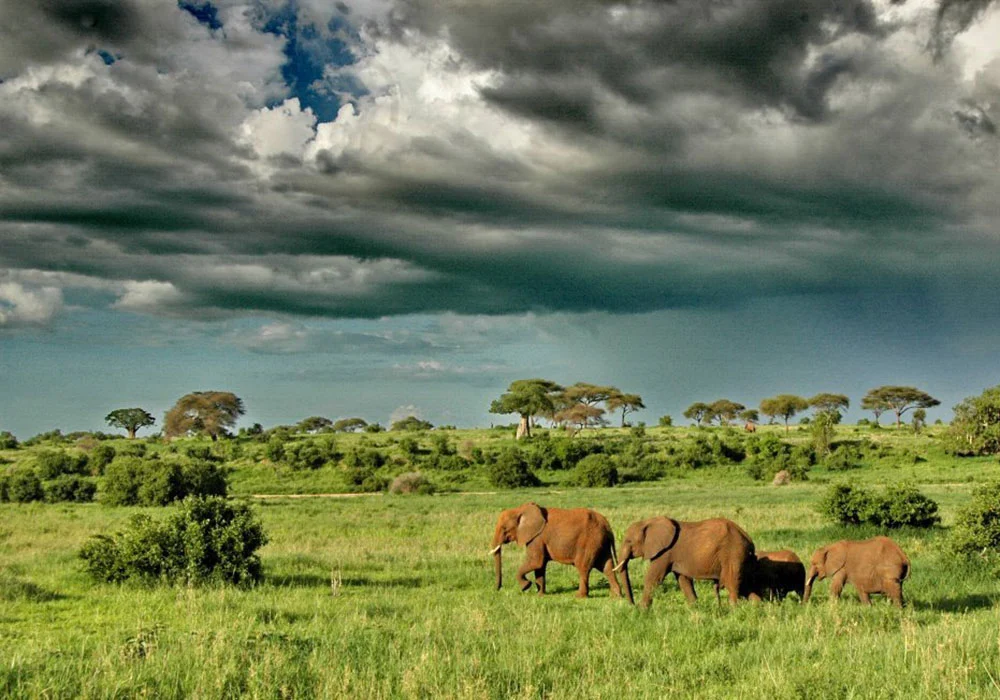

Low season (green/wet season) for Tanzania safaris runs March–May, with shoulder months in November–February offering similar value. Pros include 30–50% lower prices, near-private game drives, lush green scenery, excellent birdwatching, and dramatic photography. Cons are dispersed wildlife, occasional afternoon rains, and denser vegetation that can hide animals. Costs drop to $1,500–$2,000 per person for a 5-day northern circuit (vs $2,500–$3,500 in peak dry season), thanks to accommodation deals while park fees stay fixed. It’s ideal for budget-conscious international travelers seeking authentic wildlife without the crowds.
Every Tanzania safari guide on the internet tells you the same thing: visit between June and October. Dry season. Clear skies. Great Migration. Full parks. Guaranteed sightings. And they are not wrong — the dry season is genuinely excellent.
What most guides do not tell you is what the low season actually looks like from inside a safari vehicle in April. Not from a lodge veranda watching rain fall, not through the windscreen of a stationary 4WD — but from a game drive that started at 6am in cool, fresh air, moving through a Serengeti that has turned a vivid deep green, with no other vehicle for twenty kilometres in any direction.
That is the low season most experienced Tanzania safari travellers know. Not the caricature of floods and cancelled drives, but a different, quieter, more intimate version of the same parks — at 30–50% of what you would pay in July.
At Affordable International Travel Ltd, we run safaris in every single month of the year. Our guides are in Tarangire, the Serengeti, and the Ngorongoro Crater in April and May every year. This guide is written from what we see on the ground — not from a spreadsheet or a generalisation. We will give you every pro, every genuine con, and every cost number so you can make an informed decision about whether the low season is right for you.
What Exactly Is Tanzania’s Low Season?
Tanzania has two rainy seasons, which creates a calendar that the safari industry divides roughly as follows:
Low season (green season): April and May — the long rains. This is when accommodation discounts are deepest, parks are emptiest, and the landscape is most dramatically lush.
Shoulder season: March (early long rains beginning), November (short rains), and January–February (short dry window post-short rains). Prices drop meaningfully but not as deeply as April–May.
Peak season: June to October — the long dry season. This is when prices are highest, parks are busiest, and the Great Migration river crossings dominate the Serengeti’s northern section.
This guide focuses primarily on the deepest low season — April and May — while also covering March and November, which offer compelling value at somewhat less challenging conditions.
The Pros of a Tanzania Low Season Safari
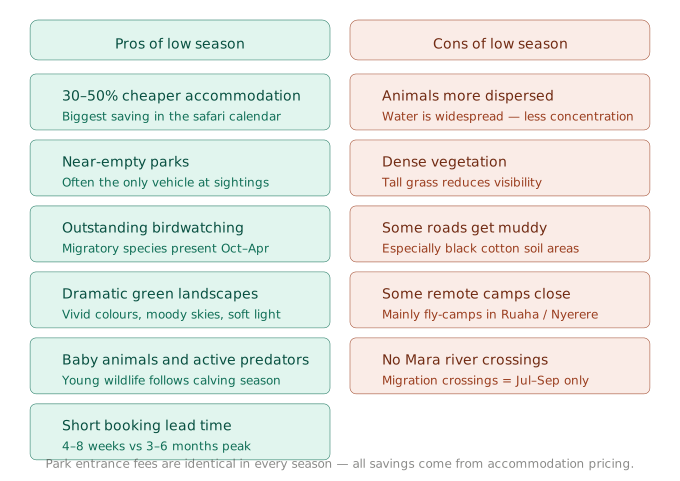
1. Accommodation Costs Drop 30–50%
This is the headline number and it is real. Most mid-range and upper mid-range lodges and tented camps in Tanzania’s national parks price their green season rates at 30–50% below their peak figures. A lodge that charges $280 per person per night in August may charge $150 in April. That is not a marginal discount — it is a fundamental change in what a safari costs.
For a couple on a 5-day northern circuit safari covering Tarangire, the Serengeti, and Ngorongoro, this discount translates to a per-person saving of $500–$1,500 depending on the accommodation tier. On a per-couple basis, the low season can save $1,000–$3,000 on a trip of this length — enough to fund a Zanzibar extension, a second safari, or simply significant extra budget flexibility.
Park entrance fees, it bears repeating, are fixed year-round. The $70 Serengeti entrance fee is identical in April and August. Tanzania’s national park fee structure — unlike Kenya’s Masai Mara, which charges $200 per person per day in high season — does not vary with the calendar. The entire seasonal saving comes from accommodation, which makes the low season discount genuinely substantial rather than cosmetic.
2. Parks Are Beautifully, Genuinely Empty
In peak season, the Serengeti’s most popular game viewing areas around Seronera can have dozens of vehicles converged on a single lion sighting. The game drives are excellent, but the sense of wild, empty Africa is harder to maintain when you are parked in a queue of eight Land Cruisers.
In April, that dynamic disappears entirely. Our guides regularly spend full-day game drives in the central Serengeti during low season without encountering another vehicle from a different operator. The Ngorongoro Crater, which can feel busy on a peak-season morning with ten or twelve vehicles working the same floor area, becomes a near-private experience. It is genuinely possible to watch a lion pride for an extended period — or track a black rhino across the open grassland — with nobody else in sight.
For travellers who value the quality of solitude as part of the safari experience — and many experienced travellers consider this the single most important variable — the low season delivers something that peak season simply cannot replicate regardless of what you pay.
3. The Landscape Is Strikingly, Photographically Beautiful
The dry season’s appeal is undeniable: short golden grass, easy visibility, animals silhouetted against dust-hazed horizons. But the green season has its own distinct visual language, and for photographers it is arguably more interesting.
Everything is vivid in April and May. The Serengeti’s plains turn a deep emerald that photographers with long experience in Tanzania describe as unlike anything available in the dry months. Baobabs in Tarangire are full and green rather than skeletal. The Ngorongoro Crater’s floor is lush and layered. Dramatic cumulus clouds build over the escarpments by mid-morning, producing photographic light that is warmer, more atmospheric, and more varied than the flat bright sky of peak season.
If you are travelling with a camera and care about landscape photography alongside wildlife, the green season genuinely produces a different set of images — and in many cases more compelling ones. The iconic dust-and-savannah photographs can be taken in peak season by anyone. The misty-crater-floor-at-dawn photographs are a green season exclusive.
4. Birdwatching Is at Its Annual Peak
Tanzania has over 1,100 recorded bird species. Between October and April, European and Asiatic migratory species arrive in their hundreds, joining the country’s extraordinary year-round resident birdlife. The result is that the wet season and shoulder months represent the absolute finest birdwatching Tanzania offers.
For dedicated birders, April and May are not the low season — they are the high season. Lake Manyara National Park is spectacular for flamingos along the lakeshore and for the extraordinary diversity of forest and woodland birds in the groundwater forest. Tarangire’s bird count of over 450 species is at its most accessible during the wet season. The Serengeti’s open grasslands host ground-nesting species, raptors in breeding plumage, and vast flocks of migratory waders.
If birding is a priority alongside wildlife viewing, a low season safari is not a compromise — it is the correct choice.
5. New Life: Baby Animals and Active Predators
The low season follows the calving season of late January and February. By April and May, the bush is full of young animals — juvenile elephants, calves of all ungulate species, young lions and cheetahs learning to hunt. Mother-offspring interactions, juveniles at play, and the general energy of a landscape in its most productive phase are at their most visible.
Predators in the green season are active hunters — the vegetation’s partial concealment makes stalk-and-ambush hunting more effective, and the presence of young, less-experienced prey animals keeps kill rates high. Our guides consistently report seeing lion kills, cheetah hunts, and leopard activity during low season game drives, often at closer range than dry season sightings because the shorter sight lines bring predators closer before they are detected.
6. More Flexibility When Booking
Peak season in Tanzania requires advance planning of 3–6 months for popular lodges, particularly in the Serengeti during July–September. Low season offers significantly more flexibility. Most properties have availability with lead times of 4–8 weeks, and some can accommodate bookings with even shorter notice. For spontaneous travellers or those with uncertain schedules, this flexibility is genuinely valuable.
It also means more negotiating room. Some operators and lodges offer additional value-adds during low season — room upgrades, extended stays, complimentary activities — that are simply unavailable during peak periods when demand fills every bed regardless.
The Cons of a Tanzania Low Season Safari
1. Animals Are More Dispersed
This is the most significant and honest trade-off of the low season. During the dry season, water sources concentrate across a progressively smaller area, forcing animals to converge at rivers and waterholes. This creates the extraordinary wildlife density that peak season is famous for — hundreds of elephants at the Tarangire River, massive wildebeest herds in the Serengeti, predators and prey packed into predictable locations.
In the green season, rainfall creates water across a wide area. Animals spread out. An elephant herd that might congregate in a tight group of fifty near a dry-season waterhole may scatter over several square kilometres when every depression holds water. This means more driving, more time searching, and less of the dramatic high-density encounters that peak season delivers so reliably.
This is not the same as saying wildlife is absent — all of Tanzania’s permanent wildlife is present in April and May, and our guides find it consistently. But the searching requires more skill, more patience, and more kilometres. An experienced guide who knows the parks well makes the difference between a frustrating green season game drive and a rewarding one. This is one of the most important reasons to book with a reputable local operator rather than the cheapest option you can find.
2. Vegetation Is Dense
Tall, lush vegetation in the green season is beautiful but also provides cover for wildlife. Animals that are easy to spot in October’s short dry grass — lions resting on open ground, cheetahs on termite mounds, leopards in low acacia branches — become harder to locate in April’s tall grass. Sightings may be briefer and more distant.
This does not mean low season game drives are unproductive. It means the experience is different — more searching, more active scanning, and more appreciation for the environmental context of animal behaviour. Many experienced safari travellers find this more engaging, not less. A lion you worked for carries different weight than one spotted from 500 metres across bare ground.
3. Some Roads Become Challenging
Tanzania’s dirt roads inside national parks can become muddy and difficult to navigate during heavy rain periods. The Serengeti’s black cotton soil is notorious for becoming particularly treacherous when wet — sticky mud that can immobilise even a well-equipped 4WD.
In practice, this is managed through careful route planning and experienced guiding. Our drivers know the Serengeti’s soil types and avoid the worst areas in wet conditions. But it is honest to acknowledge that some of the more remote park areas — particularly in the western Serengeti and parts of Ruaha — become less accessible during the heaviest rain periods, and certain game drive routes that are standard in the dry season may be substituted with alternatives.
For most northern circuit parks — Tarangire, Lake Manyara, and the main Serengeti game viewing areas — road conditions in April and May are challenging in patches but manageable with the right vehicle and driver. Mikumi National Park is road-accessible year-round from Dar es Salaam and experiences fewer accessibility issues than more remote parks.
4. Some Remote Camps Close
A small number of the most remote bush camps in Tanzania’s southern circuit — particularly in Ruaha and Nyerere — operate on a seasonal schedule and close during the heaviest rain months. This is typically March through May at the most remote fly-camp operations. The permanent lodges and main camps remain open, but the most adventurous and remote accommodation options may not be available.
Before booking, always confirm with your operator which specific properties are open during your intended travel dates. Affordable International Travel Ltd will always verify this before confirming any booking.
5. Rain Timing Is Unpredictable
Tanzania’s long rains are not a clockwork event. In some years, April is genuinely wet — heavy afternoon and evening rains most days, with morning windows that are clear but brief. In other years, April is drier than expected, with rains arriving later or lighter than average. The short rains in November are similarly variable — sometimes they barely register; occasionally they arrive more heavily than expected.
This unpredictability means low season travellers need to hold their plans more lightly than peak season visitors. Your morning game drive will almost certainly proceed — the rains predominantly fall in the afternoons — but you should not plan a low season safari around guaranteed perfect weather conditions every single day.
Low Season Safari Cost: What You Actually Pay
The cost reality of a Tanzania low season safari is one of the most frequently misunderstood things in safari planning. Here is the honest, itemised picture.
Park Entrance Fees: Identical Year-Round
As noted throughout this guide, Tanzania’s TANAPA park fees do not change with the season. You pay exactly the same daily entrance fee regardless of when you visit:
| Park | Daily Fee Per Adult (Non-Resident) |
|---|---|
| Serengeti National Park | $70.00 |
| Ngorongoro Conservation Area | $70.10 |
| Tarangire National Park | $53.10 |
| Lake Manyara National Park | $53.10 |
| Mikumi National Park | $35.00 |
| Ruaha National Park | $29.00 |
| Nyerere (Selous) National Park | $29.00 |
On a 5-day northern circuit safari, park fees total approximately $306 per adult regardless of whether you travel in April or August. This is one of the reasons Tanzania low season savings are so meaningful — the largest fixed cost of the safari is unchanged, while the largest variable cost (accommodation) drops dramatically.
Accommodation: Where the Savings Live
Budget accommodation (camping / basic tented):
- Peak season: $50–$100 per person per night
- Low season: $30–$60 per person per night
- Saving: 20–40%
Mid-range lodges and tented camps:
- Peak season: $180–$350 per person per night
- Low season: $100–$200 per person per night
- Saving: 30–50%
Upper mid-range properties:
- Peak season: $350–$600 per person per night
- Low season: $180–$350 per person per night
- Saving: 30–50%
5-Day Northern Circuit Safari: Full Cost Comparison
| Cost Component | Peak Season (Jul–Sep) | Low Season (Apr–May) |
|---|---|---|
| Park fees (5 days, shared group) | ~$306 | ~$306 |
| Accommodation (4 nights, mid-range) | $720–$1,400 | $400–$800 |
| Safari vehicle + guide (shared) | ~$120–$180 | ~$120–$180 |
| Meals, full board | Included | Included |
| Transfers | Included | Included |
| Total per person (approx.) | $2,500–$3,500 | $1,500–$2,000 |
| Per couple total saving | — | $1,000–$3,000 |
and our 5-day Tarangire, Ngorongoro, and Serengeti safari also starts from $2,000 per person — both fully inclusive with no hidden extras. These prices are achievable year-round, with green season departures often coming in at the lower end of the range.
For shorter trips, the 3-day Tarangire, Lake Manyara, and Ngorongoro safari starts from $1,100 per person and the 2-day Tarangire and Lake Manyara safari from $700 per person — making the low season’s budget-friendly conditions accessible even to travellers with just a weekend to spare.
Which Parks Perform Best in the Low Season?
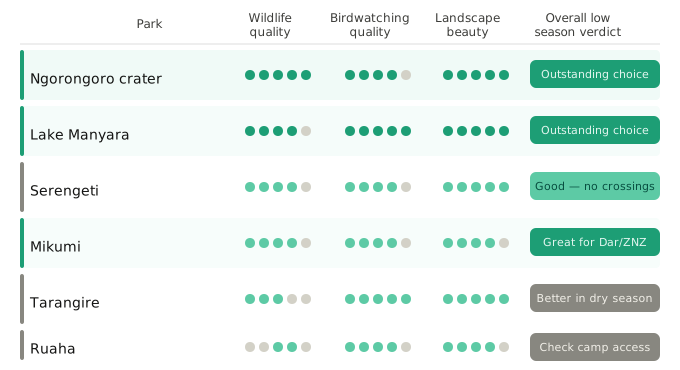
Not all Tanzania parks respond equally to the green season. Some are outstanding in April and May; one or two require more managed expectations. Here is our honest assessment park by park.
Ngorongoro Crater — Outstanding in Low Season
The Ngorongoro Crater is Tanzania’s most season-resistant wildlife destination. The crater walls and permanent water sources maintain a high year-round wildlife concentration regardless of external rainfall patterns. In April and May, the crater floor is at its most photogenic — lush green vegetation, dramatically atmospheric misty mornings, and near-empty roads. Flamingos on the lake are typically more abundant in the wet season. The black rhino population, the lions, the elephants, and the buffalo are all present and active. We consider Ngorongoro one of the best low season options in the entire country — you pay the same $70.10 entrance fee as in peak season but enjoy a far more private experience.
Lake Manyara — Excellent in Low Season
Lake Manyara is one of the few parks that is arguably better in the wet season than the dry. The lake fills and flamingos arrive in substantial flocks. The groundwater forest is vibrant and noisy with bird activity. The tree-climbing lions — always present in Manyara — are actually easier to spot in the wet season because the density of the forest canopy slows their movement and keeps them visible from the road for longer periods. Birdwatching here in April is exceptional. This is consistently one of our top low season recommendations.
Serengeti — Good, With Park Area Nuance
The Serengeti is large enough that its low season performance varies by zone. The central Serengeti (Seronera area) — where permanent water sources maintain year-round wildlife including the famous Seronera lion and leopard population — is good year-round and performs well in the green season. Lions, leopards, cheetahs, elephants, hippos, and all resident wildlife are present and active. The wildebeest herds are in the park, beginning their westward and northward movement from the southern plains.
What low season genuinely lacks in the Serengeti is the migration’s northern river crossing drama — that belongs to July–September. For travellers who specifically want the Mara River crossings, April and May are not the right months. For travellers who want excellent Big Five game viewing in the world’s most famous park without the crowds, April and May deliver very well.
Tarangire — Decent in Low Season, Exceptional in Dry Season
Tarangire is one of the parks most dramatically affected by seasonality. Its extraordinary dry season performance — when the Tarangire River becomes the only water source for hundreds of kilometres and elephants converge in extraordinary numbers — is its standout feature, and that dynamic simply does not exist in the green season when water is abundant everywhere.
Low season Tarangire still has its permanent elephant residents, good birdwatching, the magnificent baobab landscapes, and reliable predator activity. It is a worthwhile low season destination — just not the transcendent dry-season experience that makes it special. If seeing Tarangire’s maximum elephant spectacle is your primary goal, aim for June–October.
Mikumi — Consistently Good Year-Round
Mikumi is road-accessible from Dar es Salaam year-round, and its Mkata Floodplain maintains excellent wildlife visibility even in the green season. Its lower altitude compared to northern circuit parks means rain is often lighter and road conditions more consistently manageable. For travellers based in Dar es Salaam or Zanzibar looking for a low season safari that avoids difficult road access, Mikumi is our strongest recommendation.
Ruaha — Selective Low Season Value
Ruaha National Park is at its greatest in the dry season when the Great Ruaha River concentration of wildlife is extraordinary. During the heaviest rains (March–April), some remote camps close and road conditions in this remote southern park can be genuinely challenging. However, Ruaha’s May game viewing — as the rains ease — can be good, particularly for birding and for the park’s exceptional lion populations. If visiting Ruaha in low season, confirm camp availability and access conditions with our team before booking.
What the Rain Is Really Like: The Honest Account
The single most distorted piece of information in Tanzania low season planning is the rain itself. The word “rainy season” conjures images of grey skies and constant downpours. The reality is quite different.
Tanzania’s long rains are typically convective — meaning they build from afternoon heat rather than arriving as sustained frontal systems. The pattern in most years is: clear, cool mornings from 5am until 11am–12pm; clouds building through midday; rain arriving in the afternoon between roughly 2pm and 5pm; then clearing for dramatic golden-hour light and a clear, starry night.
What this means for safari game drives: your 6am departure happens in dry, fresh conditions almost every day. Your morning session — typically 6am to 11am — is conducted in ideal weather with excellent light. Your afternoon game drive (typically 3:30pm to 6:30pm) may encounter rain — either mid-drive as a passing shower, or at the end of the day. This is manageable: pop-up roof vehicles can be partially closed, and a rain shower on the Serengeti plain is an atmospheric experience rather than a disaster.
Days of sustained all-day rain do occur — perhaps 3–5 days per month during the heaviest April periods — and on those days game drive quality is reduced. But these are the exception, not the rule. The majority of April and May days follow the pattern described above, and morning game drives are almost entirely unaffected.
According to the Tanzania Meteorological Authority, April is the wettest month across most of northern Tanzania, with Arusha averaging approximately 150–200mm of rainfall spread across the month. Most of this arrives in the afternoon and evening, confirming the morning-clear pattern that our guides observe in the field.
Who Should Book a Tanzania Low-Season Safari?
Based on years of guiding low-season safari travellers, here is an honest profile of who benefits most.
Low season is genuinely right for you if:
- Budget is a meaningful consideration, and you want to maximise what you see per dollar spent
- You value privacy, solitude, and the feeling of being alone in the bush over maximum wildlife density
- You are a passionate birdwatcher for whom April–May is actually the best time in Tanzania
- You are a photographer seeking atmospheric, non-standard landscape images
- Wildlife photography is a priority and you want dramatic skies, lush green backdrops, and softer light
- You have been on safari before and want a different, more intimate version of the same parks
- You are a flexible, experienced traveller who embraces the unexpected as part of the adventure
- You want to travel on short notice without months of advance planning
Low season is probably not right for you if:
- The Great Wildebeest Migration river crossings are specifically why you are coming to Tanzania — you need July–September for that
- You are a first-time safari traveller who would find dispersed wildlife or difficult road conditions disappointing
- Rain significantly affects your enjoyment — even predictable afternoon showers would genuinely diminish the experience for you
- You are travelling with young children who need a reliable, structured daily schedule
- Maximum wildlife density and the highest probability of seeing specific animals quickly is your primary goal
7 Practical Tips for a Successful Low Season Safari
1. Choose your guide carefully. Low season game viewing rewards skilled, experienced guiding more than any other time of year. A great guide who knows where animals shelter during wet weather, which corridors elephants use in green vegetation, and how to read a changed landscape makes the difference between a frustrating and a memorable low season safari. All Affordable International Travel Ltd guides are locally licensed and personally familiar with the parks they lead in every season.
2. Pack a light waterproof layer. A lightweight rain jacket or poncho is essential. Morning departures can be genuinely cool in the highlands (Ngorongoro is often below 15°C at dawn), and afternoon game drives may encounter light rain. Nothing heavy — the rain is usually brief.
3. Bring a good camera with weather sealing if you have one. Green season light rewards photography. Dramatic clouds, vivid colours, and excellent animal behaviour make for extraordinary images. If your camera is not weather-sealed, a simple zip-lock bag provides adequate protection against light rain showers.
4. Book accommodation inside or close to the park. Staying inside a park or on its immediate edge means morning game drives can begin earlier and road conditions between your accommodation and the park gate are not a concern. In the green season, minimising unnecessary road travel also reduces your exposure to mud on access routes.
5. Be flexible about which areas you game drive. Your guide will know which park sections have the best conditions on any given day — and those sections can shift week to week in the green season as water availability changes. Trust local knowledge rather than insisting on specific areas you read about in dry season reviews.
6. Book directly with a local Tanzanian operator. This is true year-round but especially relevant in the low season. Local operators like Affordable International Travel Ltd have current, up-to-date information about conditions, which camps are open, and which areas are most productive. International booking platforms cannot provide this level of on-the-ground intelligence.
7. Consider combining with Zanzibar. The green season is one of the best times for a safari-and-beach combination. Low season lodge rates keep your mainland costs down, and Zanzibar’s April–May weather — the island’s long rains — is actually its own off-season, with beach resort prices at their lowest. A combined safari and Zanzibar trip in April is among the most affordable Tanzania holidays possible.
Real Costs from Our Portfolio: What Low Season Looks Like in Practice
Here are actual package prices from our current portfolio at Affordable International Travel Ltd, applicable across the year with green season rates at or below the stated floor:
| Package | Duration | Price From (Per Person) |
|---|---|---|
| 2 Days Tarangire and Lake Manyara | 2 days | $700 |
| 2 Days Lake Manyara and Ngorongoro | 2 days | $700 |
| 3 Days Tarangire, Lake Manyara, and Ngorongoro | 3 days | $1,100 |
| 3 Days Arusha, Tarangire, and Ngorongoro | 3 days | $1,100 |
| 3 Days Game Drive, Culture, and Bush Walk | 3 days | $1,500 |
| 4 Days Tarangire, Ngorongoro, and Serengeti | 4 days | $1,800 |
| 4 Days Lake Manyara, Serengeti, and Ngorongoro | 4 days | $1,800 |
| 5 Days Lake Manyara, Serengeti, and Ngorongoro | 5 days | $2,000 |
| 5 Days Tarangire, Ngorongoro, and Serengeti | 5 days | $2,000 |
Every package includes park fees, vehicle, licensed guide, full-board meals, bottled water, and all transfers. No hidden fees.
Low Season vs Peak Season: A Summary Comparison
| Factor | Low Season (Apr–May) | Peak Season (Jul–Sep) |
|---|---|---|
| Accommodation cost | 30–50% lower | Full price |
| Park entrance fees | Identical | Identical |
| Wildlife density | Moderate (dispersed) | High (concentrated) |
| Crowd level | Very low / near private | High |
| Road conditions | Challenging in places | Excellent |
| Vegetation | Dense and vivid green | Short and golden |
| Birdwatching | Outstanding (migratory species present) | Good |
| Predator sightings | Good — active hunters | Excellent — concentrated |
| Migration river crossings | Not available | July–Sept (northern Serengeti) |
| Calving season | Ending (Jan–Feb peak) | Not present |
| Photography landscape | Dramatic, vivid, unique | Classic, golden, standard |
| Booking lead time needed | 4–8 weeks | 3–6 months |
| Overall value for money | Outstanding | Good |
Frequently Asked Questions
Is it safe to go on safari during Tanzania’s rainy season?
Yes. Tanzania’s national parks are open and fully operational year-round. Safari vehicles are 4WD and equipped for wet conditions. TANAPA manages the parks and road network throughout the low season. Safety standards for guides, vehicles, and park operations do not change with the season. Affordable International Travel Ltd operates safaris throughout April and May every year without safety incidents related to weather conditions.
Do animals migrate out of the parks during the low season?
No. Tanzania’s national parks hold permanent wildlife populations year-round. What changes is how animals are distributed within the park — they spread more widely across the landscape when water is abundant — not whether they are present. The wildebeest population cycles through the Serengeti-Mara ecosystem as part of the Great Migration, but this is a seasonal movement within the ecosystem rather than a departure from it. In April and May, the wildebeest herds are in the central and western Serengeti, not the northern crossing zones.
How much cheaper is a low season Tanzania safari compared to peak season?
The typical saving on accommodation is 30–50% compared to peak season rates. On a 5-day northern circuit safari, this translates to a per-person saving of approximately $500–$1,500 depending on accommodation level. Since park fees are fixed year-round at the same rate, the total safari cost in low season is typically 25–40% lower than the peak season equivalent itinerary. For a couple, total savings of $1,000–$3,000 are achievable.
Will I see the Great Migration during the low season?
The Great Migration’s most famous spectacle — the Mara River crossings in the northern Serengeti — happens between July and October and is not available in April and May. However, the wildebeest herds are present in the Serengeti during the low season, moving through the central and western corridors. The calving season (January–February), which is also part of the migration cycle and equally dramatic in a different way, occurs in the southern Serengeti before the low season begins.
Which Tanzania parks are best for a low season safari?
Our top low season recommendations are Ngorongoro Crater (exceptional year-round, near-private in April–May), Lake Manyara (outstanding for flamingos and birdwatching in the wet season), the central Serengeti (good year-round wildlife at lower crowding), and Mikumi (consistently accessible and excellent value year-round from Dar es Salaam). Tarangire is decent but performs better in the dry season. Ruaha requires careful planning due to remote access and some camp closures.
Can I combine a low-season safari with Zanzibar?
Yes, and it can work very well. Zanzibar in April–May also experiences its own off-season (the long rains affect the island too), which means beach resorts are at their lowest prices of the year. A combined mainland safari and Zanzibar beach trip in April is the most cost-effective Tanzania holiday possible. Internal flights between Arusha/Dar es Salaam and Zanzibar operate year-round. Our team at Affordable International Travel Ltd regularly arranges combined safari-and-beach itineraries for both peak and low season travellers.
Conclusion
The low season label creates a false impression. It implies something lesser, something deficient, something you choose only because you cannot afford to do it properly. None of that is true.
A Tanzania low season safari in April or May is a different experience from a July safari — not an inferior one. The parks are emerald and alive. The light is dramatic. The birds are extraordinary. The animals are present, active, and viewable by anyone with a skilled guide and a willingness to look properly. And you are almost certainly alone.
What you do not get is the extreme wildlife concentration of the dry season or the drama of the Mara River crossings. Those are specific experiences, available at specific times, that genuinely justify the premium cost for the travellers who specifically want them. For everyone else — budget-conscious travellers, photographers, birders, repeat visitors, anyone who values privacy over crowd company — the low season is not a concession. It is a choice.
At Affordable International Travel Ltd, we have guided travellers through Tanzania’s parks in every month of the year. We know what April looks like from inside the Serengeti and what May looks like on the Ngorongoro Crater floor. We know which mornings produce extraordinary sightings and why. And we know how to build itineraries that give you the best possible version of a low season safari for every budget level.
Our packages start from $700 per person for a 2-day combination safari and reach comprehensive 5-day circuits for $2,000 per person — all fully inclusive, all with zero hidden fees, and all available in the low season at the prices that make this the most compelling value window in Tanzania safari travel.
Request your free, no-obligation low-season safari quote today →
Explore Our Tanzania Safari Options
- All Tanzania Safari Tours — Browse by duration and price
- Serengeti National Park Safari
- Ngorongoro Crater Safari
- Tarangire National Park Safari
- Lake Manyara Safari
- Mikumi National Park Safari
- Ruaha National Park Safari
- 2 Days Tarangire and Lake Manyara — from $700/person
- 3 Days Tarangire, Lake Manyara, and Ngorongoro — from $1,100/person
- 5 Days Lake Manyara, Serengeti, and Ngorongoro — from $2,000/person
- 5 Days Tarangire, Ngorongoro, and Serengeti — from $2,000/person
- All Tanzania Safari Destinations
- Contact Us — Talk to a Safari Expert