- From $2,000 /person
- 5 or 6 days
- Price Includes
The Rongai Route is one of the quietest and most scenic routes on Mount Kilimanjaro.
It approaches the mountain from the north, features a gradual ascent, fewer crowds, and strong summit success rates—especially on the 6-day itinerary. The route uses camping accommodation, starts at Rongai Gate, and descends via Marangu Gate after summiting Uhuru Peak (5,895 m). It’s ideal for budget travelers, beginners, and trekkers seeking a more natural experience.
About This Activity
Duration: 5 or 6 days
Difficulty Level: Moderate (steady trails, gradual incline)
Accommodation: Camping (mountain tents)
Nickname: The Quiet Route / Northern Route
Success Rate:
5 Days: ~75–80%
6 Days: ~80–90%
Distance: ~73 km
Best For: Budget travelers, beginner climbers, small groups, first-time high-altitude trekkers
Starting Point: Rongai Gate (North of Kilimanjaro)
Ending Point: Marangu Gate
Highest Point: Uhuru Peak (5,895 m)
Why Choose the Rongai Route?
The Rongai Route is perfect if you want a less stressful, less crowded climb without sacrificing your chances of reaching the summit.
Key Reasons Travelers Love Rongai
Fewer crowds than Marangu and Machame
Gentle, gradual ascent—great for beginners
Drier conditions, especially during the rainy seasons
Excellent wildlife sightings on the lower slopes
Stronger acclimatization on the 6-day option
Budget-friendly compared to longer premium routes
If your goal is to enjoy the journey—not just rush to the top—Rongai delivers a calmer, more immersive Kilimanjaro experience.
Overview
The Rongai Route approaches Kilimanjaro from the remote northern wilderness, where the landscape feels raw and untouched.
Early days pass through pine forests and open moorlands, with wide skies and quiet trails that make it easier to find your rhythm.
Unlike steeper routes, Rongai climbs gradually, giving your body more time to adapt to altitude.
After reaching the alpine desert zone near Kibo, you’ll summit via the Marangu Route and descend the same way—allowing you to experience two sides of the mountain in one climb.
This balance of solitude, scenery, and smart pacing is what makes Rongai so appealing—especially for budget travelers who still want a high-quality trekking experience.
Gallery
What to Expect
Day 1: Hotel Pickup → Rongai Gate → Simba Camp
Your journey begins with an early morning pickup from your hotel in Moshi or Arusha. After meeting your mountain crew and completing a final gear check, you’ll drive to the remote Rongai Gate, located on the northern side of Kilimanjaro near the Kenyan border.
After registration and a safety briefing, the trek starts through pine forest and farmland, a unique landscape not seen on southern routes. The trail is wide and gentle, allowing your body to ease into the climb. Wildlife sightings—such as colobus monkeys and antelope—are possible on this first day.
At Simba Camp, your tents will already be set up by the crew. You’ll enjoy a freshly prepared hot meal and a health check from your guide, including oxygen saturation and pulse monitoring.
Altitude: ~1,950 m → 2,600 m
Distance: ~8 km
Trekking Time: 3–4 hours
Terrain: Forest trails
Accommodation: Camping
Day 2: Simba Camp → Second Cave Camp
The forest gradually thins as you climb into open moorland, offering wider views of the mountain’s northern slopes. The pace remains slow and steady, following our “pole pole” (slowly, slowly) approach, which is critical for proper acclimatization.
This day is designed to allow your body to adapt naturally. Your guide will regularly check how you’re feeling and adjust walking speed if necessary.
Lunch is served along the trail, and the afternoon is spent resting, hydrating, and acclimatizing.
Second Cave Camp offers cooler temperatures and clearer night skies, giving you a real sense of being high on the mountain.
Altitude: 2,600 m → 3,450 m
Distance: ~7 km
Trekking Time: 5–6 hours
Terrain: Moorland and gentle slopes
Accommodation: Camping
Day 3: Second Cave Camp → Kikelewa Camp
Although shorter in distance, today includes a slightly steeper section, helping your body continue its adaptation to altitude. Vegetation becomes sparse, and the scenery more dramatic as you enter the alpine zone.
This is an important acclimatization day. Our guides encourage slow walking, deep breathing, and frequent hydration. Upon arrival at Kikelewa Camp, you’ll have time to rest, enjoy warm drinks, and take short acclimatization walks under guide supervision.
Altitude: 3,450 m → 3,600 m
Distance: ~5 km
Trekking Time: 3–4 hours
Terrain: Rocky paths and alpine terrain
Accommodation: Camping
Day 4: Kikelewa Camp → Mawenzi Tarn
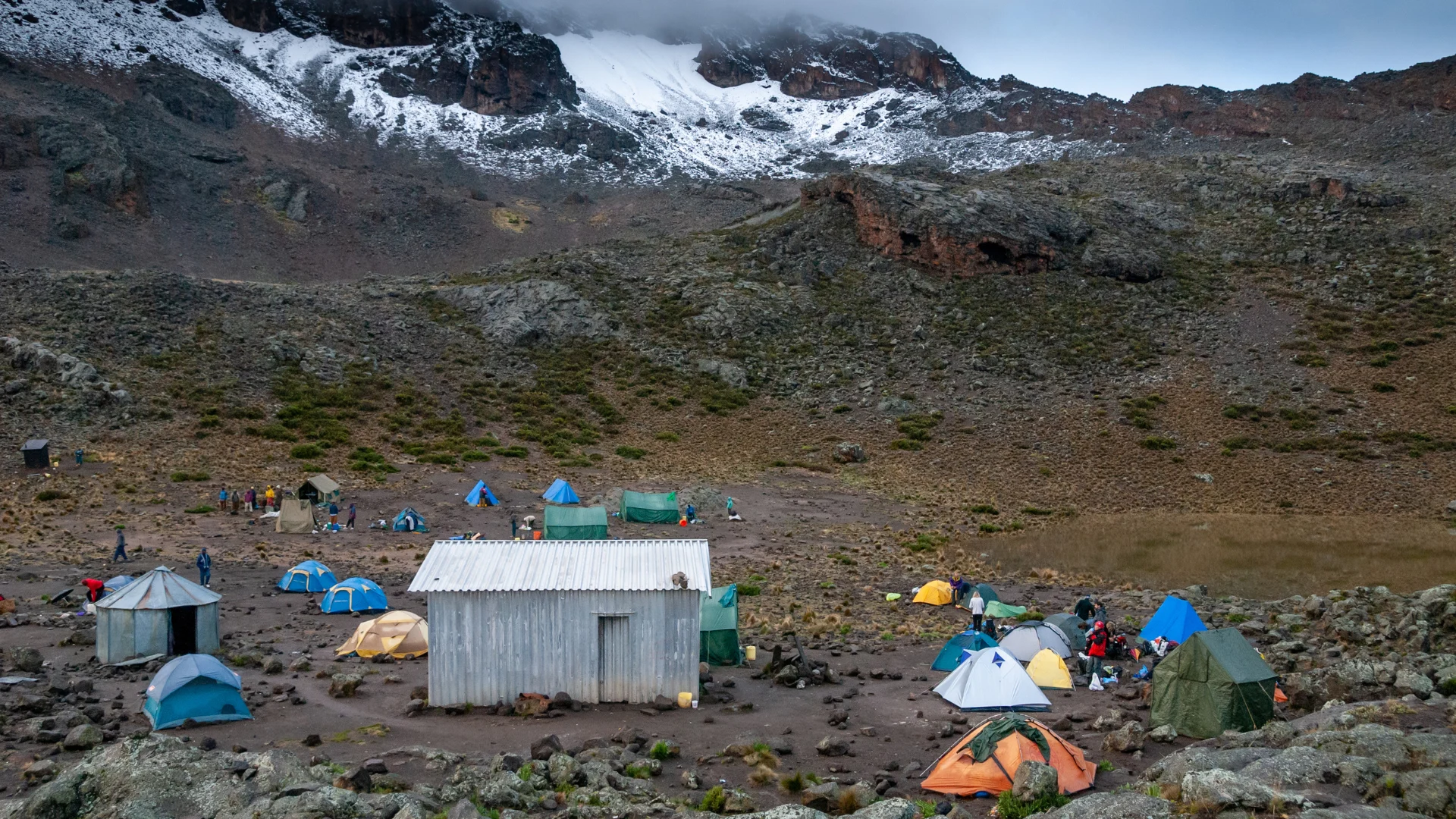
This is one of the most scenic days on the Rongai Route. You’ll hike beneath the towering spires of Mawenzi Peak, with stunning views and a quieter, more remote feel than other routes.
The trail is short but involves steady elevation gain. Reaching Mawenzi Tarn early allows plenty of time for rest, acclimatization, and health monitoring. Many climbers report feeling stronger here due to the gradual ascent of previous days.
This camp is strategically placed to prepare your body for the higher altitudes ahead.
Altitude: 3,600 m → 4,330 m
Distance: ~6 km
Trekking Time: 4–5 hours
Terrain: Alpine desert
Accommodation: Camping
Day 5: Mawenzi Tarn → Kibo Hut
Today’s trek crosses the saddle between Mawenzi and Kibo, a vast high-altitude desert.
The landscape is stark and powerful, offering a true sense of Kilimanjaro’s scale.
The pace is deliberately slow to conserve energy for summit night.
Upon arrival at Kibo Hut, you’ll have an early dinner and detailed briefing about the summit attempt. Guides will assess each climber’s condition and explain pacing, weather expectations, and safety procedures.
You’ll rest and sleep early—summit night begins around midnight.
Altitude: 4,330 m → 4,700 m
Distance: ~8 km
Trekking Time: 4–5 hours
Terrain: Alpine desert
Accommodation: Hut (shared dormitory)
Day 6: Summit Day – Kibo Hut → Uhuru Peak → Horombo Hut / Marangu Gate
Summit day is the most challenging but also the most rewarding. You’ll start the ascent around midnight, guided at a slow, steady pace with regular breaks. Headlamps illuminate the trail as you climb through the cold, thin air.
Reaching Stella Point at sunrise is a major milestone, followed by the final push to Uhuru Peak (5,895 m)—the highest point in Africa. After photos and celebration, you’ll descend carefully back to Kibo Hut, then continue down to Horombo Hut or directly to Marangu Gate, depending on your itinerary.
Throughout the day, guides closely monitor climbers for altitude symptoms, ensuring a safe and supported descent.
Altitude: 4,700 m → 5,895 m → 1,860 m
Trekking Time: 12–14 hours
Highlight: Sunrise on the Roof of Africa
Price
Price Includes
- All Transfers
- Accomodations
- Camping Equipment
- Meals on Climbing
- Proffesional Guides and Porters
- Oxgen Tanks
- GPS Trackers
- Fully-loaded medical kits
- All park fees and taxes
- Dedicated support team
FAQ About Rongai Route
Is the Rongai Route suitable for first-time Kilimanjaro climbers?
Yes. The Rongai Route is one of the best options for first-time climbers. Its gradual ascent, fewer steep sections, and lower crowd levels reduce physical and mental stress. When climbed over 6 days, the route offers excellent acclimatization, making it especially suitable for travelers with no prior high-altitude trekking experience.
How difficult is the Rongai Route compared to other Kilimanjaro routes?
The Rongai Route is considered moderate in difficulty.
Easier than: Machame, Lemosho, Umbwe
Slightly more demanding than: Marangu (due to camping and longer distances)
The main challenge is altitude, not technical terrain. There is no climbing or scrambling involved.
Why does the 6-day Rongai Route have a higher success rate?
The extra day allows:
More gradual altitude gain
Additional rest and hydration time
Better recovery before summit night
This gives your body more time to adapt to lower oxygen levels, reducing the risk of altitude sickness.
What is the best time of year to climb the Rongai Route?
The Rongai Route is particularly good during rainy seasons because the northern side of Kilimanjaro is drier.
Best months:
January – March
June – October
Good alternative months:
April – May
November
What happens if I cannot continue to the summit?
Your safety always comes first. If you’re unable to continue:
You’ll descend with a guide
Support staff will assist with logistics
Evacuation procedures are in place if required
Partial refunds depend on park regulations and timing, which we explain clearly before booking.