- From $2,000 /person
- 6 or 7 days
- Price Includes
The Kilimanjaro Machame Route—often called the Whisky Route—is one of the most scenic and popular ways to climb Mount Kilimanjaro. It typically takes 6 or 7 days, offers excellent acclimatization, and has a high summit success rate of up to 90% when done over 7 days. The route starts at Machame Gate and ends at Mweka Gate, using comfortable mountain camping along the way. Machame is ideal for budget-conscious international travelers who want breathtaking landscapes, varied terrain, and a strong chance of reaching Uhuru Peak (5,895 m).
About This Activity
Duration: 6 or 7 Days
Difficulty Level: Moderate to Challenging (varied terrain, steeper sections)
Accommodation: Mountain camping (high-quality tents provided)
Nickname: “The Whisky Route”
Success Rate:
6 Days: ~80–85%
7 Days: ~85–90%
Distance: ~62 km
Best For: Budget travelers, adventurous beginners, first-time high-altitude trekkers, small groups
Starting Point: Machame Gate
Ending Point: Mweka Gate
Highest Point: Uhuru Peak (5,895 m)
Why Choose the Kilimanjaro Machame Route?
At Affordable International Travel, we often recommend the Machame Route to travelers who want maximum value for money without sacrificing experience or safety.
Here’s why Machame stands out:
Incredible Scenery: Rainforest, moorland, alpine desert, glaciers—Machame offers the most diverse landscapes on Kilimanjaro
Better Acclimatization: The “climb high, sleep low” profile improves your chances of summit success
Authentic Adventure Feel: Camping under the stars adds to the true mountain experience
Excellent Value: High success rate without the premium price of longer or less-traveled routes
Social & Motivating: One of the most popular routes—great for meeting fellow climbers from around the world
Overview
The Machame Route approaches Kilimanjaro from the southwest, gradually guiding you from lush rainforest into open alpine landscapes and eventually to the snow-covered summit.
Unlike the more gradual Marangu Route, Machame feels wild and adventurous, with winding trails, ridge walks, and dramatic views of Mount Meru and the Shira Plateau.
What makes Machame special is how naturally your body adjusts to altitude. The route intentionally takes you higher during the day and slightly lower at night, giving your body time to adapt—one of the key reasons for its strong success rate.
It’s challenging in parts, yes—but with the right pace, professional guides, and proper support, it’s achievable for most reasonably fit travelers.
Gallery
What to Expect
Day 1: Hotel Pickup → Machame Gate → Machame Camp
Altitude: 1,800 m → 3,000 m
Distance: ~11 km
Trekking Time: 5–7 hours
Terrain: Rainforest (muddy, shaded, humid)
Your climb begins with an early hotel pickup from Moshi or Arusha, followed by registration and permits at Machame Gate.
After a full briefing and final gear check by your guide, you enter the lush rainforest zone.
Expect thick vegetation, towering trees, and the sounds of birds and monkeys overhead.
The trail is well-defined but can be muddy and slippery, especially after rain.
The pace is deliberately slow to allow your body to adjust to altitude from the very first day.
By late afternoon, you reach Machame Camp, where your tents are already set up by the support crew.
This is your first night on the mountain, with temperatures cooling quickly after sunset.
Day 2: Machame Camp → Shira Camp
Altitude: 3,000 m → 3,840 m
Distance: ~5 km
Trekking Time: 4–6 hours
Terrain: Moorland, rocky ridges, open views
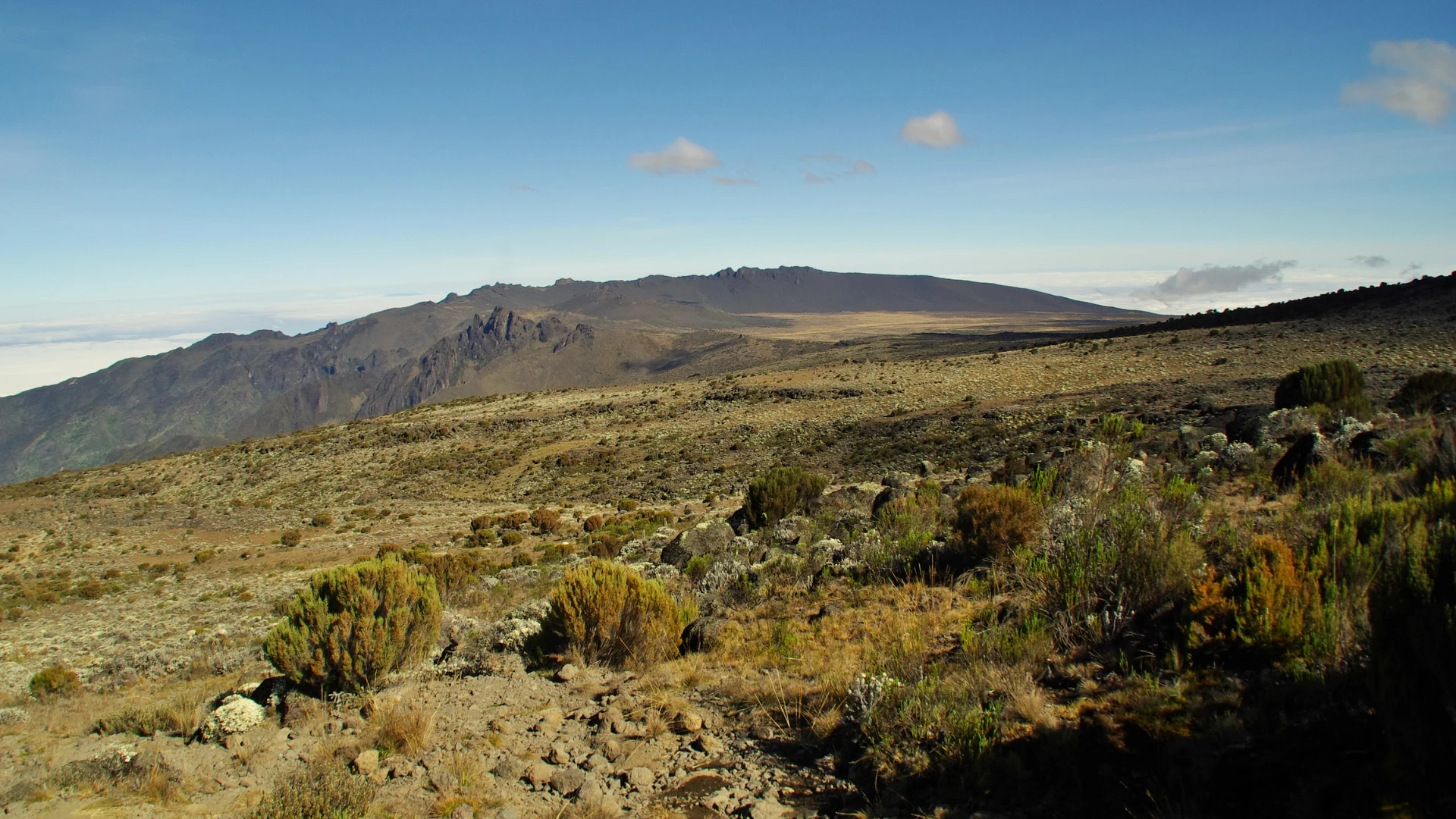
As you leave the rainforest behind, the landscape opens dramatically.
The trail becomes drier and rockier, with wide views of the Shira Plateau and Mount Meru in the distance.
You’ll notice the air becoming thinner today, and your guides will monitor your pace, breathing, and hydration closely.
Mild symptoms like shortness of breath or headache are normal and carefully managed.
Shira Camp sits on an exposed plateau, meaning cooler temperatures and stronger winds at night. This day plays a key role in acclimatization.
Day 3: Shira Camp → Lava Tower → Barranco Camp
Altitude: 3,840 m → 4,630 m → 3,960 m
Distance: ~10 km
Trekking Time: 6–8 hours
Terrain: Alpine desert, volcanic rock
This is one of the most important acclimatization days on the Machame Route.
You climb steadily toward Lava Tower (4,630 m), where altitude effects are often felt more strongly. It’s common to experience fatigue, light nausea, or reduced appetite—but this is exactly why the route is designed this way.
After lunch near Lava Tower, you descend into Barranco Valley, allowing your body to recover while maintaining altitude gains.
This “climb high, sleep low” strategy is a major reason Machame has a strong summit success rate.
Barranco Camp offers some of the most scenic views on the mountain, including the iconic Barranco Wall.
Day 4: Barranco Camp → Karanga Camp
Altitude: 3,960 m → 4,035 m
Distance: ~5 km
Trekking Time: 4–5 hours
Terrain: Rock scrambling, ridges, valleys
The day starts with the famous Barranco Wall. Despite its appearance, this is not technical climbing. Guides lead you step by step, and most climbers find it enjoyable and confidence-boosting.
After the wall, the trail rolls gently across ridges and valleys.
This is a shorter trekking day, intentionally designed to help you rest and acclimatize further.
Karanga Camp sits high with sweeping views, and guides will conduct thorough health checks before dinner.
Day 5: Karanga Camp → Barafu Camp
Altitude: 4,035 m → 4,673 m
Distance: ~4 km
Trekking Time: 3–4 hours
Terrain: Alpine desert, exposed slopes
This is a short but mentally important day.
You move into the alpine desert zone, where vegetation disappears and temperatures drop sharply.
Upon arrival at Barafu Camp, you rest, hydrate, and eat an early dinner.
Your guide will give a detailed summit briefing covering pacing, breathing, safety, and expectations for the night ahead.
Most climbers sleep only a few hours before the summit attempt.
Day 6: Barafu Camp → Uhuru Peak → Mweka Camp
Altitude: 4,673 m → 5,895 m → 3,100 m
Distance: ~17 km
Trekking Time: 12–15 hours
Terrain: Scree slopes, glaciers, summit ridge
Summit night begins around midnight. The climb is slow, cold, and physically demanding. Temperatures can drop below -10°C, and progress is made one careful step at a time.
After reaching Stella Point, you continue along the crater rim to Uhuru Peak, the highest point in Africa.
Sunrise near the summit is often the most emotional moment of the entire climb.
After photos and celebration, you descend to Barafu for a short rest, then continue down to Mweka Camp, where oxygen levels feel noticeably better.
Day 7: Mweka Camp → Mweka Gate → Hotel
Altitude: 3,100 m → 1,640 m
Distance: ~10 km
Trekking Time: 3–4 hours
Terrain: Rainforest
The final day is a gentle downhill walk through forest trails. At Mweka Gate, you receive your summit certificates and say goodbye to the mountain crew.
A transfer takes you back to your hotel for a well-deserved hot shower and rest.
Price
Price Includes
- All Transfers
- Accomodations
- Camping Equipment
- Meals on Climbing
- Proffesional Guides and Porters
- Oxgen Tanks
- GPS Trackers
- Fully-loaded medical kits
- All park fees and taxes
- Dedicated support team
FAQ About Kilimanjaro Machame Route
Is the Machame Route suitable for first-time Kilimanjaro climbers?
Yes. In fact, Machame is one of the most recommended routes for first-time climbers who want strong acclimatization and scenic variety.
While it is slightly more demanding than Marangu, the “climb high, sleep low” design significantly improves summit success, making it safer for beginners when done over 6 or 7 days.
Should I choose the 6-day or 7-day Machame Route?
We strongly recommend the 7-day Machame Route whenever your schedule allows.
6 Days: Suitable for very fit climbers with prior high-altitude experience
7 Days: Better acclimatization, less fatigue, higher success rate (85–90%)
From a safety and success perspective, the extra day is one of the best investments you can make on Kilimanjaro.
Do I need technical climbing or hiking experience?
No technical climbing experience is needed. The Machame Route is a trekking route, and even the Barranco Wall is a guided scramble without ropes.
However, we do recommend:
Regular cardio training before arrival
Comfortable hiking for 5–7 hours per day
Mental readiness for cold and altitude
What is the best time of year to climb the Machame Route?
The best months are:
January to March – Cooler, quieter, occasional snow at the summit
June to October – Drier weather, clearer views, peak season
Machame is climbable year-round, but April–May is the wettest period and best for experienced climbers only.
How fit do I need to be for the Machame Route?
You do not need to be an athlete, but you should be:
Comfortable hiking uphill for several hours
Able to carry a small daypack
Willing to train consistently before arrival
Most successful climbers focus on endurance, not speed.