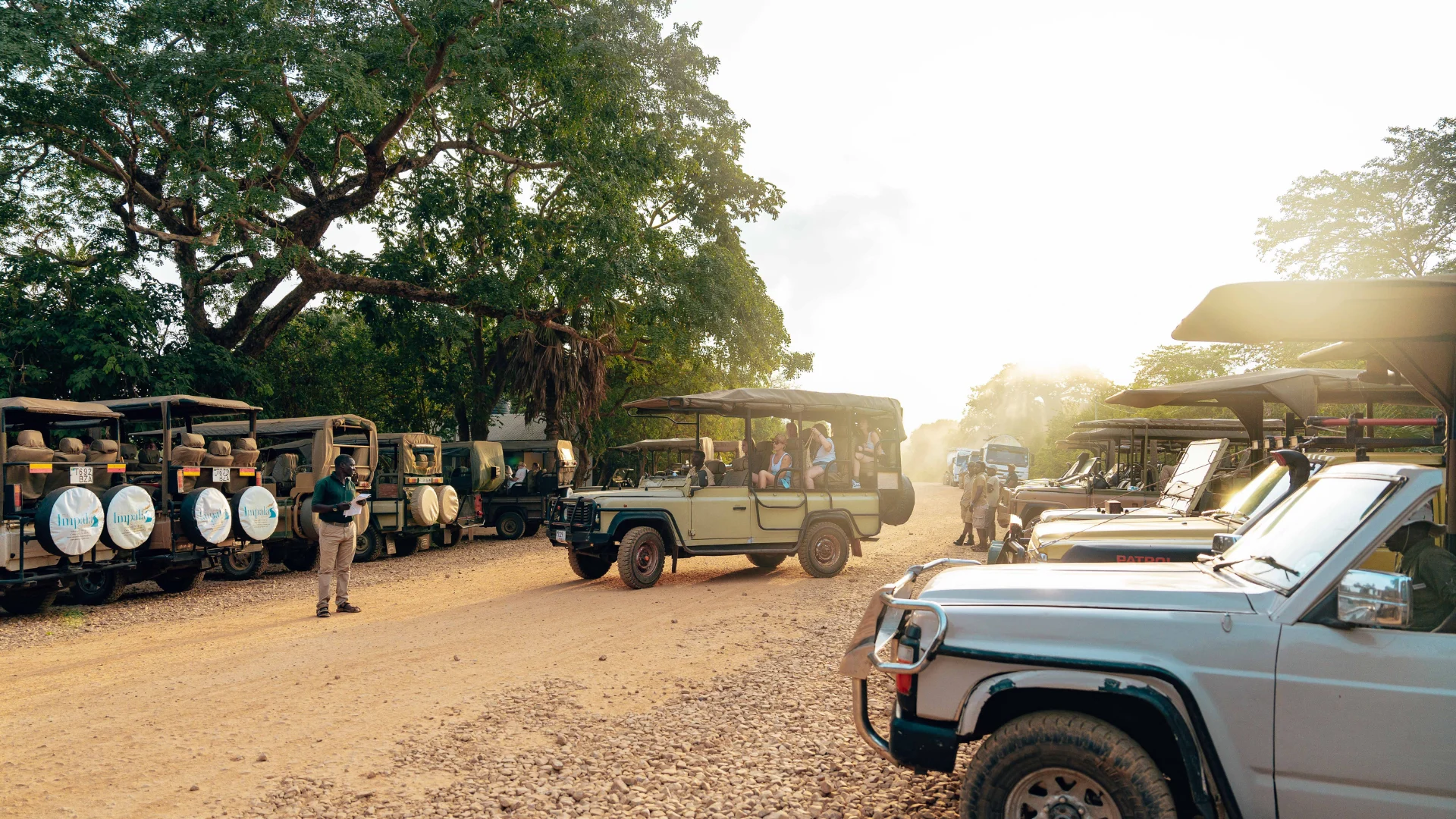

To do a Tanzania safari on a budget, opt for group camping tours starting at $180-350 per person per day, travel during shoulder seasons (March-May, November), choose northern parks like Tarangire and Lake Manyara, join shared game drives, and book through reputable operators. Total costs for a 7-day trip can range from $1,500-3,000 excluding flights, delivering authentic wildlife sightings with smart savings.
A Tanzania safari is often described as a “once-in-a-lifetime” experience—iconic wildlife, vast savannahs, and world-famous national parks. But for many international travelers, the first question is a practical one: Is a Tanzania safari affordable?
The short answer is yes—if you plan it the right way.
At Affordable International Travel Ltd, we’ve helped countless explorers like you navigate Tanzania’s wildlife wonders affordably.
Drawing from years of on-the-ground experience organizing budget-friendly trips, this guide will show you exactly how to make it happen.
You’ll learn to slash costs without sacrificing quality, from choosing the right seasons and parks to selecting accommodations and transportation that maximize value.
By the end, you’ll have a step-by-step plan to book your safari, avoid common pitfalls, and return home with stories that’ll make your friends envious.
We’ll cover everything: timing your trip for deals, estimating real costs, picking destinations that punch above their weight, and even packing tips from seasoned guides.
Let’s turn your budget safari dream into reality – it’s more accessible than you think.
Table of Contents
What Does a Budget Tanzania Safari Actually Mean?
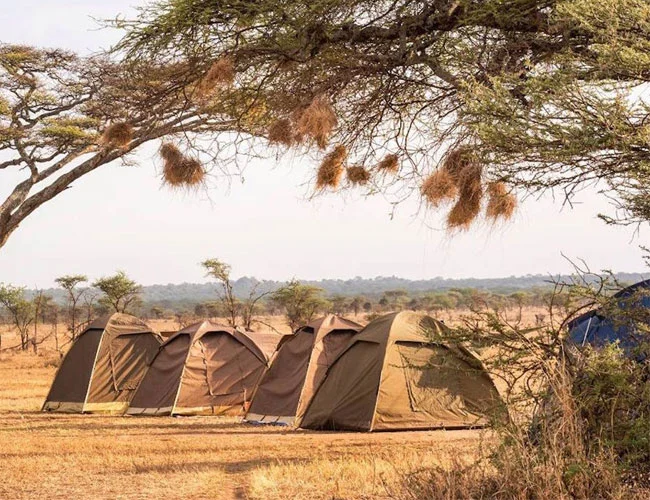
A budget safari in Tanzania doesn’t mean compromising on wildlife viewing or settling for subpar experiences. It means making strategic choices about accommodation, timing, park selection, and tour structure to reduce costs while maintaining the quality of your game drives and overall adventure.
Budget safari categories typically include:
- Camping safaris – Sleeping in tents at public campsites within or near national parks ($150–$250 per person per day)
- Budget lodge safaris – Basic but comfortable accommodations with private rooms and bathrooms ($250–$400 per person per day)
- Mid-range options – Slightly upgraded lodges with better amenities ($400–$600 per person per day)
For context, luxury and premium safaris start at $600–$800 per person per day and can exceed $1,500 for ultra-luxury experiences.
The reality is that whether you’re on a $200-per-day camping safari or a $2,000-per-day luxury package, you’re seeing the same wildlife in the same parks.
The difference lies in your accommodations, meal quality, vehicle exclusivity, and service level—not in the actual safari experience during game drives.
Why Choose Tanzania for a Budget Safari?
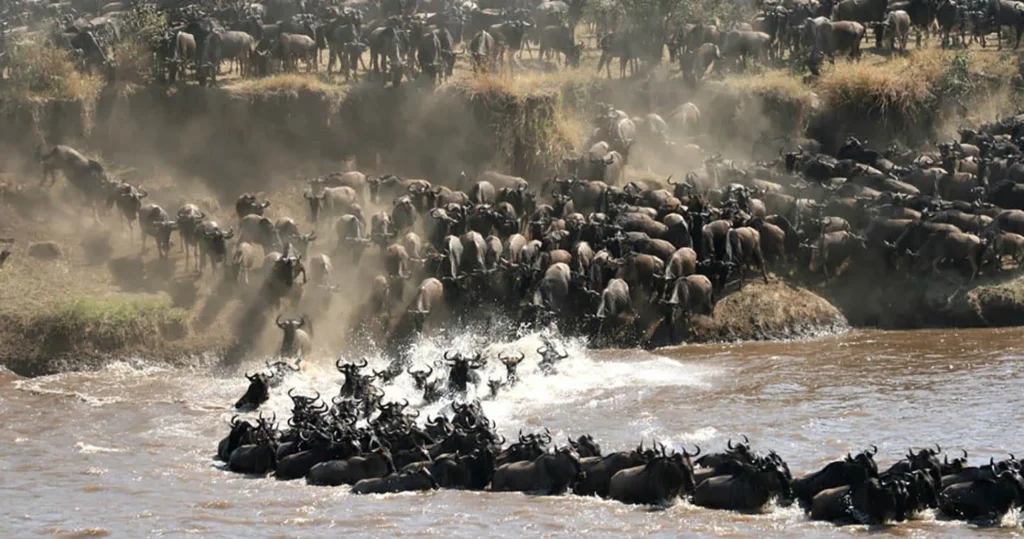
Tanzania offers exceptional value for budget travelers due to its world-class wildlife concentrations at accessible prices. Home to the Great Migration and the Big Five, it provides premium experiences without the ultra-luxury premiums seen in some neighboring countries.
Reasons it’s ideal for budgets:
- Variety of affordable parks: Options like Tarangire deliver elephant herds rivaling pricier spots.
- Group tour availability: Joining others cuts costs by 30-50% compared to private safaris.
- Shoulder season deals: Lower rates during less crowded periods mean savings without missing key sightings.
- Local operators: Many reliable companies specialize in budget packages, including all essentials like meals and transport.
From our experiences guiding groups, Tanzania’s infrastructure supports cost-effective travel, with public campsites and shared vehicles making it feasible for solo travelers or families to join without extra fees.
When Is the Best Time for a Budget Safari in Tanzania?
The best time for a budget Tanzania safari is during shoulder seasons: March to May or November. Prices drop 20-50% compared to peak dry season (June-October), with fewer crowds and lush landscapes enhancing photography.
Breakdown by season:
- High season (June-October): Dry weather, excellent wildlife viewing, but rates peak at $300+ per day. Great Migration in northern Serengeti (July-September).
- Shoulder (March-May, November): Mild rains, green scenery, newborn animals. Budget safaris from $180/day, with good visibility.
- Low season (December-February): Hot, but calving season in southern Serengeti offers predator action at reduced costs.
Tip: Avoid heavy rainy months (April-May in some areas) if roads concern you, but they’re often manageable and reward with dramatic skies and fewer tourists.
How to Choose the Most Affordable Tanzania Safari Parks
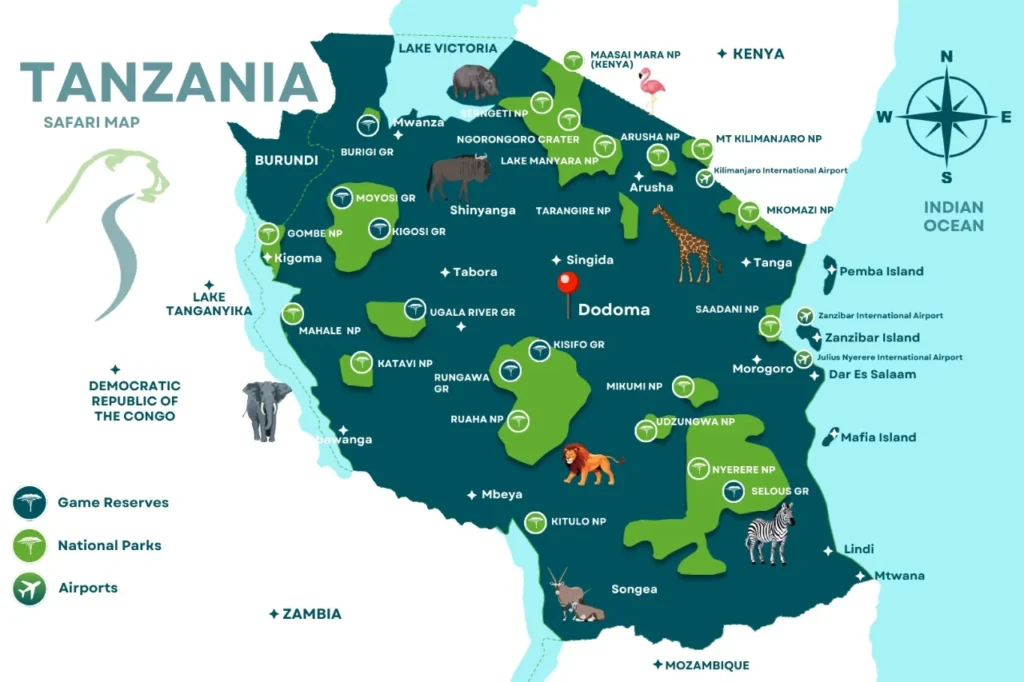
Tanzania has 22 national parks, but most safaris focus on the northern circuit (Serengeti, Ngorongoro, Tarangire, Lake Manyara) or southern circuit (Selous/Nyerere, Ruaha). Your park selection dramatically impacts costs.
Budget-friendly park combinations:
Tarangire + Lake Manyara + Ngorongoro Crater (3–4 days): This classic route offers exceptional wildlife diversity at lower costs than Serengeti-focused itineraries. Tarangire is famous for elephants and baobabs, Lake Manyara for tree-climbing lions and flamingos, and Ngorongoro provides the Big Five in a contained ecosystem. Total driving time is reasonable, reducing fuel costs.
Arusha National Park (1–2 days): Located just 40 minutes from Arusha town, this park eliminates long transfer costs. While smaller, it offers canoeing, walking safaris, varied landscapes, and good primate viewing. Perfect as an add-on or for extremely tight budgets.
Lake Manyara only (1–2 days): A focused visit to this compact park delivers diverse habitats, good birdlife, and regular wildlife sightings without the Serengeti’s high entrance fees.
Parks to limit if watching costs:
Serengeti National Park: While spectacular, especially during the Great Migration, the Serengeti requires higher park fees ($70/day) and longer driving distances, increasing fuel and time costs. If the Migration is your primary goal, budget accordingly, but consider shorter stays (2–3 days instead of 4–5).
Ngorongoro Crater: The crater requires a $70 descent fee per vehicle in addition to conservation fees. While worth visiting for its unique ecosystem, limit your time to a half-day crater tour rather than full-day to reduce costs.
Focus your itinerary on 2–3 parks maximum. Each additional park means more entrance fees, more driving, and higher overall costs.
Camping Safari vs. Lodge Safari: What Saves You Money?
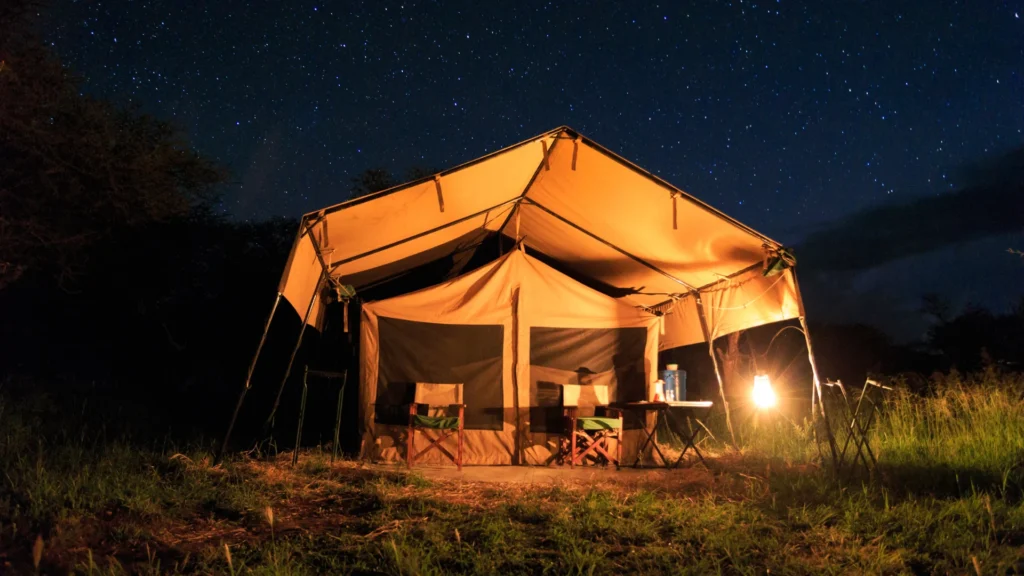
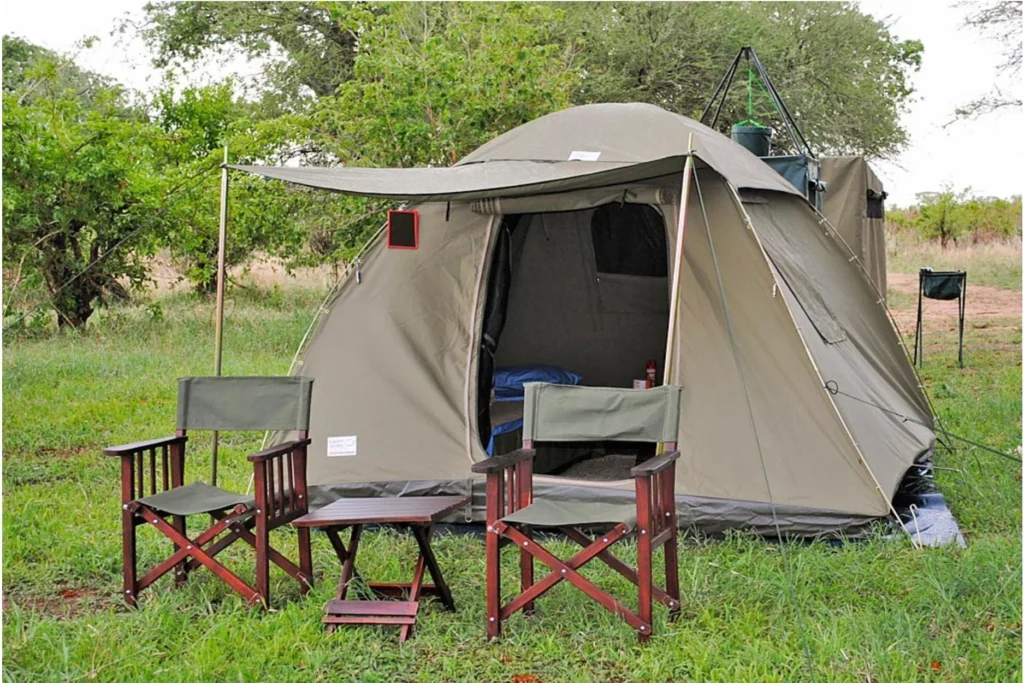
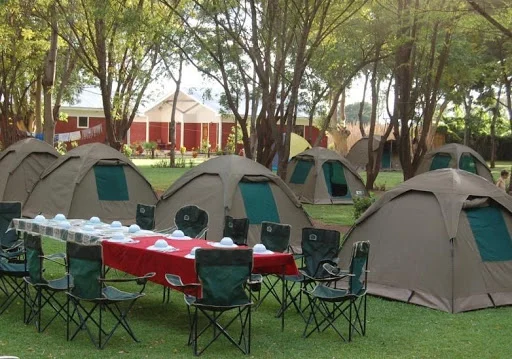
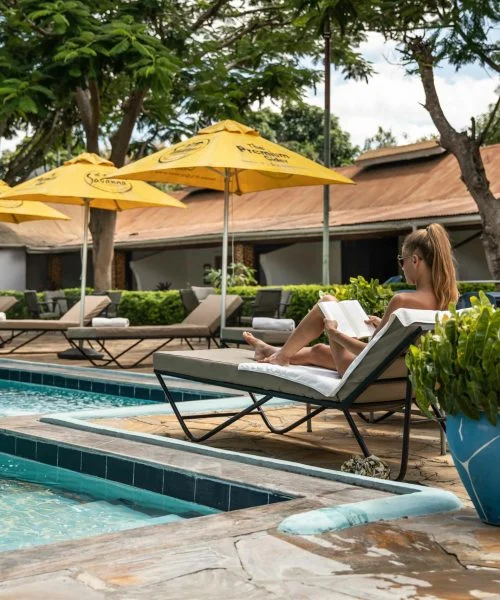
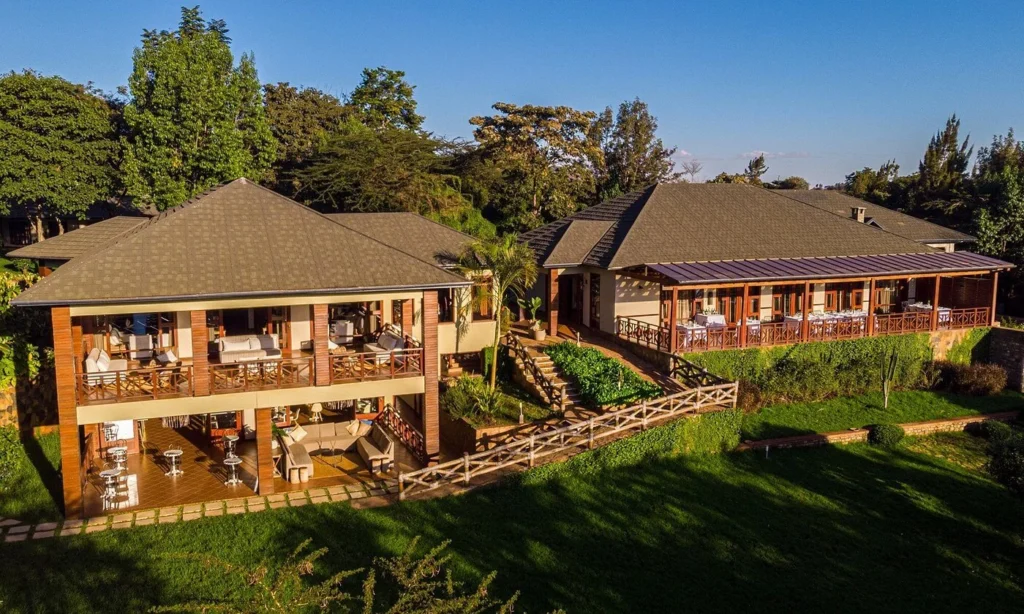
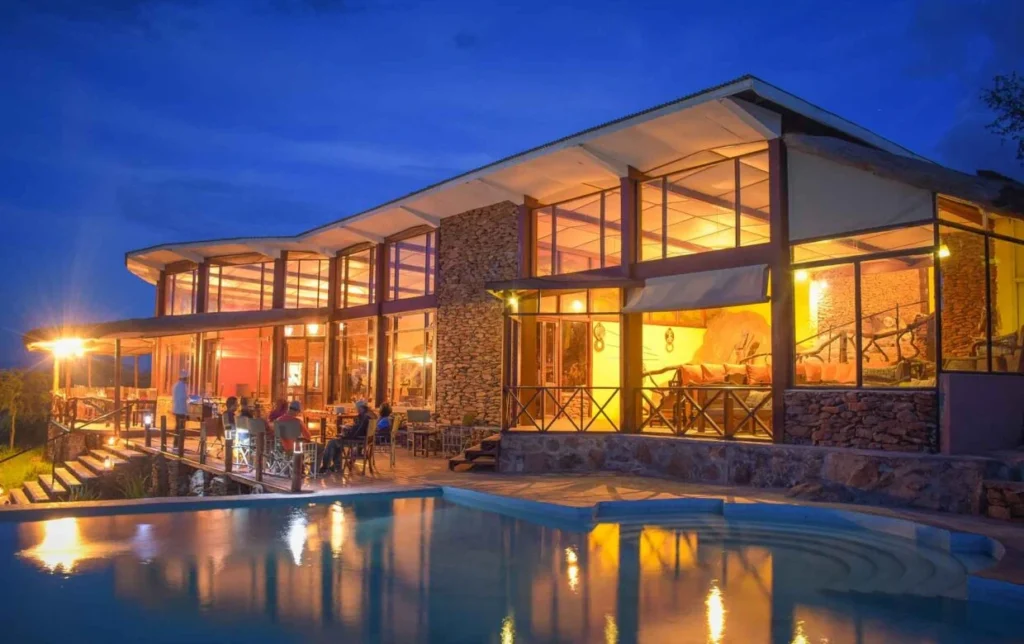
Accommodation choice is your biggest opportunity for cost control beyond park selection.
Public camping ($150–$250 per person per day): You’ll sleep in tents at designated public campsites within or adjacent to national parks. Your safari operator provides all camping equipment—tents, sleeping bags, mattresses, camp chairs, and cooking gear. Meals are prepared by camp cooks and served outdoors. Facilities include basic toilets and sometimes showers (often bucket showers).
The experience is more adventurous and authentic. You’ll fall asleep to wildlife sounds and wake to African sunrises. There’s minimal barrier between you and nature. This is the most economical option and particularly appealing if you enjoy outdoor experiences.
Budget lodges/tented camps ($250–$400 per person per day): These offer private rooms or permanent tents with ensuite bathrooms, running water, electricity, restaurant meals, and bar facilities. Comfort is significantly higher than camping, but you sacrifice the intimate bush experience. Budget lodges are typically located outside park boundaries, adding travel time to morning and afternoon game drives.
Cost breakdown example (3-day safari):
Public camping option:
- Total: $600–$750 per person
- Includes: All park fees, camping fees, meals, transport, guide
Budget lodge option:
- Total: $900–$1,200 per person
- Includes: All park fees, lodge accommodation, meals, transport, guide
The $300–$450 difference per person on a 3-day safari is substantial. For couples or families, camping can save $600–$1,800 or more.
Who should choose camping: Adventurous travelers, those comfortable with basic facilities, people prioritizing wildlife over comfort, and anyone on a strict budget.
Who should choose budget lodges: Travelers wanting private bathrooms and comfortable beds, those with mobility concerns, or anyone who prioritizes convenience over cost savings.
Group Tours vs. Private Safaris: The Biggest Money-Saver
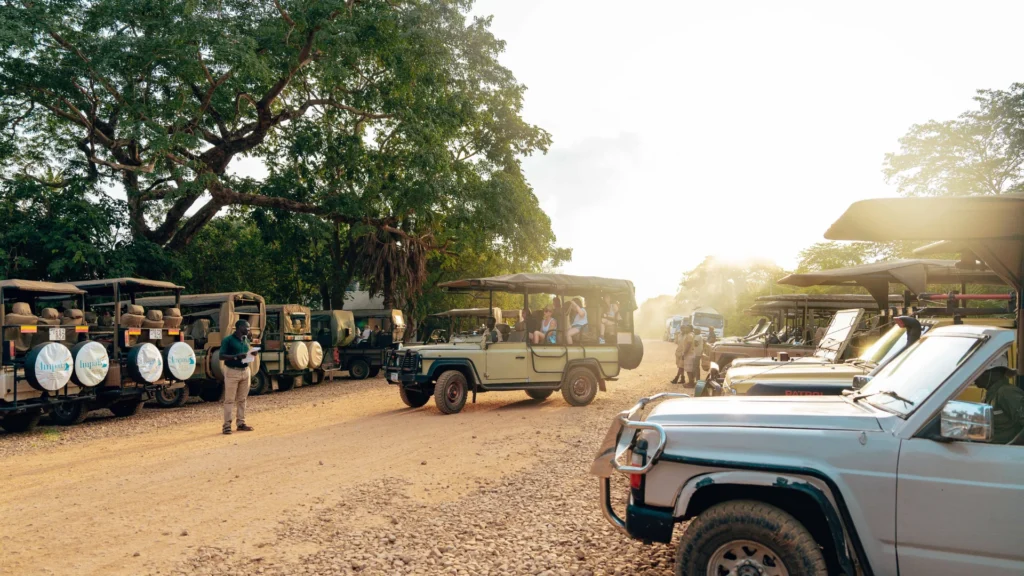
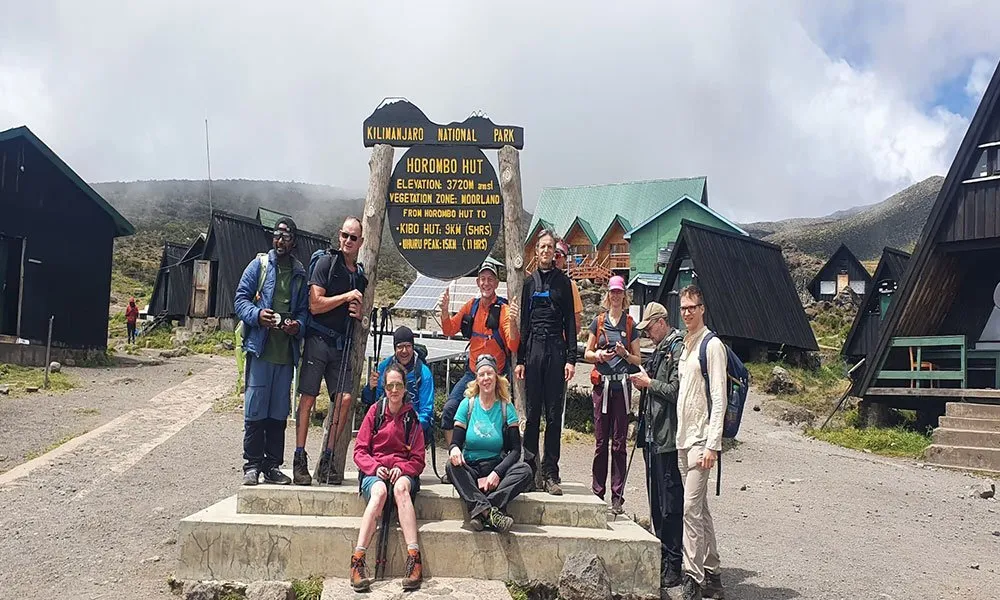
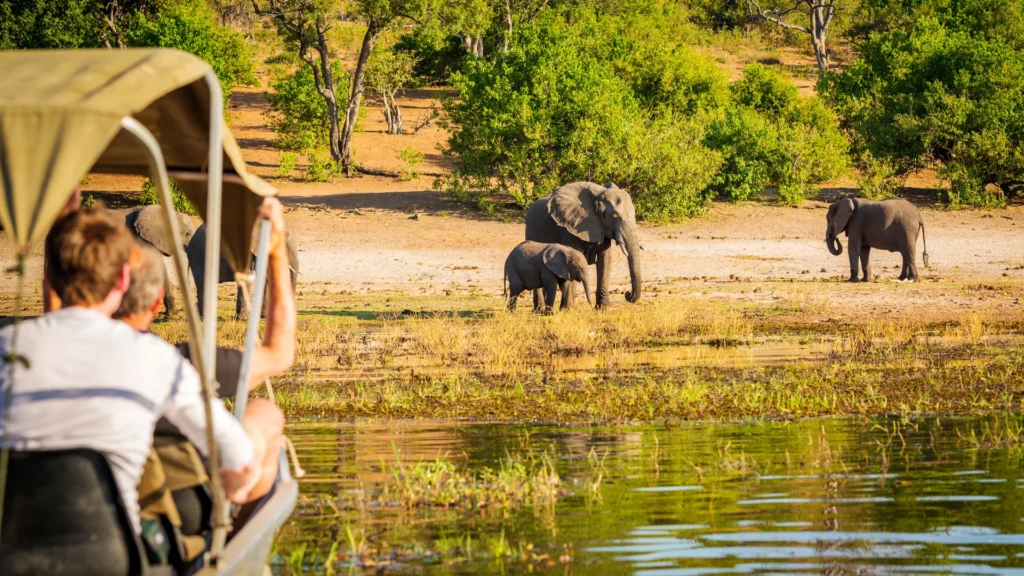
Joining a group tour rather than booking a private safari can cut costs by 40–60%. This is the single most effective budget strategy.
How group tours work: Safari operators compile small groups (typically 4–7 people) with similar itineraries and travel dates. You share a safari vehicle (usually a 6–7 seat Land Cruiser), guide services, and camping/accommodation costs. Everyone follows the same schedule and visits the same locations.
Group tour advantages:
- Significantly lower per-person costs since you’re sharing vehicle, guide, and fuel expenses
- Social experience with other travelers from around the world
- Fixed departure dates mean easier planning
- No minimum group size requirement (you can join as a solo traveler)
Group tour considerations:
- Less flexibility in schedule and activities
- You’re with strangers (though this often leads to lasting friendships)
- Must compromise on game drive duration and locations
- Limited ability to customize your itinerary
Private safari advantages:
- Complete control over schedule, pace, and focus
- Privacy with your travel companions only
- Flexibility to extend game drives or skip activities
- Can customize the itinerary to your interests
Private safari considerations:
- Substantially higher costs, especially for solo travelers or couples
- You absorb all vehicle and guide costs without sharing
Cost comparison example (4-day camping safari):
Group tour: $800–$1,000 per person Private safari (2 people): $1,400–$1,800 per person Private safari (solo): $2,400–$3,000 total
For solo travelers, group tours are almost essential for budget safaris. Even couples save 30–40% by joining groups.
Where to find group tours: We specialize in scheduled group departures with fixed dates throughout the year. Book 2–3 months in advance during high season or 2–4 weeks ahead in low season.
Understanding What’s Included in Budget Safari Packages
Budget safari pricing can be confusing. Understanding exactly what’s covered helps you compare operators accurately and avoid surprise expenses.
Typically included in budget camping safaris:
- All national park entrance fees and conservation fees
- Public campsite fees
- Camping equipment (tents, sleeping bags, mattresses, pillows)
- All meals during the safari (breakfast, lunch, dinner)
- Bottled water during game drives
- 4×4 safari vehicle with pop-up roof for game viewing
- Professional English-speaking guide-driver
- Airport transfers (if specified)
- Government taxes
Often excluded (budget for separately):
- International and domestic flights
- Tanzania visa fees ($50–$100 depending on nationality)
- Travel insurance (essential—budget $50–$150)
- Tips for guide, cook, and porter (expect $10–$15 per day total)
- Alcoholic beverages and soft drinks
- Personal items (sunscreen, insect repellent, etc.)
- Optional activities (balloon safaris, Maasai village visits, etc.)
- Accommodation before/after the safari in Arusha/Moshi
Hidden costs to watch for:
Some operators advertise low base prices but exclude standard items to appear cheaper. Always confirm whether park fees are included—these can add $200–$300 to your trip. Verify meal coverage (some budget operators only include breakfast and lunch). Ask about water provision (you’ll need several liters daily in the heat).
Request a comprehensive, written quotation showing all inclusions and exclusions before committing to any operator.
How Long Should Your Budget Safari Be?
Safari duration directly impacts total cost, but there’s a sweet spot that maximizes value without unnecessary expense.
3–4 day safaris: This is the most popular budget option, offering excellent wildlife viewing without excessive costs. You can cover Tarangire, Ngorongoro Crater, and Lake Manyara, experiencing diverse ecosystems and seeing most major species including the Big Five.
A 3-day safari typically costs $600–$750 per person (camping) or $900–$1,200 (budget lodges). This provides substantial wildlife exposure while keeping total expenditure manageable.
5–6 day safaris: Adding the Serengeti increases both cost and wildlife diversity. You’ll experience the vast plains ecosystem and potentially witness the Great Migration (timing dependent). Budget increases to $1,000–$1,500 for camping or $1,500–$2,400 for budget lodges.
This length is ideal if you have both the time and budget flexibility, as the additional days in Serengeti provide unique experiences impossible in shorter safaris.
1–2 day safaris: Ultra-budget options focusing on a single park like Tarangire or Lake Manyara. While economical ($300–$500 total), you’ll miss the diversity that makes Tanzania safaris special. Consider these only if you’re extremely time or budget constrained.
Longer than 6 days: Extended safaris offer diminishing returns for budget travelers. The incremental cost per additional day doesn’t proportionally increase wildlife diversity or experiences. Unless you’re incorporating southern circuit parks or specific Migration timing, stick to 3–6 days.
Optimal recommendation: A 3–4 day camping safari in the northern circuit provides the best balance of cost, wildlife variety, and memorable experiences for budget-conscious travelers.
Essential Money-Saving Strategies for Tanzania Safaris
Beyond the major decisions covered above, these tactical strategies can shave hundreds off your total safari cost.
Book directly with local operators: Eliminate international agent markups by contacting Tanzania-based companies directly. Agents and booking platforms often add 20–40% commission. Direct booking with operators like Affordable International Travel Ltd means your money goes toward your actual safari experience.
Travel during low season: We’ve mentioned this, but it bears repeating—visiting in March, April, May, or November can reduce accommodation costs by 30–50%. Park fees remain the same, but these savings on lodges and camps are substantial.
Share costs with others: If you can’t join a group tour, travel with friends or family to split private safari costs. A vehicle accommodates up to six passengers, so larger groups dramatically reduce per-person expenses.
Skip unnecessary add-ons: Balloon safaris cost $500+ per person. Maasai village visits add $20–$50. Cultural tours and walking safaris increase costs. While worthwhile if budget permits, they’re not essential for excellent wildlife viewing. Focus your spending on game drive time.
Bring your own snacks: While meals are included, having personal snacks for game drives (granola bars, nuts, dried fruit) means you won’t need to purchase overpriced items at lodges or camps.
Choose shoulder season Migration viewing: If seeing the Great Migration is essential, visit in June or late October/early November rather than peak July–September. You’ll still witness massive herds but pay significantly less for accommodations.
Limit Serengeti time: Instead of 4–5 days in the Serengeti, spend 2–3 days there and allocate remaining time to Tarangire and Lake Manyara. You’ll see incredible wildlife diversity while managing the Serengeti’s higher park fees.
Book longer in advance: Early booking (3–6 months ahead) sometimes qualifies for early-bird discounts, though this varies by operator. More importantly, it secures group tour spots and prevents last-minute availability issues that force expensive alternatives.
Avoid peak holiday periods: Christmas, New Year, and Easter see inflated prices across all safari categories. If your schedule allows, travel just before or after these periods.
Negotiate respectfully: While reputable operators have limited negotiation room (remember those fixed park fees), you might secure small discounts for larger groups, repeat bookings, or off-season travel. Always ask politely and professionally.
What to Pack for a Budget Camping Safari
Proper packing enhances comfort without adding costs. Budget camping safaris require more personal gear than lodge-based trips.
Essential clothing:
- Neutral-colored clothing (khaki, olive, brown—avoid bright colors and black)
- Long-sleeved shirts and pants for sun protection and cooler mornings/evenings
- Lightweight jacket or fleece for early morning game drives
- Hat with brim for sun protection
- Comfortable closed-toe shoes (sneakers or hiking boots)
- Sandals for camp
Practical items that save money:
- Reusable water bottle with filter or purification tablets (camp water may not be potable)
- Headlamp or flashlight with extra batteries (campsites have limited lighting)
- Sunscreen (expensive in Tanzania—bring from home)
- Insect repellent with DEET
- Wet wipes and hand sanitizer (camping facilities are basic)
- Personal toiletries in travel sizes
- Quick-dry towel (provided towels may be limited)
- Ziplock bags for protecting electronics from dust
- Power bank for charging devices (vehicle charging available but limited)
Photography equipment:
- Camera with zoom lens (safari’s main expense-free souvenir)
- Extra memory cards and batteries
- Dust bags for equipment protection
Medical supplies:
- Personal prescription medications
- Basic first aid kit
- Anti-diarrheal medication
- Pain relievers
- Motion sickness tablets if prone to car sickness
What not to pack: Skip excessive clothing changes (you’ll wear the same safari outfit repeatedly), hairdryers and styling tools (limited electricity), heavy books (download e-books), and excessive toiletries (basic facilities make elaborate routines impractical).
Most camping operators provide bedding and camping equipment, but confirm exactly what’s included when booking.
Common Budget Safari Mistakes to Avoid
Learning from others’ errors saves both money and disappointment. These are the most frequent mistakes budget safari travelers make.
Booking the absolute cheapest option: Rock-bottom prices often mean dangerous vehicles, unqualified guides, hidden fees, or excluded park fees. Legitimate budget safaris have a realistic cost floor based on operational expenses. Extremely cheap offers usually deliver poor experiences or involve deceptive pricing.
Not reading reviews thoroughly: Surface-level review scanning misses important details. Read recent reviews (last 6–12 months) carefully, looking for patterns about communication, vehicle quality, guide knowledge, food quality, and whether actual experiences matched promises.
Failing to verify what’s included: Assuming “all-inclusive” means everything leads to shock when you discover park fees, drinks, or tips aren’t covered. Always get itemized inclusions in writing before paying.
Skipping travel insurance: Budget travelers sometimes skip insurance to save $50–$100, then face thousands in costs if medical emergencies, evacuation, trip cancellation, or lost luggage occur. Comprehensive travel insurance is non-negotiable.
Not budgeting for tips: Guide, cook, and porter tips are customary and represent significant income for safari staff. Budget $10–$15 per day total for tipping. Not planning for this creates awkward situations at trip end.
Bringing inadequate cash: Tanzania has limited ATM access in safari areas, and cards aren’t widely accepted outside major hotels. Bring sufficient US dollars (newer bills, post-2013) for souvenirs, tips, and incidentals. Budget at least $200–$300 beyond your pre-paid safari cost.
Overpacking your itinerary: Trying to visit too many parks in too few days creates exhausting travel days with less game viewing time. Focus on quality over quantity—better to thoroughly experience three parks than rush through five.
Not confirming group tour dynamics: If joining a group, ask about typical group size, age ranges, and whether it’s truly a guaranteed departure or waitlisted pending minimum numbers. Clarify these details to avoid surprises.
Ignoring health preparations: Yellow fever vaccination is mandatory for Tanzania entry if arriving from infected areas. Malaria prophylaxis is strongly recommended for safari regions. Skipping these due to cost can result in denied entry or serious illness. Budget $100–$200 for proper health preparations.
Expecting luxury experiences at budget prices: Maintain realistic expectations. Budget safaris deliver authentic wildlife viewing and adventure but not luxury amenities, gourmet cuisine, or premium service. Appreciate what you’re getting for the price rather than comparing to $1,000/day luxury experiences.
Is a Tanzania Budget Safari Worth It?
Having organized hundreds of budget safaris and witnessed travelers’ reactions to their first elephant herd, lion pride, or cheetah hunt, the answer is unequivocally yes—with the right expectations and preparations.
What budget safaris deliver brilliantly:
The wildlife viewing is identical to luxury safaris. Animals don’t discriminate based on accommodation prices. You’ll see the same Great Migration herds, the same Big Five, the same incredible birdlife regardless of whether you sleep in a $50 tent or a $500 suite.
The adventure and authenticity are often superior. Camping in the bush, hearing hyenas at night, and waking to sunrise over the Serengeti creates deeper connections to the African wilderness than air-conditioned lodges ever can.
Professional guides on budget safaris are often equally qualified and passionate. Many legendary guides work across budget and luxury operations. Your guide quality depends on the operator’s standards, not your accommodation tier.
What budget safaris require from you:
Flexibility and adaptability. Camping facilities are basic. Weather affects comfort. Group tours follow schedules that may not match your ideal pace. Accepting these realities with good humor makes the difference between frustration and adventure.
Reasonable expectations about comfort. You won’t have WiFi, hot showers, or restaurant-quality meals. If these amenities are essential to your travel enjoyment, budget safaris may frustrate you. If you can appreciate simple, wholesome food, basic washing facilities, and mobile-free immersion in nature, you’ll thrive.
Some self-sufficiency. Bring what you need, solve minor inconveniences yourself, and maintain a positive attitude when things don’t go perfectly.
The truth about value: A $750 three-day budget camping safari delivers more memorable experiences per dollar than virtually any other travel investment. Where else can you witness wild lions, watch elephants raise dust clouds, and sleep under African stars for that price?
Budget safaris democratize wilderness experiences that were once exclusively for the wealthy. This accessibility is genuinely remarkable and worth celebrating.
For travelers who prioritize wildlife, adventure, and natural beauty over luxury amenities, Tanzania budget safaris represent extraordinary value and create life-changing memories that rival any expensive journey.
If you’re planning your first Tanzania safari and wondering whether you can afford it, the answer is almost certainly yes—with smart planning, strategic choices, and operators who understand how to maximize value without compromising safety or experience quality.
Frequently Asked Questions
How much does a budget Tanzania safari actually cost?
Budget Tanzania safaris range from $150–$250 per person per day for camping safaris to $250–$400 for budget lodge options. A typical 3-day camping safari costs $600–$750 per person all-inclusive (park fees, meals, camping, transport, guide). Group tours cost significantly less than private safaris, and low season (March–May) offers the best value. These prices include all essential costs except flights, visas, tips, and travel insurance.
What is the cheapest month to go on safari in Tanzania?
April is typically the cheapest month, falling in the heart of the long rainy season. Accommodation prices drop 30–50% compared to peak season, and you’ll encounter fewer tourists. March and May also offer excellent value. While afternoon showers are common, mornings usually provide clear weather for game drives, and wildlife viewing remains strong. The landscape is lush and green during this period, creating beautiful photographic opportunities.
Can I do a Tanzania safari solo on a budget?
Yes, by joining group camping tours rather than booking private safaris. Group tours allow solo travelers to share vehicle and guide costs with other participants, reducing per-person expenses by 40–60%. Many operators run scheduled group departures throughout the year. Solo travelers on private safaris pay substantially more since they absorb all vehicle and guide costs without sharing. Budget $800–$1,200 for a 3-4 day group camping safari as a solo traveler.
Are budget Tanzania safaris safe?
Yes, when booked with licensed, reputable operators who maintain proper vehicle standards, employ qualified guides, and follow safety protocols. Verify that operators hold valid Tanzania Tourist Board licenses and TATO membership. Ask about vehicle age and condition, guide qualifications, and emergency procedures. Avoid operators offering prices well below market average, as extremely cheap safaris sometimes cut corners on safety. Budget doesn’t mean unsafe—it means simpler accommodations and group arrangements rather than compromised security.
Is camping safari better than lodge safari in Tanzania?
For budget travelers, camping offers better value and often more authentic experiences. You’ll save $300–$600 per person on a 3-day safari while gaining closer connection to nature—falling asleep to wildlife sounds and waking to African sunrises. Public campsites are located inside or adjacent to parks, sometimes offering better access than budget lodges positioned outside park boundaries. However, camping requires comfort with basic facilities (bucket showers, basic toilets, sleeping in tents). Choose budget lodges if you need private bathrooms, comfortable beds, or have mobility concerns.
How many days is enough for a budget safari in Tanzania?
Three to four days provides optimal value for budget travelers, allowing you to visit Tarangire, Ngorongoro Crater, and Lake Manyara while experiencing diverse ecosystems and seeing the Big Five. This duration keeps costs manageable ($600–$750 for camping) while delivering substantial wildlife exposure. Five to six days allows Serengeti inclusion but increases costs by 40–60%. One to two-day safaris are very economical but miss the diversity that makes Tanzania special. For most budget travelers, 3-4 days offers the best balance of cost, variety, and memorable experiences.
Conclusion
A Tanzania safari does not have to be expensive to be extraordinary. With the right timing, smart park selection, and experienced local planning, you can enjoy iconic wildlife, breathtaking landscapes, and authentic safari moments on a realistic budget.
The key is knowing where to save and where not to compromise. This guide has shown you how to do exactly that—clearly, honestly, and based on real safari planning experience.
If you’re planning a Tanzania safari and want expert guidance tailored to your budget, Affordable International Travel Ltd is here to help you plan wisely, travel confidently, and experience Tanzania the right way—without overspending.